Morning all 👋 how is everyone? Hopefully doing well, unfortunately I cannot say I am as not only have these past two weeks been horrendous 😳 but now the weather is changing (such a British thing to talk about) I’ve now caught one of the many flu bugs that’s going around 🤧 and I know I’m not the only one, my sister and her boys have all come down with it as well thanks to one or possibly both of the kids contracting it from school, hopefully, they’re feeling better now🤞🏼 Now let me tell you a few things that have happened since my last post…
We have had so many back-to-back appointments with various people but the majority of them were either at our GP surgery or the hospital, all of which were mainly for my mum who is in talks about having two separate operations regarding two different problems, one of the operations would be a 2nd surgery to correct a problem that didn’t work the first time, and the other operation would be to fix her stomach that the doctor said wouldn’t get better without it, she’ll hopefully know more in a week 🤞🏼
My dad also had to get an emergency doctor’s appointment as he ended up dry-heaving all through the night, followed by a violent spout of throwing up 🤮 turns out he has Laryngopharyngeal Reflux (LPR for short), a condition where stomach contents, including acid and enzymes, flow back up into the throat and voice box, causing symptoms like a lump in the throat (globus sensation), hoarseness, a chronic cough, and frequent throat clearing., thankfully he’s been given some tablets to help manage it, which seems to have calmed it down.
There have been some good moments – my oldest nephew got class winner of the week at his school, a system his school set up to award good behaviour! 😀 which has made us all even more proud of him as he’s letting other people see how well behaved and kind he is ❤️
And the final thing I’ll mention is that it was my mum’s birthday 🎉 this past Sunday! We spoiled her rotten (as best as we could) with various different and unique presents (I’m famous for getting unique but amazing gifts in my family), and she loved every single item. We went out for the entire day to celebrate 🥳 in Newcastle, which was really good fun, even though there were a lot of people about. By the time we got home, we were all completely shattered! But she had a good day, which is all that mattered 😀 Now let’s move on to today’s post…
This week’s post is all about the Smithsonian. For as long as I can remember, I’ve always wanted to visit every one of the museums in the complex, as the Institution is more than just the biggest collection of museums in the USA—it’s a treasure trove of history and culture. The Institution lets you explore America’s history, art, science, and culture. An added bonus is that a visit to the Smithsonian Institution offers the opportunity to travel the globe without leaving Washington, D.C. I’m hoping that within the next five years I can tick off visiting one of the biggest Museums in the world off my bucket list!
For now, though, read on to find out some interesting facts about the Institution that you may never have known or even heard of.

Mini History:
The Smithsonian is the world’s largest museum complex, a historical institution that holds over 157 million items, with 20 museums and the National Zoo. Eleven museums are located along the National Mall in Washington, D.C. Six others, including the Smithsonian’s National Zoo, are nearby. Two are in New York City, and two more are in development. The Institution was founded in 1846 with funds from the Englishman James Smithson (1765–1829), according to his wishes, “under the name of the Smithsonian Institution, an establishment for the increase and diffusion of knowledge.” Almost all of the institution’s 30 million annual visitors are admitted without charge, with the exception of visitors to the Cooper Hewitt, Smithsonian Design Museum in New York City, which charges an admission fee.
Beginning in 1825, weekly sittings were arranged during sessions of Congress for the reading of scientific and literary works, but this practice continued for only a short time, as the number of attendees declined rapidly. Eighty-five communications were made to Congress by 26 people during the entire life of the society, with more than half relating to astronomy or mathematics. Among all the activities planned by the institute, only a few were actually implemented. Two were the establishment of a botanical garden and a museum that was designed to have a national and permanent status. The former occupied the place where the present Botanic Garden sits. The museum contained specimens of zoology, botany, archaeology, fossils, and other related items, some of which were later passed on to the Smithsonian Institution after its formation. The institute’s charter expired in 1838, but its spirit lived on in the National Institution, founded in 1840.

Construction began on the Smithsonian Institution Building (“the Castle”) in 1849. Designed by architect James Renwick Jr., its interiors were completed by general contractor Gilbert Cameron. The building opened in 1855. Smithsonian collections include 156 million artworks, artifacts, and specimens. The National Museum of Natural History houses 145 million of these specimens and artifacts, which are mostly animals preserved in formaldehyde. The Collections Search Center has 9.9 million digital records available online. The Smithsonian Institution Libraries hold 2 million library volumes. The Smithsonian Archives hold 156,830 cubic feet (4,441 m3) of archival material.
The National Museum of American History displays treasures such as the Star-Spangled Banner, the stovepipe hat that was worn by President Abraham Lincoln, the ruby slippers worn by Judy Garland in The Wizard of Oz, and the original Teddy Bear that was named after President Theodore Roosevelt. In 2016, the Smithsonian’s Air & Space museum curators restored the large model Enterprise from the original Star Trek TV series.
For more background on The Smithsonian, visit their official website, Smithsonian Institution, or if you want to know more about what features are inside, check out my fellow bloggers’ page, Arias Writing Journal.
List Of Museums
| Institution | Type of collection | Location | Opened |
| Anacostia Community Museum | African American culture | Washington, D.C. Anacostia | 1967 |
| Arthur M. Sackler Gallery (affiliated with the Freer Gallery) | Asian art | Washington, D.C National Mall | 1987 |
| Arts and Industries Building | Special event venue | Washington, D.C. National Mall | 1881 |
| Cooper Hewitt, Smithsonian Design Museum | Design history | New York City Museum Mile | 1897 |
| Freer Gallery of Art (affiliated with the Sackler Gallery) | Asian art | Washington, D.C. National Mall | 1923 |
| Hirshhorn Museum and Sculpture Garden | Contemporary and modern art | Washington, D.C. National Mall | 1974 |
| National Air and Space Museum | Aviation and spaceflight history | Washington, D.C. National Mall | 1946, 1976 |
| National Air and Space Museum’s Steven F. Udvar-Hazy Center | Aviation and spaceflight history | Chantilly, Virginia | 2003 |
| National Museum of African American History and Culture | African-American history and culture | Washington, D.C. National Mall | 2003, 2016 |
| National Museum of African Art | African art | Washington, D.C. National Mall | 1964, 1987 |
| National Museum of American History | American history | Washington, D.C. National Mall | 1964 |
| National Museum of the American Indian | Native American history and art | Washington, D.C. National Mall | 2004 |
| National Museum of the American Indian’s George Gustav Heye Center | Native American history and art | New York City Bowling Green | 1994 |
| National Museum of Natural History | Natural history | Washington, D.C. National Mall | 1858, 1911 |
| National Portrait Gallery | Portraiture | Washington, D.C. Penn Quarter | 1968 |
| National Postal Museum | United States Postal Service; postal history; philately | Washington, D.C. NoMa | 1993 |
| Renwick Gallery | American craft and decorative arts | Washington, D.C. Lafayette Square | 1972 |
| Smithsonian American Art Museum | American art | Washington, D.C. Penn Quarter | 1968 |
| Smithsonian Institution Building (The Castle) | Visitor center and offices | Washington, D.C. National Mall | 1855 |
| National Zoological Park (National Zoo) | Zoo | Washington, D.C. Rock Creek Park | 1889 |
Authorization to create two additional museums, the National Museum of the American Latino and the Smithsonian American Women’s History Museum, passed Congress in 2020 as part of the Consolidated Appropriations Act, 2021. The museums have not yet been created, and the Smithsonian has two years to select the museums’ locations on or near the National Mall.

- The Smithsonian Institution operates as a trust instrumentality, receiving federal funding, private donations, and income from its trust funds. Its Fiscal Year 2024 budget was $1.09 billion.
- In Washington, D.C., all Smithsonian museums and the National Zoo offer free admission. This is not the case for the Cooper Hewitt, Smithsonian Design Museum, located in New York.
- The Smithsonian’s holdings include artifacts, works of art, and scientific specimens. Of the 153 million items, only about 1% of the collection is on public display at any time.
- The National Zoo was relocated to its current site in Rock Creek Park in 1891 to provide a more natural habitat for the animals. It was initially part of the National Mall. Now located in Rock Creek Park, it remains a beloved free attraction.
- The ruby slippers from The Wizard of Oz are part of the Smithsonian’s collection. Judy Garland’s shoes are housed at the Smithsonian’s National Museum of American History, where they are preserved as a symbol of American film history.

- James Smithson was a British chemist and mineralogist who defined the mineral smithsonite and published extensively for the Royal Society. Smithson was unmarried and childless. He left his estate to establish the Smithsonian Institution in Washington, D.C., should his nephew die without heirs, which occurred in 1835.
- During World War II, the Smithsonian hid its irreplaceable items in climate-controlled warehouses. The curators secured the most valuable collections in undisclosed climate-controlled locations to protect them from possible bombings by the Axis Powers.
- The Smithsonian partners with over 200 affiliates across Puerto Rico, the U.S., and Panama, ensuring its resources reach a wider audience.
- The Smithsonian Tropical Research Institute (STRI) in Panama is the Smithsonian’s only bureau outside the United States. Since 1923, it has studied tropical ecosystems and their importance to human welfare. STRI is the Smithsonian’s only overseas location.
- The Freer and Sackler Galleries house 45,000 works of Asian art. The National Museum of Asian Art is made up of the Smithsonian Institution’s two Asian art galleries: the Freer Gallery of Art and the Arthur M. Sackler Gallery. The two galleries share management, staff, and a combined collection.

- Benjamin Latrobe, who was the architect for the US Capitol after the War of 1812, and William Thornton, the architect who designed the Octagon House and Tudor Place, served as officers during the existence of the institution.
- Other prominent members, who numbered from 30 to 70 during the institute’s existence, included John Quincy Adams, Andrew Jackson, Henry Clay, Judge William Cranch, and James Hoban. Honorary members included James Madison, James Monroe, John Adams, Thomas Jefferson, and the Marquis de Lafayette.
- The Smithsonian’s first expansion came with the construction of the Arts and Industries Building in 1881. Congress had promised to build a new structure for the museum if the 1876 Philadelphia Centennial Exposition generated enough income. It did, and the building was designed by architects Adolf Cluss and Paul Schulze, based on original plans developed by Major General Montgomery C. Meigs of the United States Army Corps of Engineers.
- The National Zoological Park opened in 1889 to accommodate the Smithsonian’s Department of Living Animals. The park was designed by landscape architect Frederick Law Olmsted.
- The National Museum of Natural History opened in June 1911 to similarly accommodate the Smithsonian’s United States National Museum, which had previously been housed in the Castle and then the Arts and Industries Building. This structure was designed by the D.C. architectural firm of Hornblower & Marshall.
- The first new museum building to open since the National Museum of History and Technology was the Hirshhorn Museum and Sculpture Garden, which opened in 1974. The National Air and Space Museum, the Smithsonian’s largest in terms of floor space, opened in June 1976.
- In 2004, the Smithsonian opened the National Museum of the American Indian in a new building near the United States Capitol. Twelve years later, almost to the day, in 2016, the latest museum opened: the National Museum of African American History and Culture, in a new building near the Washington Monument.
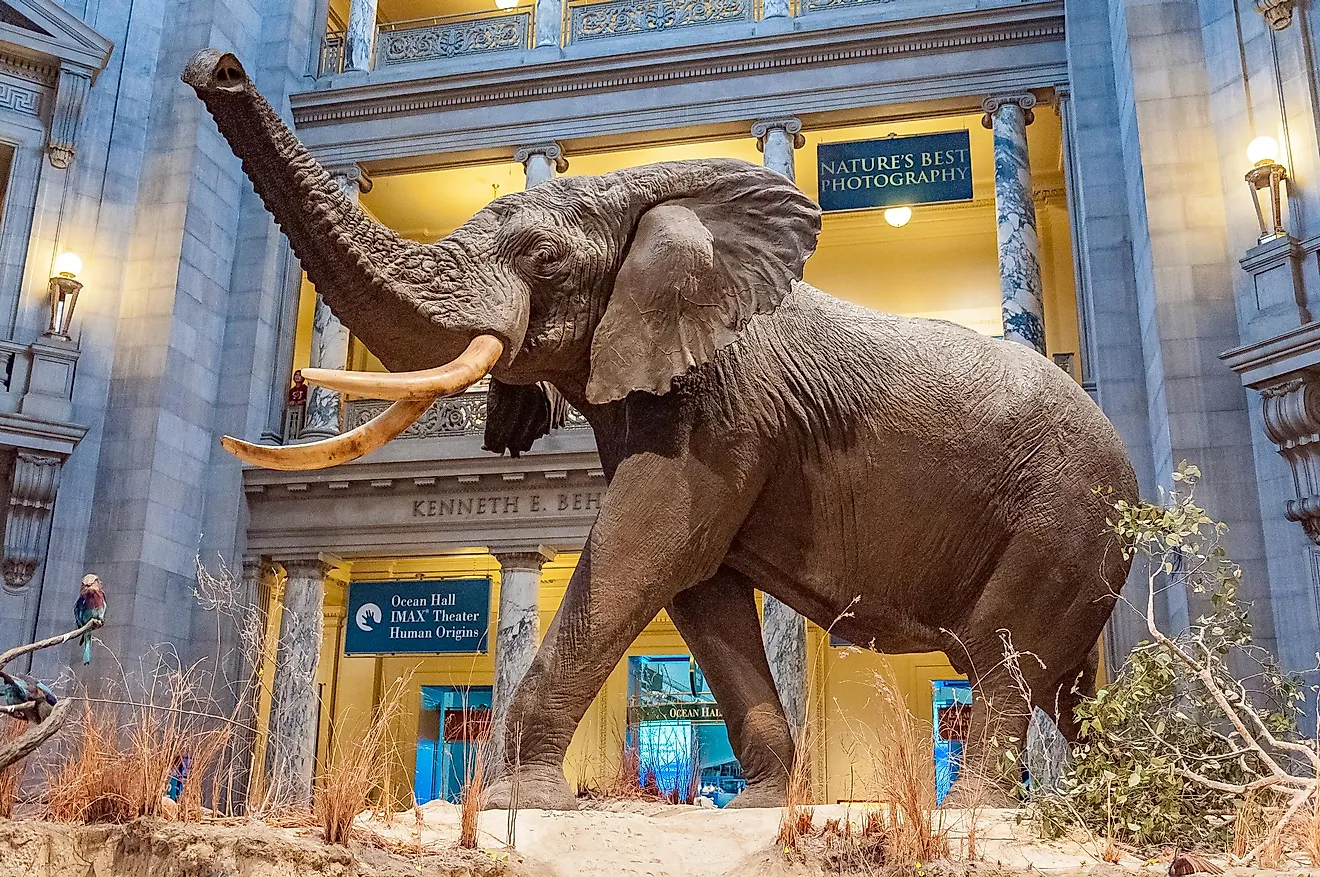
- The National Museum of Natural History collects whale earwax. These earwax plugs have rings like trees that allow researchers to decipher the whale’s age and environmental conditions, such as pollution. With advances in technology, scientists are continuing to discover information from the plugs about the unique lives of each whale. Visitors can find these unusual items in the Objects of Wonder exhibit.
- ‘That belongs in a museum!’ – One of the signature phrases of Harrison Ford’s iconic character, Indiana Jones, became a reality in 1989 as Ford and Lucasfilm donated Indy’s signature fedora and leather jacket to the Smithsonian. In 1999, they gifted the museum his bullwhip as well.
- Several major Hollywood movies have featured scenes filmed within the Smithsonian’s museums. The National Air and Space Museum was featured in both Transformers: Revenge of the Fallen with Megan Fox and Captain America: The Winter Soldier with Chris Evans. Meanwhile, Night at the Museum: Battle of the Smithsonian, starring Ben Stiller, was the first time the moniker ‘Smithsonian’ was allowed in the title of a feature film.
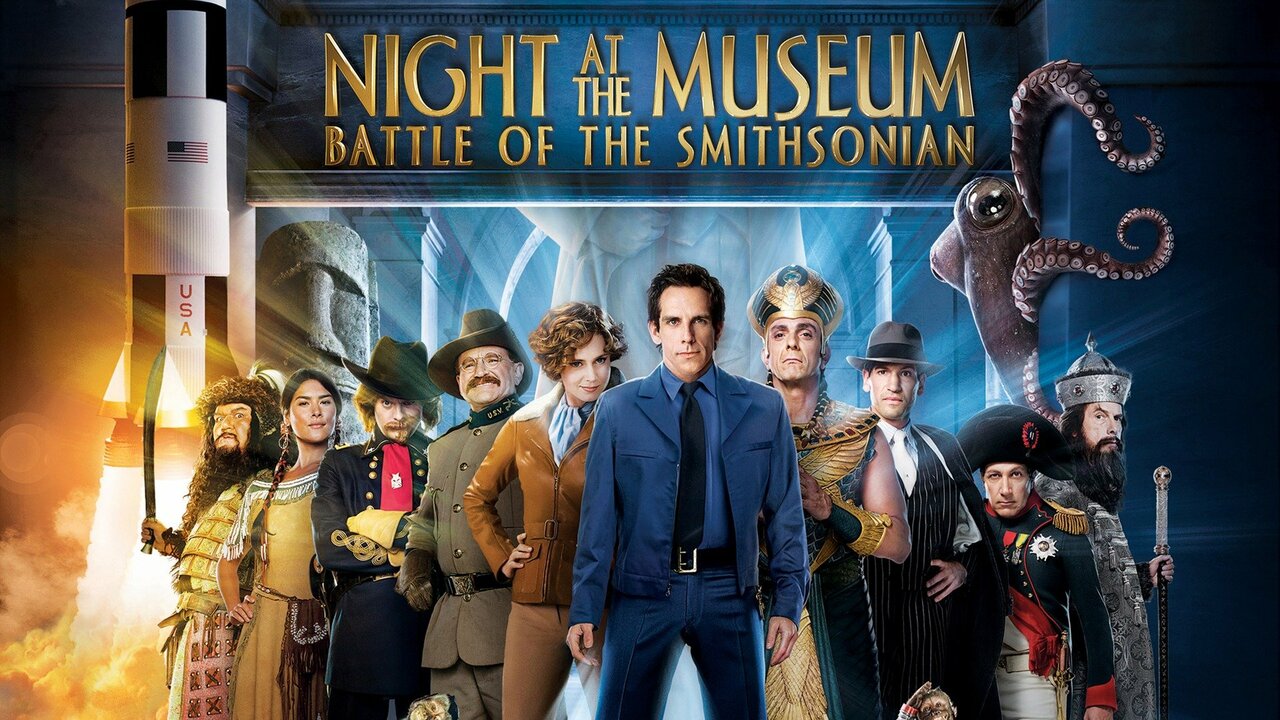
- There’s a new pop culture exhibition featuring Muhammad Ali’s training robe, Leonard Nimoy’s Spock ears, and Prince’s guitar.
- The Smithsonian’s National Zoo was originally on the National Mall. In 1889, William Temple Hornaday, chief taxidermist at the Smithsonian, brought 15 North American species to live on the National Mall behind the Smithsonian Castle, including deer, foxes, prairie dogs, badgers, lynx, and bison. The zoo’s current 163-acre plot in Rock Creek Park opened in 1891 and remains one of the oldest zoos in the United States. Admission is always free.
- The National Zoo contains 400 different species, totalling 2000 animals. Roughly 25% of the animals are considered endangered.
- Some of the animals at the National Zoo include North Island brown kiwis, cheetahs, Sumatran tigers, western lowland gorillas, Asian elephants, and giant pandas.
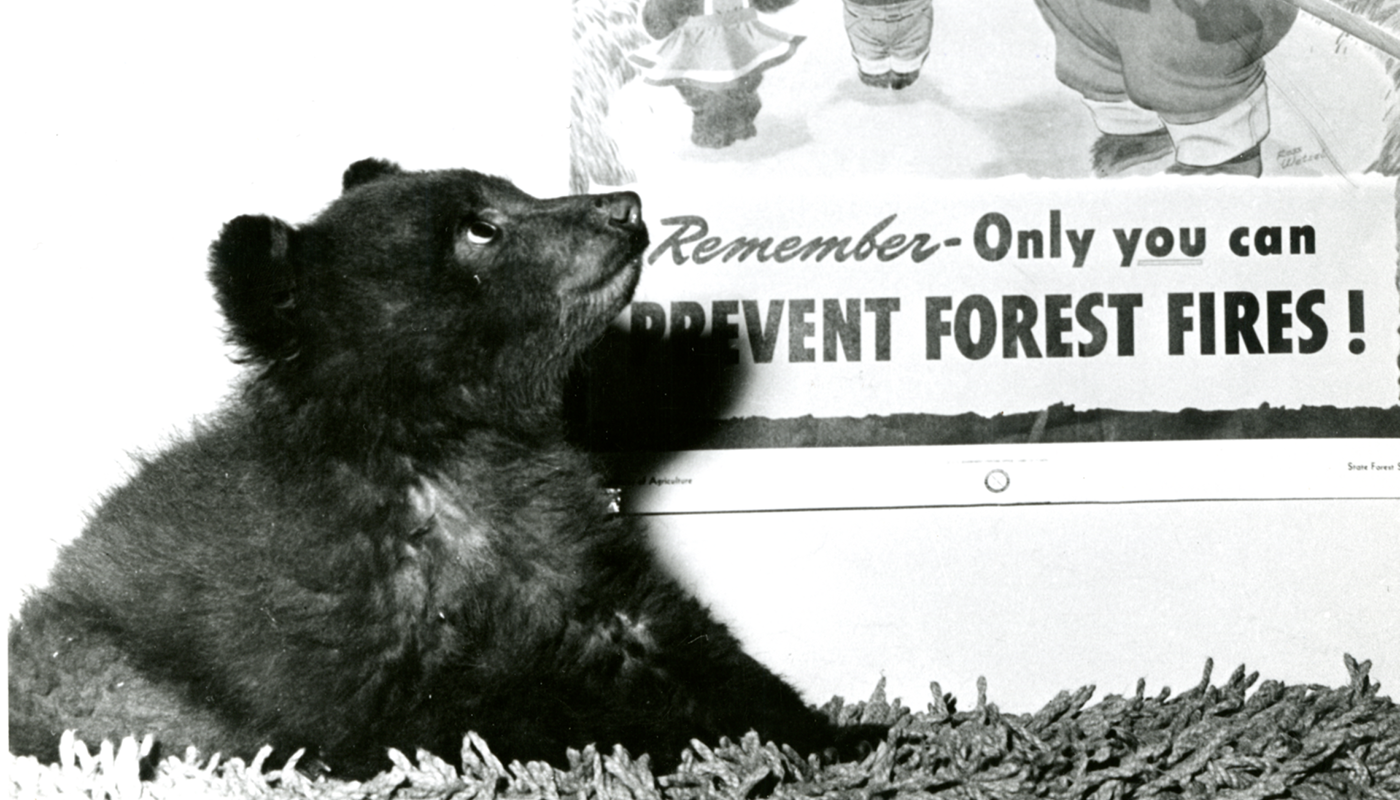
- Smokey Bear lived at the National Zoo. In 1950, a bear cub that survived a raging forest fire in Capitan, New Mexico, was adopted by the U.S. Forest Service and named Smokey after the popular ad campaign mascot of the era. As a living symbol of the effort, he spent his remaining 26 years at the National Zoo, a constant recipient of visitor attention and hundreds of jars of honey.
- Although the Smithsonian Institute’s museums are in the United States of America, the founder never visited the country. Even though James Smithson died in 1829, he would eventually make it to the United States. In 1904, 75 years after he died in Genoa, Italy, Smithson’s grave site was set to be displaced by a nearby quarry expansion. The Smithsonian Institution took the opportunity to ship his casket to America so he could be interred at the site of his legacy – the Smithsonian complex itself. Escorted by Alexander Graham Bell, the casket travelled 14 days by sea. His body was entombed in the Smithson Crypt, which the public has historically been able to view at the Smithsonian Institution Building, better known as the Smithsonian ‘Castle’.
- The Smithsonian Institute research facilities include the Smithsonian Tropical Research Institute and the Marine Station, Smithsonian Institution Archives, Smithsonian Institution Libraries, Museum Conservation Institute, Smithsonian Environmental Research Center, Smithsonian Astrophysical Observatory, Smithsonian Conservation Biology Institute, and the Archives of American Art.
- In Washington, D.C., the Smithsonian museums are open every day of the year except Christmas.
- Approximately 6300 people work for the Smithsonian in some capacity, and a large percentage are government employees.
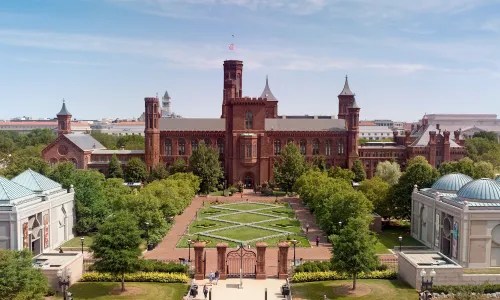
- The original Smithsonian Institution’s building was the Castle, located near the National Mall in Washington, D.C. It is a red brick building that looks like a castle, built after a design competition in 1946. It is still the headquarters of the Smithsonian Institute.

Beyond the biological phenomena, rare gems, and quirky curiosities that have come to define the Smithsonian as America’s treasure trove, there are also lesser-told stories of the globe’s diverse communities and cultures to be found in its collection. Founded in 1967, the Anacostia Community Museum (pictured) is dedicated to DC’s Anacostia neighborhood and “the people [living] furthest from opportunity” in the city. While sharing tales of local African American change-makers and creatives, it also shines a light on issues faced by urban communities all over the world.
From animals and art and heritage and aerospace, the Smithsonian has become America’s – and the world’s – greatest repository of history after nearly 200 years of operation. Travellers to Washington, DC, can enjoy free admission to all of the capital’s Smithsonian attractions, including the National Zoo, so you’d need to stay in the city for more than two weeks if you wanted to visit a different venue every day.
Thank you for visiting my blog and reading today’s post. I hope you found it as fascinating as I did, and possibly learnt a few new things too, just like I did! For now, though, I shall leave you to get on with your day 😃 Have a lovely week, and I shall see you again in two weeks 👋


 Peytons View
What a warm, openhearted update! 💫
Even while you’ve been under the weather and juggling so much for your parents, you’ve shared everything with such clarity and care that it almost feels like we were right there beside you. The way you balance the hard moments — the flu, hospital visits, and your dad’s reflux scare — with the bright ones, like your nephew’s award and your mum’s birthday in Newcastle, shows a beautiful strength of spirit.
It’s lovely how your writing keeps a gentle optimism running through every paragraph: even in the middle of challenges, you find room for pride, humour, and gratitude. Your thoughtfulness in celebrating your mum and noticing each family member’s little victories speaks volumes about your heart. 🌟
LikeLiked by 1 person
Thank you for your kind words, that really touched my heart ♥️ I’ve had a few bad days as of recent and reading your comment really brightened my day, so thank you for that.
I like to be honest with you and everyone that reads my posts, so if anyone that is reading it is going through anything that I’m raising awareness about or can relate to anything that either me or a member of my family are going through (whether it be an achievement or a medical issue etc..), I want people to know that they are not alone! 🙂
LikeLiked by 1 person
The Smithsonian is a lot of fun. I grew up in Baltimore which is about 40 minutes from Washington DC we would go to the museum about once a year.
LikeLiked by 1 person
Oh my god, that sounds so awesome, is there a specific part that you love? Is it as amazing as it sounds? 😀
LikeLiked by 1 person
Loved going to the air and space museum and the national museum of American history. Those were the favorites growing up. Would love to get back and go as an adult.
LikeLiked by 1 person
I would love to visit both of them! I love learning about history. I hope you manage to get to go back sometime and have fun 😃
LikeLiked by 1 person
Impressive.
LikeLiked by 1 person
Weather talk is not only limited too the Brits… We here in Netherlands can complain pretty easy about the grey skies too. Me especially as I have to cycle to work in torrents of rain on a daily basis. i wish you a speedy recovery with the flu, it really sucks.
LikeLiked by 3 people
Thank you for your kind words. Oh bless you, that must be horrendous having to cycle in that. I hope you stay safe on your travels and you don’t end up getting the flu too🤞🏼.
LikeLiked by 1 person
Funny thing is, I am back at work today after spending 3 days in bed with flu…
LikeLiked by 1 person
Oh bless you, I hope your feeling better now 🤞🏼
LikeLiked by 1 person
Hope you are feeling better now.
I was fortunate to get chance to visit a couple of Smithsonian museums.
LikeLiked by 2 people
I’m feeling much better now, thank you ☺️
Oh wow, that’s amazing 😁 I would love to visit them all!
LikeLike
Super cool post, my favorite fact about the Smithsonian is the first barcode scanned for purchasing an item was on a pack of wrigleys gum. The gum and the reciept are on display in the museum. The Smithsonian also has a magazine you can subscribe to that is amazing
LikeLiked by 2 people