


Good morning, hope everyone is well and has had a good week. The same cannot unfortunately be said for me as my mental health took a major blow, to be specific – Wednesday afternoon was when it all went downhill. We had to view a property we didn’t want to see in the first place because of our housing co-ordinator threatened us with homelessness, and when we got there, we made it very clear it wasn’t suitable for any of our needs, but she didn’t listen, instead she got very aggressive towards us. Getting up the hill to the flat, my mum almost collapsed from not being able to breathe right in front of her but she didn’t care one bit, then upon entering the building, I had a mental breakdown walking down the corridor as it brought back memories from a traumatic time in my life that after 10 years of hard work has gone down the drain, but again she showed not one bit of sympathy. We have since reported her and her supervisor for the threats and stress she has caused all of us. Away from that, we did manage to enjoy a bit of family time together whilst my dad was off which was nice, sadly we couldn’t venture too far as my shoulder seems to be getting more swollen as the days go on so we couldn’t go on any day trips like we usually would.
Talking about day trips actually brings me nicely to this week post… The UK has produced some of the most celebrated literary figures throughout history and has long been one of the top literary destinations in the world. William Shakespeare, Charles Dickens, JK Rowling, Jane Austen, and hundreds of others have entertained generations of readers. From childhood homes to popular watering holes, here are some of the top literary destinations in the UK that you must see for yourself.

The UK is known for having a huge literary history, from the home of the Brontë sisters to Harry Potter’s Platform 9¾ at King’s Cross Station, many places have helped create a a successful piece of writing and have provided a great source of inspiration to most writers with the vast selection of locations and places of interest on offer. Regardless of whether its an industrial town or breathtaking landscapes of the countryside, there’s a wide variety of literary locations that Britain has to offer to inspire you for your next literary trip.
Brontë Parsonage
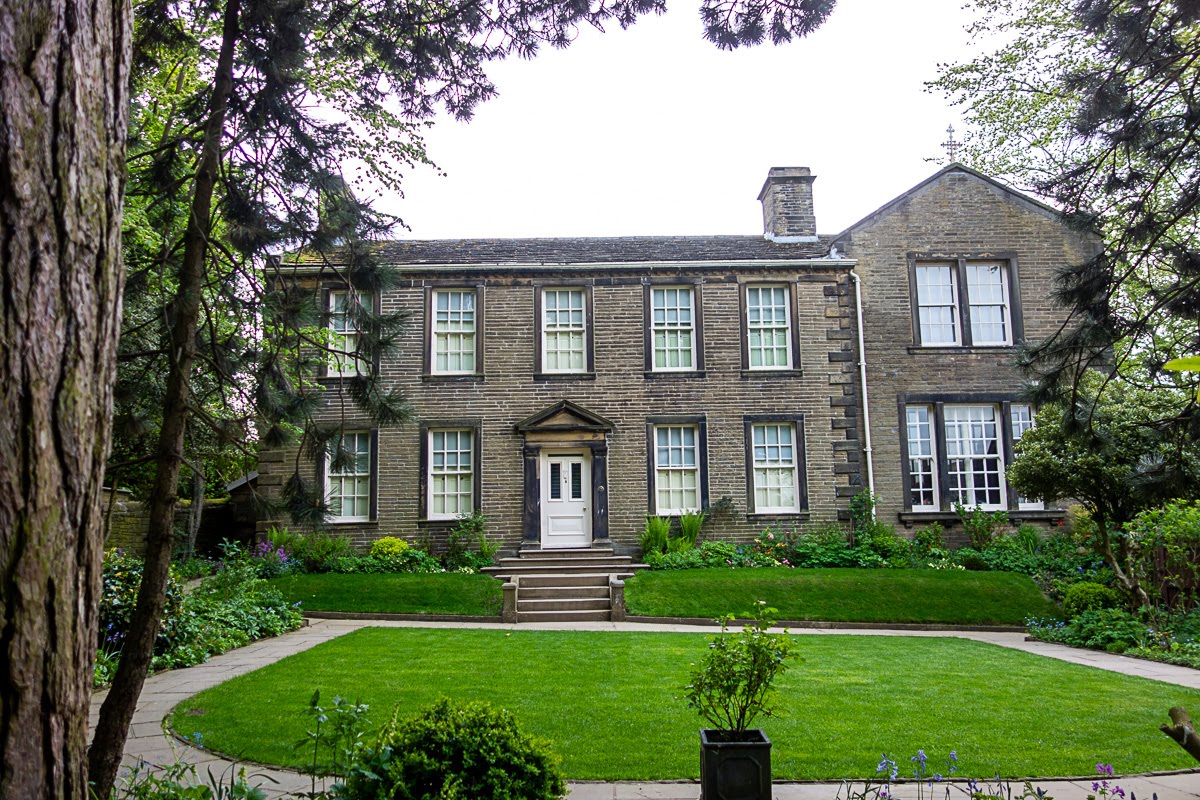
For a Brontë fan, the first stop for most is the Brontë Parsonage. Charlotte, Emily and Anne Brontë wrote some of their most famous books in Haworth at the Parsonage (now the Brontë Parsonage Museum), and the wild moorland landscape around Haworth was a rich source of inspiration for them. For modern fans, this is a cornucopia of delights. The Parsonage is largely restored to how it looked when the Bronte family lived there. And The Brontë Collections housed there are the largest and most important in the world. Particular treats are the tiny books of juvenilia, the table all three sisters sat down to write at as well as Charlotte’s dress. Considering how private the sisters were in their own lifetimes the Brontë Parsonage houses an amazing array of artefacts relating to their lives. After Charlottes tragic death, her husband set about cementing her legacy alongside that of her sisters. As such, from the 1850s onwards the Parsonage has been a pilgrimage site for ardent fans. Visiting Haworth and the Brontë Parsonage Museum is a must-do for any book-lover.
Jane Austen’s Chawton cottage

Jane Austen’s House in the picturesque Hampshire village of Chawton is one of the most important literary sites in the world. It was in this inspiring cottage that Jane Austen’s genius flourished and where she wrote, revised, and had published all six of her globally beloved novels. Step back in time to 1816 and follow in Jane’s footsteps; discover the rooms where she lived and wrote and see her writing table, jewellery, letters and first editions of her novels up close. Explore the pretty cottage garden, try your hand at traditional garden games and enjoy Regency dress up, bonnet designing and more! Browse the unique rage of gifts and books in the beautiful Gift Shop and relax with an ice cream on the lawn. Children can discover the secrets and stories of Jane Austen’s life and works via a beautifully illustrated trail and families can follow their visit with a trip to the village playground, set in stunning parkland just opposite the museum. A range of events take place throughout the year including tours, walks, workshops and talks.
Sherwood Forest
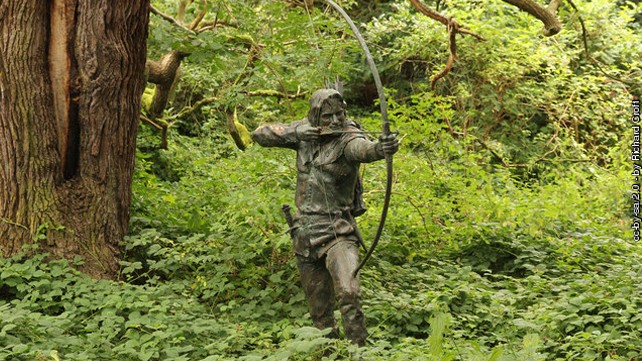
Sherwood Forest is a landmark thousands of years in the making, alive with nature, history and folklore, all waiting to be explored! It is known all over the world as the home of Robin Hood, and packed with stories, from the ancient oaks to the country’s most famous outlaw, and the work of the RSPB and their partners. It is also a National Nature Reserve – a place to play, discover and leave with tales of your own, inspired by 420 hectares of beautiful, precious, unique woodland. From the popular Robin Hood Festival, which attracts visitors from around the world to learning about woodland crafts or the rich history of Sherwood and Edwinstowe. Plus no trip to Sherwood is complete without seeing the Major Oak. This majestic giant has a canopy spanning 28 metres, a trunk 10m in girth and has watched over this special landscape for a millennium. It is a truly wondrous tree to see in any season. In fact, Sherwood has the finest collection of ancient oaks in Western Europe – that is, aged 400 years or more.
221B Baker Street
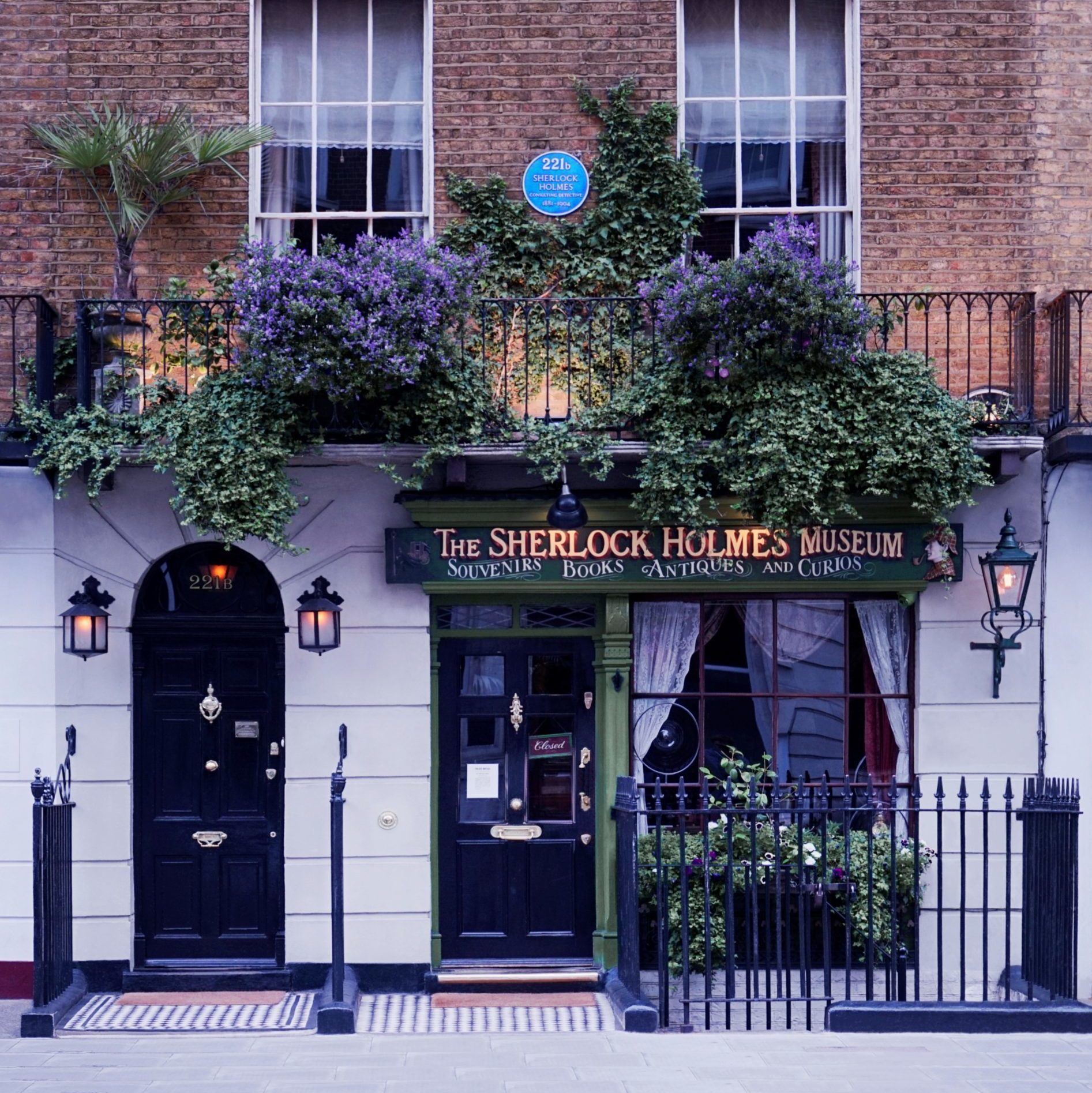
Escape the London bustle, step back in time, and enter a world of gas light, Victorian curiosities, and many of the objects, letters and characters from Sherlock Holmes’ most famous cases. Located at one of the world’s most famous addresses, the Sherlock Holmes Museum lovingly recreates the gas-lit world of London’s iconic detective and his Victorian surroundings. Immerse yourself in a treasure trove of items relating to Sherlock and the famous cases he solved, in the very setting which inspired them. From the cheery London ‘Bobby’ in traditional uniform at the door, to the welcoming, knowledgeable guides in period costume guiding you through the rooms, immerse yourself in the gas-lit world of London’s iconic detective. The small and intimate setting of 221B is filled with authentic Victorian furniture and curiosities, and a treasure trove of items belonging to Sherlock, his friends and adversaries. Whether you’re a die-hard devotee of the original stories or a more recent Cumberbatch convert, step back in time to see where some of Holmes and Watson’s most famous cases began and imagine what life was like in a fascinating bygone era. The Museum also boasts the largest collection of Sherlock Holmes gifts and memorabilia in the world.
Shakespeare’s Birthplace – Stratford-upon-Avon
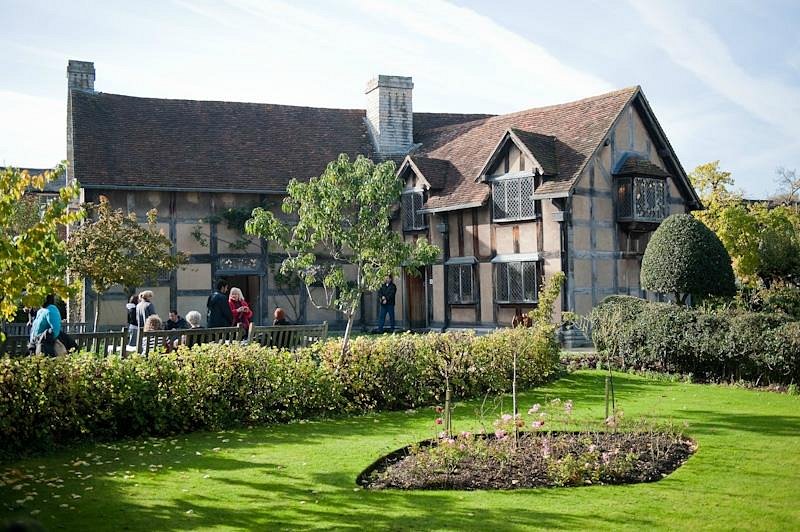
William Shakespeare’s Birthplace is the most visited of Stratford-upon-Avon’s Shakespeare-related attractions. It is the house where Shakespeare was born and raised and it contains an exhibition about the Bard’s life. The house is believed to date from the mid-16th century and is built in the half-timbered wattle and daub style typical of buildings from the Tudor period. It belonged to William Shakespeare’s parents, John and Mary, and at the time it was the largest house on Henley Street. The house was built to accommodate John Shakespeare’s workshop where he worked as a successful glovemaker and it also played an important role in William Shakespeare’s early life. William Shakespeare was born in the house in 1564 and he grew up here. After marrying Anne Hathaway, Shakespeare lived in the house for the first five years of his marriage before he moved to London. The Famous Beyond Words exhibition features displays about Shakespeare’s work and his legacy and includes artefacts including an early printed folio and a 9m- (29 ft)-long timeline detailing Shakespeare’s 38 plays. The Shakespeare and Me section of the exhibition includes an interactive video exhibit that highlights the personal ways that people around the world respond to Shakespeare’s work. From here you could go on a 25 minute walk to Anne Hathaway’s house.
Royal Shakespeare Theatre
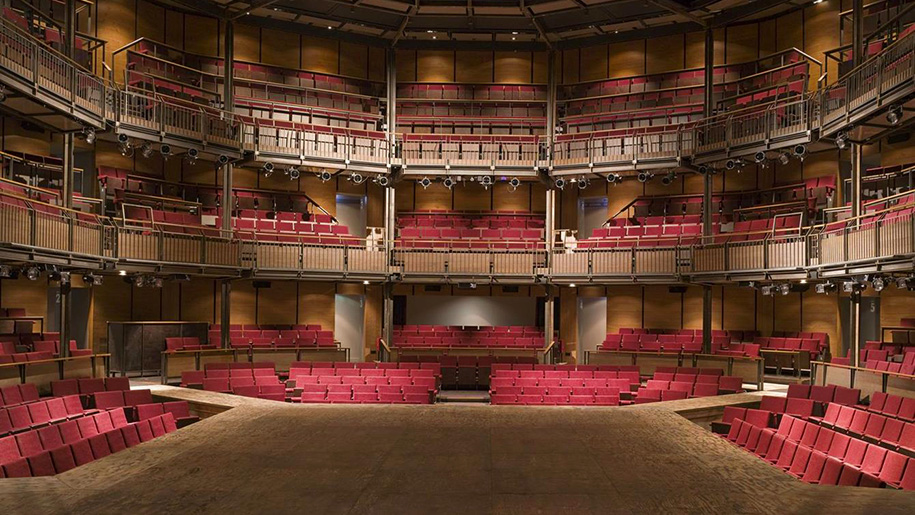
Explore the building and immerse yourself in the workings of theatre while hearing stories of individuals who have shaped the RSC’s unique history – from well-known performers, skilled professionals to our incredibly talented staff. No day at the RSC is the same so depending on what is happening on the day of your tour, you will get to see a part of the building that is not usually accessible to the public. While you’re there you could be led through the Royal Shakespeare Theatre to discover more about the auditorium and backstage, or the state-of-the-art Costume Workshop which delves deeper into the expert craftmanship that goes into costume making from past to present, or, since April 2023, you could be taken into the newly transformed Swan Theatre. Whatever you end up doing there’s plenty to see and do.
Pooh Sticks Bridge, Buckhurst Park Estate
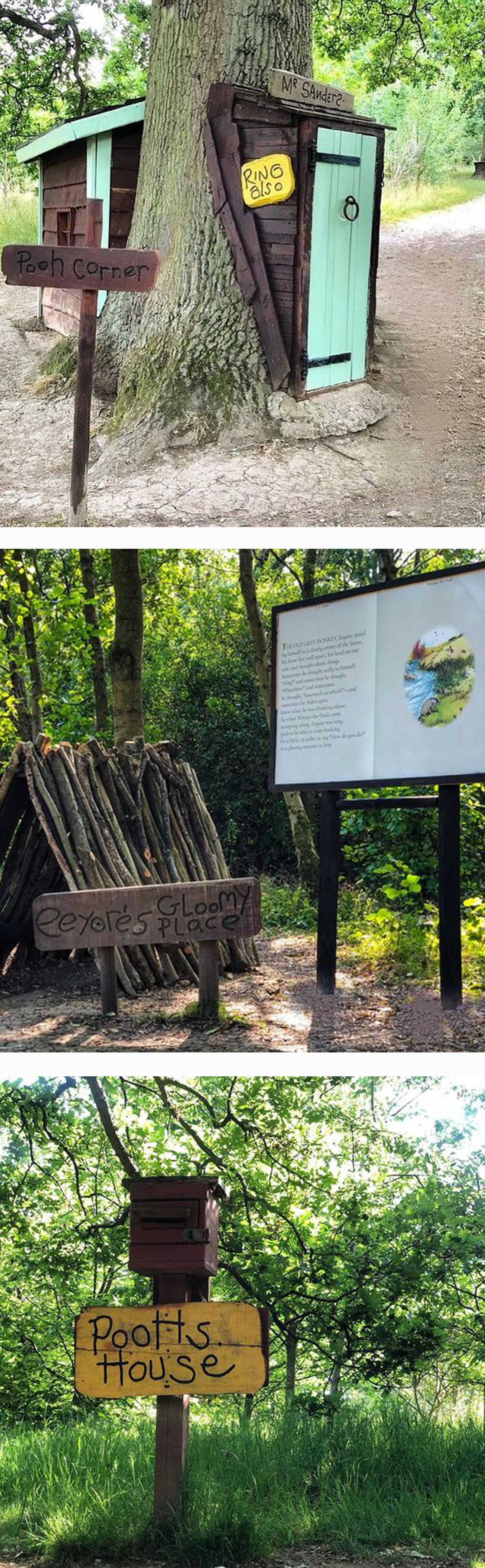
The Winnie the Pooh Trail to find pooh sticks bridge is a must for any A.A. Milne fans. It’s the perfect trail for families as it’s just a short walk and is pushchair friendly. You can race your Pooh Sticks under the bridge in the Ashdown Forest, made famous by the classic Winnie the Pooh story where Pooh Bear plays the game with Christopher Robin, Tigger and Eeyore. It’s not a long trail to Pooh Bridge and is perfect for pushchair-friendly walks. The surrounding forest is very beautiful. Keep your eyes peeled for any Winnie the Pooh finds such as Owl’s house, which is up in a tree on the right-hand side along the way. If you cross the bridge and up a narrower path, you can find Pooh’s House inconspicuously tucked away about 100 metres or so up the path. In a little cutaway to the left hand side, you can step into the hedge and here you’ll find Winnie himself with his little house and even his own mailbox! You can also spot the homes of other characters too on the way to Pooh Bridge.
Beatrix Potter‘s Hilltop House
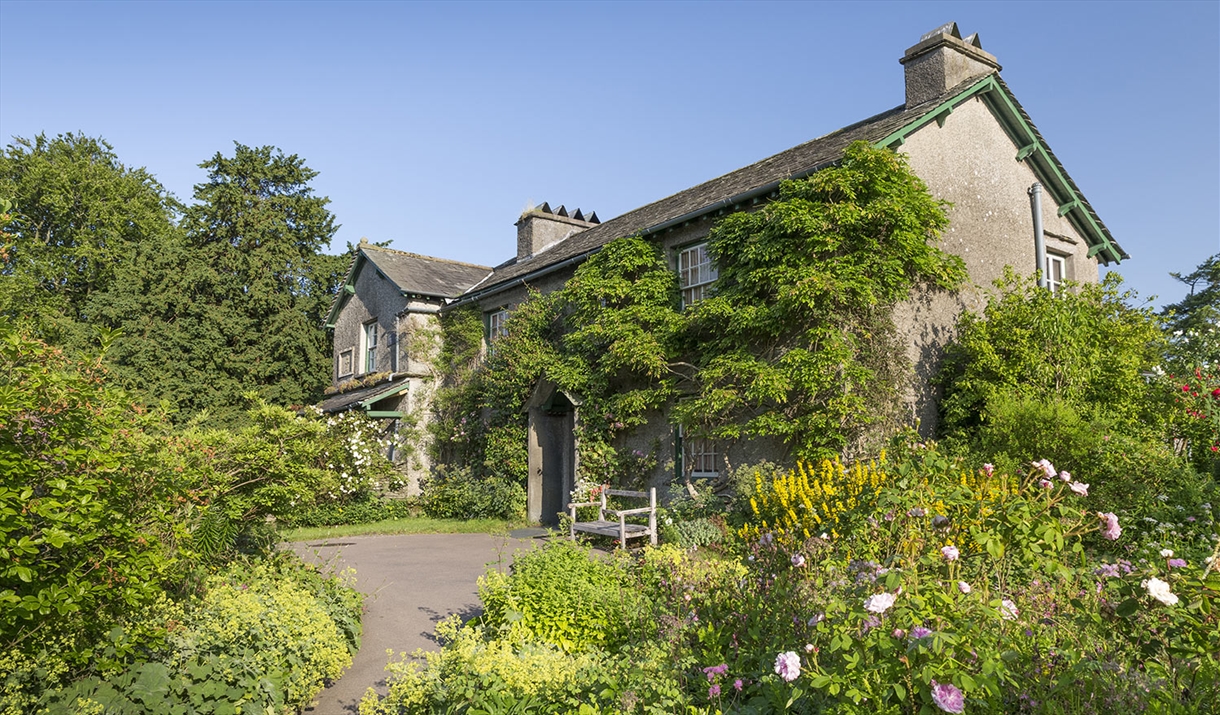
National Trust Hill Top is a time capsule of Beatrix Potter’s life. Full of her favourite things, the house appears as if Beatrix had just stepped out for a walk. Every room contains a reference to a picture in a ‘Tale’. Bought with the proceeds of Peter Rabbit in 1905, Beatrix used Hill Top and its surroundings as inspiration for many of her ‘little books’ – you’ll recognize the rhubarb patch where Jemima Puddle-Duck laid her egg and the garden where Tom Kitten and his sisters played! Beatrix Potter’s garden is a haphazard mix of flowers, herbs, fruit and vegetables. You’ll recognize the rhubarb patch where Jemima Puddle-Duck laid her egg, and the garden where Tom Kitten and his sisters played.
Harry Potter’s Platform 9¾

As any fan of J.K. Rowling’s bestselling series will know, King’s Cross is where students of Hogwarts School of Witchcraft and Wizardry catch the Hogwarts Express. In the wizarding world, Harry and his friends get to the platform by dashing through a brick wall between platforms 9 and 10. Meanwhile, in the real King’s Cross, platforms 9 and 10 are separated by tracks, but you can find a platform 9¾ on the wall in the station concourse. Look out for a luggage trolley embedded in the wall, and make-believe that you are off to start your magical school journey. The trolley is accessible at all hours, and you don’t have to pay to take your own photographs. You can have a professional photograph taken with a scarf in your house colors, which is then available for you to view and purchase inside the Harry Potter shop next door.
The Jane Eyre Trail

This circular film and literature walk takes you to the places visited by Charlotte Bronte that appear in Jane Eyre. You can also recreate the famous scene from Pride & Prejudice ‘on location’ above Stanage Edge and visit the grave of Robin Hood’s sidekick Little John. Explore a Romano-British village, Norman fort, historic church and breathtaking moors on the way. The trail has a clear map linked to photos and information to guide you around Hathersage and its nearby moors – all featuring in Jane Eyre or Pride & Prejudice. Climb the cliff where Keira Knightley surveyed the Peak as Elizabeth Bennet in Pride & Prejudice. Follow the road to lead you to one of the many Eyre family homes North Lees Hall, featured significantly throughout the storytelling of Jane Eyre. Other places you’ll come across along the trail include; Brookfield Manor, Moorseats/Moor House, Norman Fort and Hathersage Churchyard.
Greenway, Agatha Christie’s Devon retreat

Agatha Christie called Greenway ‘the loveliest place in the world’ and treasured it as a holiday home for her and her family. They filled it with items dear to them, brought to Greenway from Ashfield, Agatha’s childhood home, and from their travels and extensive collections. It’s easy to imagine Agatha and her family spending relaxed summer days or cosy Christmas holidays here. Everywhere you turn in the house there’s an item waiting to speak to you about its history. The Drawing Room is furnished with items from Agatha’s childhood home in Torquay, Ashfield. This is where the family would gather for games and to hear the first readings of Agatha’s new manuscripts. It’s also home to Agatha’s Steinway piano. Although Agatha trained as a concert pianist, she was too shy to perform in public. Her Steinway is a Boudoir Grand Piano and dates back to the late 1800s.
Charles Dickens’ Birthplace Museum

The Charles Dickens Birthplace Museum is the perfect place to start exploring and experiencing the work of one of England’s most famous and best-loved writers. Pay a visit to the small terraced house where, in 1812, the famous novelist Charles Dickens was born. The home in which he lived for a short time has been lovingly restored and furnished to illustrate middle-class tastes of Dickens’ era. The furniture, ceramics, glass, household objects and decorations faithfully recreate the Regency style which Charles’s parents would have favoured, although their actual possessions have long since been dispersed. There are three furnished rooms: the parlour, the dining room and the bedroom where Charles was born. The exhibition room features a display on Charles Dickens and Portsmouth, as well as a small collection of memorabilia. This includes the couch on which he died at his house in Kent, his snuff box, inkwell, and paper knife – poignant reminders of an author celebrated for his prodigious talents and creative output.
Dracula & Whitby
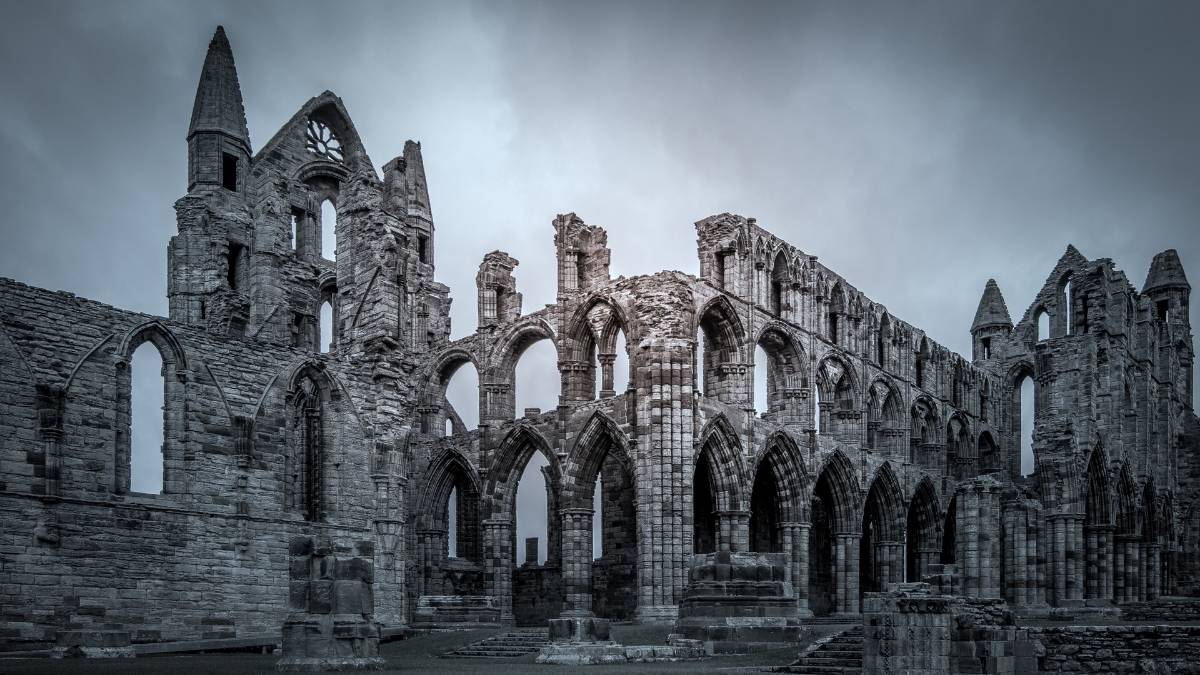
Dracula and Whitby are forever connected, thanks to Bram Stoker’s 1897 novel. The story is well known worldwide and brought the idea of an undead, blood-thirsty creature into popular culture. Stoker found some of his inspiration for his novel while staying in Whitby in 1890. He’d been recommended to stay in our coastal town by actor Henry Irving after the two had finished a theatrical tour of Scotland. By the time he came to Whitby, Stoker was already planning a vampire tale. He used his time in here to research and develop his ideas. Until his Whitby stay, his protagonist was a going to be called Count Wampyr. If you wander through the graveyard at St Mary’s church next to Whitby Abbey, you’ll find the a tombstone of a man named Swales. This name, among others, was noted by Stoker during his stay. Revisit Dracula and you’ll find that it’s poor Swales who becomes Dracula’s first Whitby victim. There are several Dracula related activities you can get involved in during your stay in Whitby, and the connections with the vampire are clear to see throughout the town.
The Jane Austen Centre

The Jane Austen Centre in Bath focuses on the life and works of Jane Austen, as well as the Regency period in which she lived. A constantly evolving attraction, the Jane Austen Centre aims to inform and entertain visitors. A visit to The Jane Austen Centre offers you a snapshot of life during Regency times and explores how living in this magnificent city affected Jane Austen and her writing. Jane Austen, 1775 – 1817. Their Famous costumed Guides will take you on a journey through the Centre. You can have fun dressing up, tasting some Regency food, writing with quill pen and ink and even having your picture taken with the world-famous Jane Austen waxwork while finding out about England’s most famous author.
Keats House
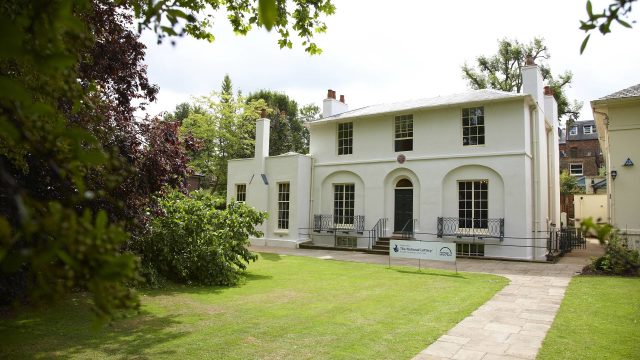
Keats House is the beautiful Regency villa where Romantic poet John Keats found inspiration, friendship and love. Visit the house to discover his life story, and experience what inspired him to write some of his most-loved works. Built circa 1815 and originally named Wentworth Place, the house reflected the gradual suburbanization of Hampstead village then taking place. It was at Wentworth Place that Keats composed his mysterious and magical lyric ‘La Belle Dame sans Merci’, finished his wonderful narrative poem The Eve of St Agnes, and wrote his great odes of spring 1819 including ‘Ode to a Nightingale’. Now more than two hundred years old, Keats House has always welcomed poets. Here Keats was visited by his poet-friends John Hamilton Reynolds, Leigh Hunt, and Barry Cornwall. The painters Joseph Severn and William Hilton came too. And it was here that Keats fell in love with his ‘bright star’ Fanny Brawne.
Charles Darwin’s Down House

Step into the very rooms where Charles Darwin worked and lived, including the study where he wrote On the Origin of Species, and trace his story with a fascinating exhibition about his life and work. The house is surrounded by beautiful gardens that acted as Darwin’s ‘living laboratory’ – see recreated experiments and discover how his observations helped him develop his groundbreaking theories. There’s plenty for everyone to enjoy, with a family trail, Victorian clothes to try on and lots of space to play on the lawn outside.
The British Library

The British Library is the UK’s national library. It’s home to over 170 million collection items covering every age of written civilisation, from Magna Carta, to Jane Austen’s notebooks, to lyrics handwritten by the Beatles. Every year the British Library hosts a range of free and ticketed exhibitions. All year round, you can visit the Treasures Gallery – ‘the holy grail for history buffs’ (Time Out). Discover iconic items such as Leonardo da Vinci’s manuscripts and letters by Ada Lovelace. Or visit the Sound Gallery, a free immersive experience where you can listen to some of the 7 million sounds in the Library’s collection, handpicked by curators. As the library is so big, if you have time, you can wander up a few floors to the Alan Turing Institute, now based in the Library. The Living with Machines project – a collaboration between the Alan Turing Institute and the British Library – is one of the most ambitious humanities and science research initiatives ever launched in the UK.
Poet’s Corner

Poets’ Corner, Westminster Abbey, is a place of pilgrimage for literature lovers. More than 100 poets and writers are buried or have memorials here. It was originally established in the year 1400 as the burial place for Geoffrey Chaucer but has since been expanded to include other famous authors. Today, there are more than 100 writers and poets who have been commemorated here. Many of those buried or remembered in Poets’ Corner are world-famous, like William Shakespeare, Jane Austen, the Bronte sisters and Charles Dickens. Apart from authors and poets, some actors and clergymen are also buried here, along with the musician, George Frederic Handel.
I hope this list of eighteen literary places in England has inspired you in some small way. Britain has been the birthplace of much of the world’s greatest literature – from Harry Potter’s magical world to Agatha Christie’s murder mysteries – so there is lots to see.
Thank you for visiting my blog and reading today’s post. I hope you all have a lovely day, and I shall see you next week!

 Peytons View
Great post! Thank you for doing Literary Tour of the U.K. These are definitely some places that I would like to go and visit. 👍👍👍
LikeLiked by 2 people