Hello, everyone! I hope you’re all doing well. 🤞🏼 Unlike last time, it feels like it’s been ages since my last post. Has anyone been up to anything fun? I’d like to say my family and I have but we didn’t really do much to start with as it’s been too hot 🥵 (British people are not use to the amount of heatwaves we keep having) ☀️ I did end up having to go back to the hospital because of my knee which has actually got more swollen and painful in the last two weeks 😩I’ve now been diagnosed with having soft tissue damage, which if it’s no better after two more weeks, they want me to go back for further investigation, but hopefully it won’t come to that 🤞🏼. I said in my last post about getting some help for my depression, well I’ve now been put on some different antidepressants to try and help, which are also used to help you sleep and boy do they work (I’m not loving that part) as it’s affecting my ME/CFS quite badly, so I’m going to have to mention that when they phone for a review on how it’s going in a couple of weeks.
On another note, we visited a city we’d never been to before – Hull, East Yorkshire – and, because the weather was so sunny and warm, it felt like we were on holiday 😎. We had a fun time while we were there. We’ve decided we’re definitely going back again sometime soon to look around further! Other than that I’ve been trying to rest my knee as much as possible which hasn’t been an easy task as I don’t like to sit still too much, but I did manage to sit still long enough to binge watch The Old Guard (which we’ve seen multiple times) and The Old Guard 2 which dropped on Netflix at the beginning of this month. I’m not going to spoil anything for anyone who hasn’t seen either film, but they’re so good and action-packed, I’d definitely recommend watching them 👍
We also had couple of power cuts due to the weather which wasn’t fun, and then at the weekend my dad was involved in a car accident when another car collided into him sending him crashing into the back of a bus, thankfully no-one was injured, but my dad was understandably shook up and traumatised by the whole thing which is affecting his sleep, and he’s still a bit wary today of going back on the road and getting behind a wheel, which we (my mum and I) are trying to help him get through, but we know it’s going to take a bit of time.
Before I get on with today’s post, I just want to give a shoutout to my beautiful big sister whose birthday was this Sunday just gone, we unfortunately didn’t get to see her on the day, but we are seeing her in just over a week which I can’t wait for, to be able to get to spend the day with her and spoil her a little 🤏will really make me happy 😊
Anyway, shall we move on to this week’s post… Which is actually inspired a little bit by my sister, as she also celebrated her seventh wedding anniversary with her husband in the last two weeks as well, which gave me the idea for a post on wedding photography tips!
Of the many elements of a wedding day, the photos taken are perhaps the most meaningful to the couple. These images, captured in the most emotional of moments and kept safe for years to come, are heirlooms to hand down and reminders to hold close. But at heart, they are return tickets to the very best moments of two lives now lived as one. The couple entrusts the photographer to create these time-capsules, toeing the line between art and archive, elevating and preserving all at once. For the aspiring amateur, it’s a balancing act that comes with its own unique learning curve: one that begs skill, experience, and, most of all, a love for the craft. Here are 16 tips to get that perfect day just right!

Make It Legal
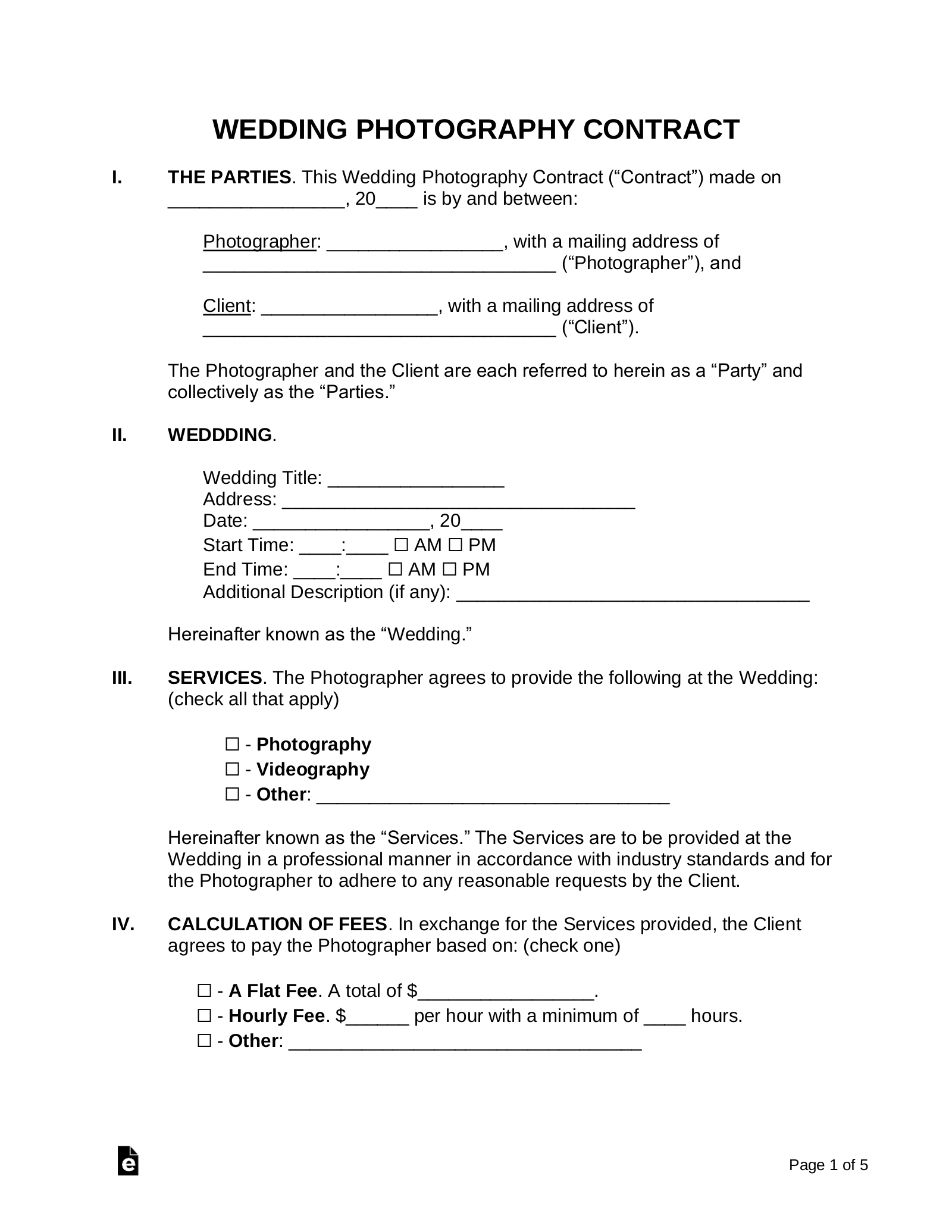
One of the biggest beginner mistakes a photographer can make when photographing weddings is not having a signed contract. When you have a legally binding contract, it sets an agreement between you and the client. When your client signs a contract, it means they agree with your role and responsibilities for the wedding. The contract clearly states your tasks and what your clients will receive. It serves as a protection to both parties, especially since there’s money involved.
Research Your Locations

Your contract should detail where the ceremony and reception are taking place. Use this information to research photography policies and lighting conditions in these venues. Do an in-person walkthrough if possible, or preview the locations online if the venues are too far away for a pre-wedding visit.
Map Out Locations and Know Time Between Them
If you need to cover weddings with multiple locations, mapping out venues and allotting travel time can work wonders. Consider traffic or unexpected delays when you move from one place to another. Check with a GPS or Google Maps to see the estimated travel time from going to the venue for preparation, to church, and the reception venue. When being hired for photography for a wedding, the last thing you want to do is show up late because you miscalculated how long the travel time would take!
Places of Worship
Ask venues about their photography policies! Places of worship, in particular, often have strict rules about when – and from where – you can photograph. Communicate any restrictions to your clients well before the wedding day. If your clients’ church doesn’t allow photography during the wedding ceremony, for example, setting your clients’ expectations will prevent disappointment later.
Organize Your Gear
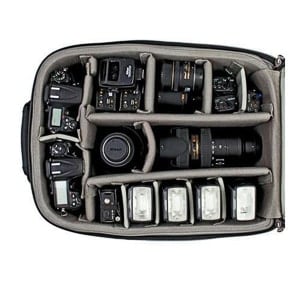
Do you have the gear you need to make the photographs you plan to make? Maybe you want to make macro photographs of the couple’s rings, but don’t own a macro lens. Plan ahead to purchase or rent one!
The Basics
As a wedding photographer, you must bring the essential gear, including:
- 2 camera bodies (can be DSLR or mirrorless)
- At least 2-3 lenses with different focal lengths
- At least 1 flash with a diffuser
- Memory cards
- Chargers and spare batteries
- Tripod
- Reflector
- A camera bag to keep all your gear organized
Backup Equipment
Have plenty of memory cards (or film), batteries, and backup equipment. Even the latest and greatest camera can fail when you least expect it. Be prepared with a second camera and lens(es). Make sure this backup gear is accessible while you’re shooting – not hidden away in the back of your car. That won’t do you any good if your camera zonks out midway through the ceremony!
Don’t Rely On One Battery and Memory Card
One of the worst things that can happen while photographing a wedding is running out of memory card space or having a battery die. This is something overlooked by beginners, which results in them scrambling during the event to charge a battery or delete photos.
You can’t ask for the officiant or coordinator to wait for you while you charge, so bring at least two fully charged batteries, as well as multiple memory cards. While it’s okay to charge a battery during an event, make sure that you still have another battery to use so you can continue with the wedding photography.
Have Multiple Lenses
Use a wide-angle lens for group shots and interiors and a different one with a longer focal length for candid and portrait shots. If you can’t bring two cameras with you, your best option is to take two lenses with varying focal lengths. Practice changing lenses fast because it can save you precious time.
Set Up Safeguards

Weddings can be unforgiving, but you can eliminate some of the high stakes by knowing where you’re most vulnerable. Do you forget your belongings? Label all of your gear with your name and phone number. Tend to run late? Get there 20 minutes ahead of time, enjoy a coffee, and get started early. Charge extra batteries the day before and never plug them in at hotels and venues (unless they’re right by your gear). Shoot on two memory cards to create redundancy. Don’t worry if you mess up! Mistakes are how we evolve.
Cooperate With Other Vendors
Other wedding vendors are going to be your best partners at the event. They can either make the job easier or harder, so you must treat them with respect throughout the entire event. After the event, you can continue building a relationship with them for future weddings!
Build a good relationship with vendors like:
- Videographers
- Hairstylists and makeup artists
- Florists
- Bakers
- Officiants
- Venue coordinators
- Wedding planners
- Caterers
- DJs and bands
It’s always a great idea to pass along your contact information to other wedding vendors. Of course, be courteous and ask for their business cards as well. Design a striking yet professional business card that other people won’t end up tossing aside.
Incorporate Vendors’ Gorgeous Work
Wedding photographers will likely take photos of details that make up the whole wedding. Remember that your clients paid for other vendors’ creativity as well, so they would like to have a visual remembrance of it. Photograph the catering team serving food, hair and makeup artists styling the wedding party, or the band performing during the first dance. Other vendors will love you for capturing moments of them in action. Aside from that, images like these spark feelings and memories when your clients see them.
Share Vendor Photos and Tag Them on Social Media
When you upload the clients’ images on social media, tag them and the vendors on the post. In some cases, vendors will share your actual post, which can increase page engagement and views. There are cases when they’ll ask permission to upload photos on their websites, and they will include a backlink to you. Either way, it can result in new client inquiries and partnerships.
Use the Right Camera Settings

Shoot in RAW
RAW files are uncompressed data files that contain all of the image information. Since RAW data are unprocessed, they look flat and lack contrast. They’re like a film negative! The advantage is that you get more flexibility and range when it comes to editing your photos because RAW files capture more dynamic range in a scene. All visual information remains intact on the file, so you have leeway in adjusting sharpness, brightness, contrast, shadows, and colors.
Use Varying Shutter Speeds
A fast shutter speed is a good starting point for wedding photography because you’ll capture lots of movement. For starters, set the shutter speed to 1/200 or faster. Then try shutter priority mode to really freeze moments. Set the shutter speed to 1/500th of a second to capture active moments. You can tweak these settings to capture laughter, dancing, twirling, and other movements.
Experiment with a Range of Apertures
The aperture dictates what part(s) of a photo are in focus. If you want to show the grandeur of a ballroom, make sure you’re putting everything in the scene in focus. In that case, you’d use an aperture of f/8 or even f/16.
When you’re taking photos of people and details, you can opt for high apertures to create depth by blurring out the background. In that case, try an aperture of f/2/8 or f/4. On the other hand, lower apertures isolate the subject, making it the whole focus of an image. This is why it’s best to use apertures between f/1.8 to f/2.8 for bridal portraits. In this way, you can bring in more light while reducing unwanted distractions.
Adjust your ISO
Here’s another wedding photography tip for beginners: keep the ISO under 1000 whenever possible to keep the digital artifacting at a minimum. However, you can always increase the ISO depending on the situation, especially in low-light venues. Want to capture the moody glow of candlelight? Consider bumping up your ISO to 3200. An entire ISO range is available at your disposal, so maximize it and try new things!
For indoor weddings, try to keep ISO between 400-800 to achieve beautiful, grain-free portrait photos. If you go higher than that, you may get more digital noise (though, this depends on your camera, so try a few options).
Shoot Off-Camera Flash
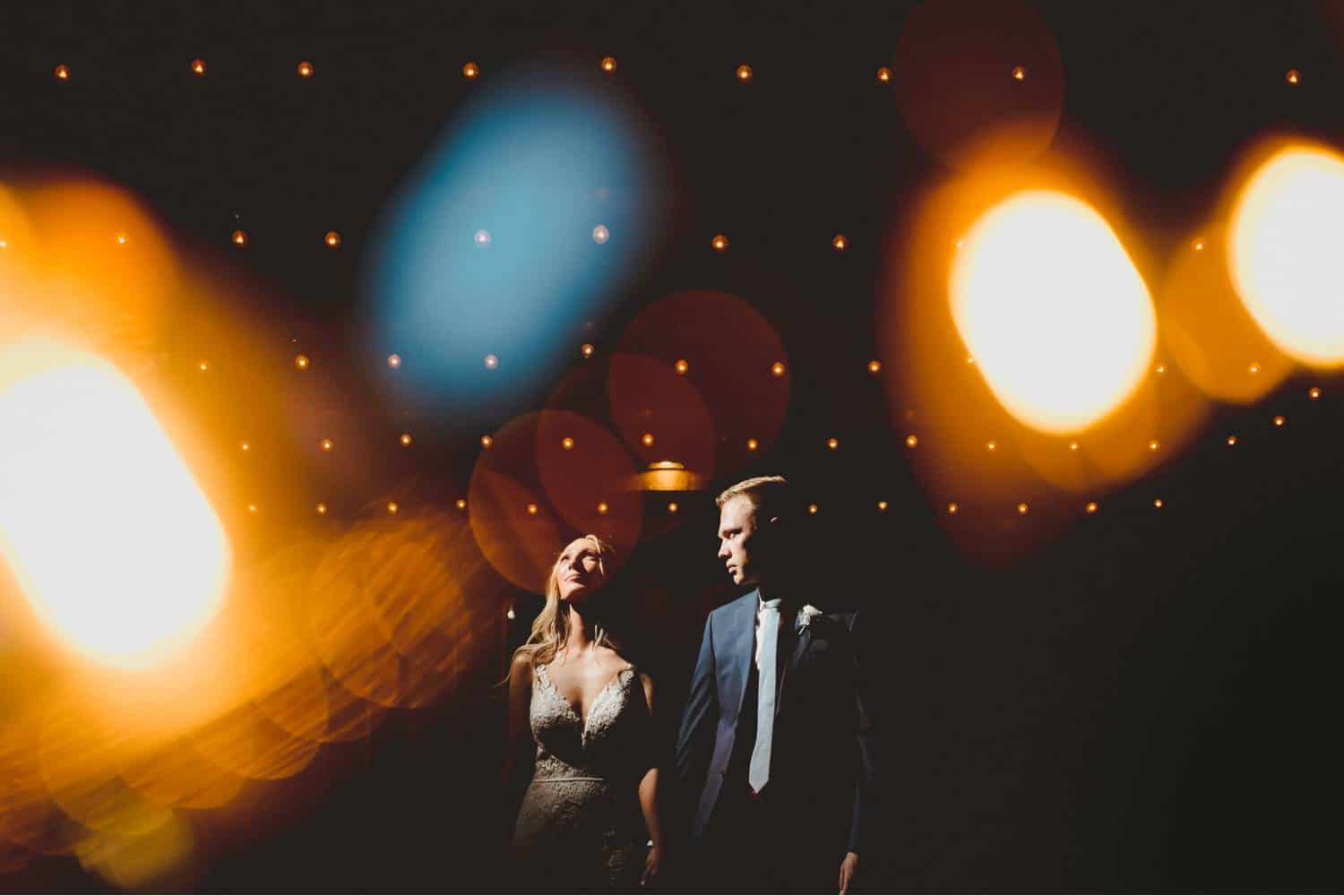
What separates the pros from the novice photographers is mastering the tools. In a world full of filters and automatic settings, the one thing that you can’t cheat as a professional wedding photographer is having the technical know-how to shoot in low-light scenarios and capture the action. It creates a more flattering light source than a direct, front-facing flash and helps separate the subject from a sometimes busy background. There are many techniques for doing this. Some involve an assistant shooter, and some do not. YouTube is a great teacher; start there. Know what kind of batteries you need for your remotes, bring plenty of extras, and make sure that everything is fully charged on the big day.
Ask for a Photo Wishlist
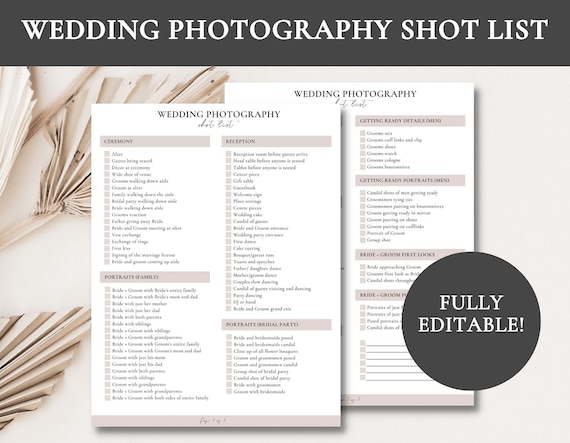
As a photographer, it’s your job to take photos you know are necessary for events while also accommodating some requests from the couple. One of the common mistakes of a newer photographer is relying on instincts alone. While you may have superb memorizing skills, there’s still a chance you might forget to shoot something during the event, especially if it’s something you didn’t think of in the first place. To help you prepare and practice, here are some wedding photography tips and ideas for images you can take throughout the big day:
Detail Shots
When you arrive during the preparation, the couple, family, and wedding party might just be starting with hair and makeup. This is a great chance to take photos of details like:
- Close-up shots of the rings, cord, and veil
- Bouquets, corsage, and other flower arrangements
- Invitation
- Hanging dresses and suits
- Shoes
- Perfume, jewelry, cufflinks, and other accessories
While they look like simple items, there might be deeper sentimental value. These things serve as important reminders of the personal details of the wedding. Make sure to include these in your shot list because you’ll never know what emotions may stir from seeing the images.
Bridal Coverage
The bridal coverage highlights how the bride prepares for the wedding day. It’s also about spending time with the special friends in her life. Carve out at least an hour to capture the following:
- Bride, maid of honor, and bridesmaids getting their hair and makeup done
- Parents helping the bride with accessories
- Maid of honor and bridesmaids having fun with the bride
- Bride putting dress on
- Group shots with the family
- Creative shots of the bride beside a big window, in the staircase, or other stunning areas at the venue
- Boudoir shoot if the client requests it
Groom Coverage
Like the bridal shoot, coverage of the groom documents the guys preparing for the event. It’s also about having fun with the groom’s best friends. Allocate at least 30-45 minutes to shoot moments such as:
- A ‘cheers’ shot with some beer or scotch
- Groom putting on jacket, tie, and cuff links
- Family shots
- Solo pictures of the groom
- Quirky shots of the wedding party
Ceremony
Keep in mind that what happens at the ceremony is out of your control. It’s your job to be attentive and shoot what goes on to the best of your ability. The ceremony is the most challenging and essential part of the day, so equip yourself with the right gear and information.
Get a Copy of the Ceremony Schedule
First things first— get a copy of the program from the clients or coordinators. While every religion’s wedding may have similarities, there might be parts of the ceremony that you’re not familiar with. Thus, you need the actual timeline of the event.
When photographing wedding ceremonies, it’s your job to know how the ceremony will unfold, so that you can move to the right spot at the right time. From the processional to exchanging vows and rings to the first kiss, it’s less likely that you’ll miss moments if you’re aware when they will happen.
Clarify Wedding Traditions
As a photographer, you’ll encounter many religious and cultural traditions. You’ll need to know what to expect, especially if there are rules that you also need to follow. Depending on regional or religious traditions, you may need to adjust your coverage so you’re inclusive of various guidelines. A Hindu wedding, for example, may span multiple days. Meanwhile, Catholic weddings also include the Liturgy of the Eucharist or Communion during the ceremony. As you can imagine, a lot depends on the faith tradition, which is why you must be aware of key details beforehand so you’ll know how to act and shoot.
Must Have Shots
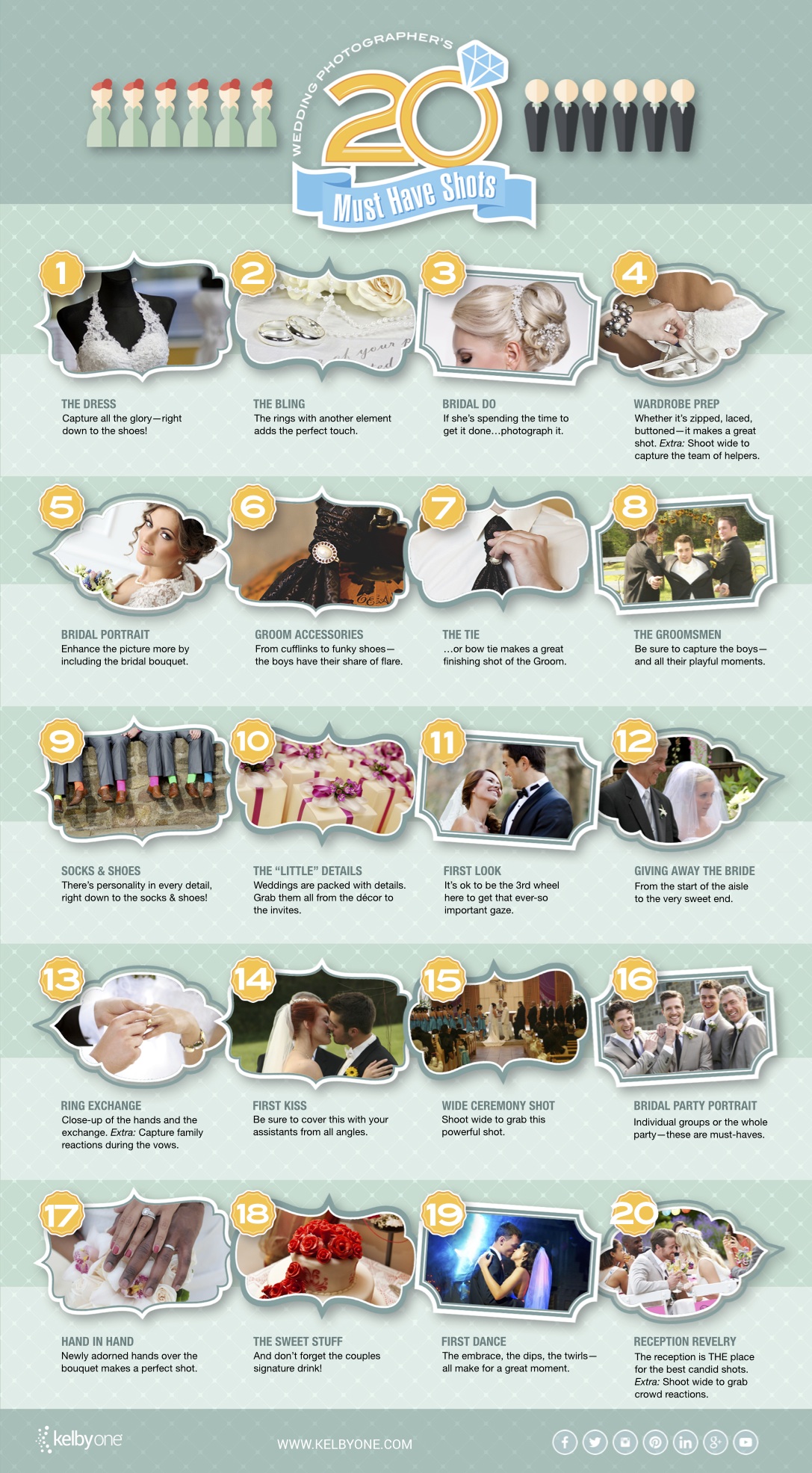
Whether the wedding is civil or religious, it will likely follow a general outline. What’s vital is that you capture each important aspect:
- Processional for wedding party walking down the aisle
- The groom’s reaction when the bride walks in
- Bride walking down the aisle
- The officiant’s opening remarks and address to the couple
- Exchange of rings and vows
- Pronouncement of marriage
- Front and center angles of the first kiss (You must not miss this!)
- Reaction shots of the family, friends, and guests
- Recessional or the confetti-filled exit
- Signing of the ketubah or other marriage contract
Group and Family Shots
Group shots may depend on the church’s policies or the client’s preferences. At this point, the couple may just want to head to their cocktail party! So it’s your job to take charge and keep things moving. To speed things up, work with event coordinators to announce that you’ll be doing formal group photos. Aside from the official bride and groom photos, here are a few standard group images to take:
- Bride and groom with the officiant
- Bride and groom with each set of parents
- Bride and groom with each immediate family
- Bride and groom with each extended family (grandparents, aunts, uncles, cousins, nieces, nephews)
By following a sequence, you can streamline the wedding portrait process. Your couple will thank you because you can save them precious party time!
Reception
The last part of the day where most of the fun happens. Just like the ceremony, the reception is pretty much beyond your control. In general, here are key shots to remember:
- Reception setup and details like table settings, name place cards, and wedding favors
- Cocktail hour
- Grand entrance
- Toasts and speeches
- Cake cutting
- First dance and specialty dances
- Bouquet and garter toss
- Bride and groom interacting with the guests
- Dance floor fun
- Any additional games
- Sparkler exit
Look for the Action
Unlike photographing a wedding ceremony where the majority of the guests just sit and stand, the reception lets people move more. Unless it’s part of the program like cake cutting or the first dance, the reception is filled with opportunities for you to take candid photos. Take a step back and observe where the fun is happening. Is it on the dance floor or photobooth area? If you hear people laughing and chatting over at a table, head over to that area to get authentic smiles. Being a wedding photographer means you can pick up on little, unexpected moments. Be on the lookout for situations that no one else might notice but will certainly make a good memory for the couple.
Scout the Location for the Best Light Source
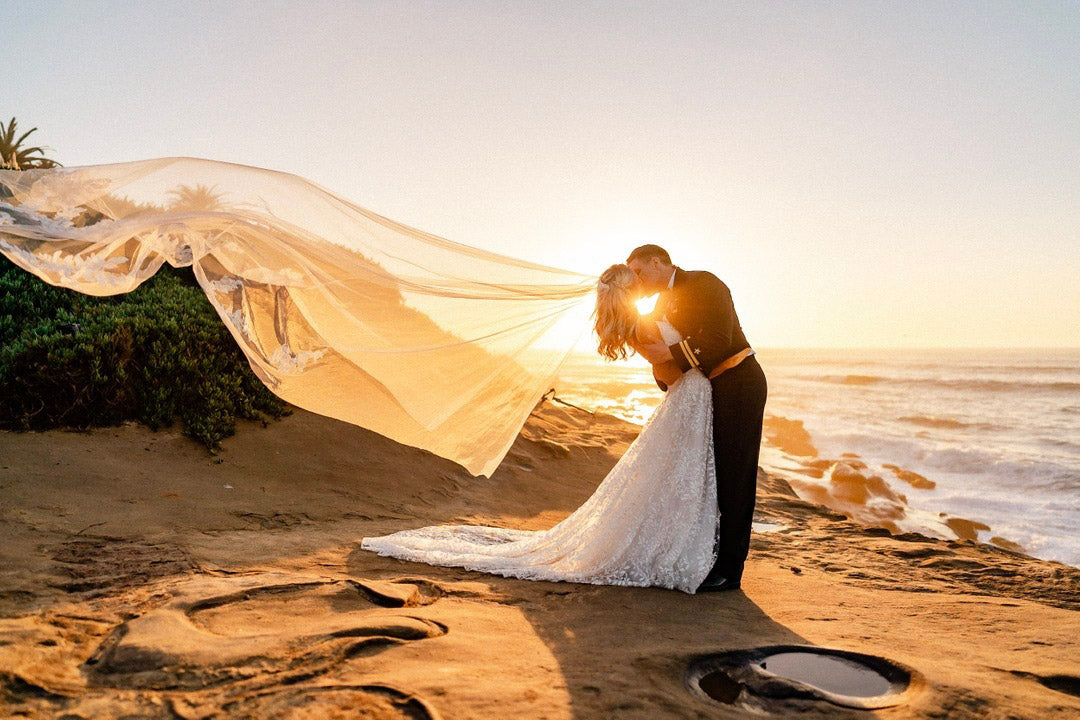
One of the best wedding photography tips for beginners is to arrive at the venue early. Not only does this give you ample time to prepare your equipment, but also time to scout for shooting locations and available lighting. Whenever you arrive at the venue, one of the first things to do is to check the lighting that might be available throughout the day. There are four common sources of light that you can optimize:
Natural Light
Use natural light as much as possible to provide a gentle, warmer, and softer look for your subjects. Most wedding venues and reception areas have ample window light. Make a mental note of where windows are located.
Golden Hour
Golden hour is a magical time for emotive, evocative portraits of the couple. When the sun is low on the horizon, the light creates a soft and beautiful look that flatters the subjects.
On-Camera Flash
If the available light is dull, a flash can add interest to the scene. Use your flash to illuminate the couple more while filling in the dark shadows. Always check the venue’s unique rules regarding flash.
Reflectors
A reflector is a simple, portable tool to help you bounce and direct light. If the sun is behind the couple, creating bold backlighting, you can bounce some of the light by placing a reflector in the front. In effect, you get more exposure between the couple and the background.
Don’t Forget the Composition

Some wedding photographers still struggle with composition. During your first time shooting a wedding, you might experience some common challenges. Take an extra minute to pause and examine your composition before snapping the photo. Make sure there aren’t any major distractions in the shot. If there are, look for different angles that you can shoot the scene from instead.
Use People and Things to Frame the Bride and Groom

To gain a fresh perspective, examine the existing frames at the venue. This means elements like a window or an archway that serve as the background. Architectural elements can balance the composition and add symmetry to photos. Another great way to take creative shots of the couple is by using guests as a foreground framing device to give more context. In this way, you can also show how people react or pay attention to the ceremony. For instance, look for the parents or siblings and capture the moment they wipe their tears during the couple’s exchange of vows. You can also anticipate the guests’ reactions when the couple is about to cut their cake!
Cooperate With Other Vendors
.jpg)
Other wedding vendors are going to be your best partners at the event. They can either make the job easier or harder, so you must treat them with respect throughout the entire event. After the event, you can continue building a relationship with them for future weddings!
Build a good relationship with vendors like:
- Videographers
- Hairstylists and makeup artists
- Florists
- Bakers
- Officiants
- Venue coordinators
- Wedding planners
- Caterers
- DJs and bands
It’s always a great idea to pass along your contact information to other wedding vendors. Of course, be courteous and ask for their business cards as well. Design a striking yet professional business card that other people won’t end up tossing aside.
Incorporate Vendors’ Gorgeous Work
Wedding photographers will likely take photos of details that make up the whole wedding. Remember that your clients paid for other vendors’ creativity as well, so they would like to have a visual remembrance of it. Photograph the catering team serving food, hair and makeup artists styling the wedding party, or the band performing during the first dance. Other vendors will love you for capturing moments of them in action. Aside from that, images like these spark feelings and memories when your clients see them.
Share Vendor Photos and Tag Them on Social Media
When you upload the clients’ images on social media, tag them and the vendors on the post. In some cases, vendors will share your actual post, which can increase page engagement and views. There are cases when they’ll ask permission to upload photos on their websites, and they will include a backlink to you. Either way, it can result in new client inquiries and partnerships.
Make Backups of All Images
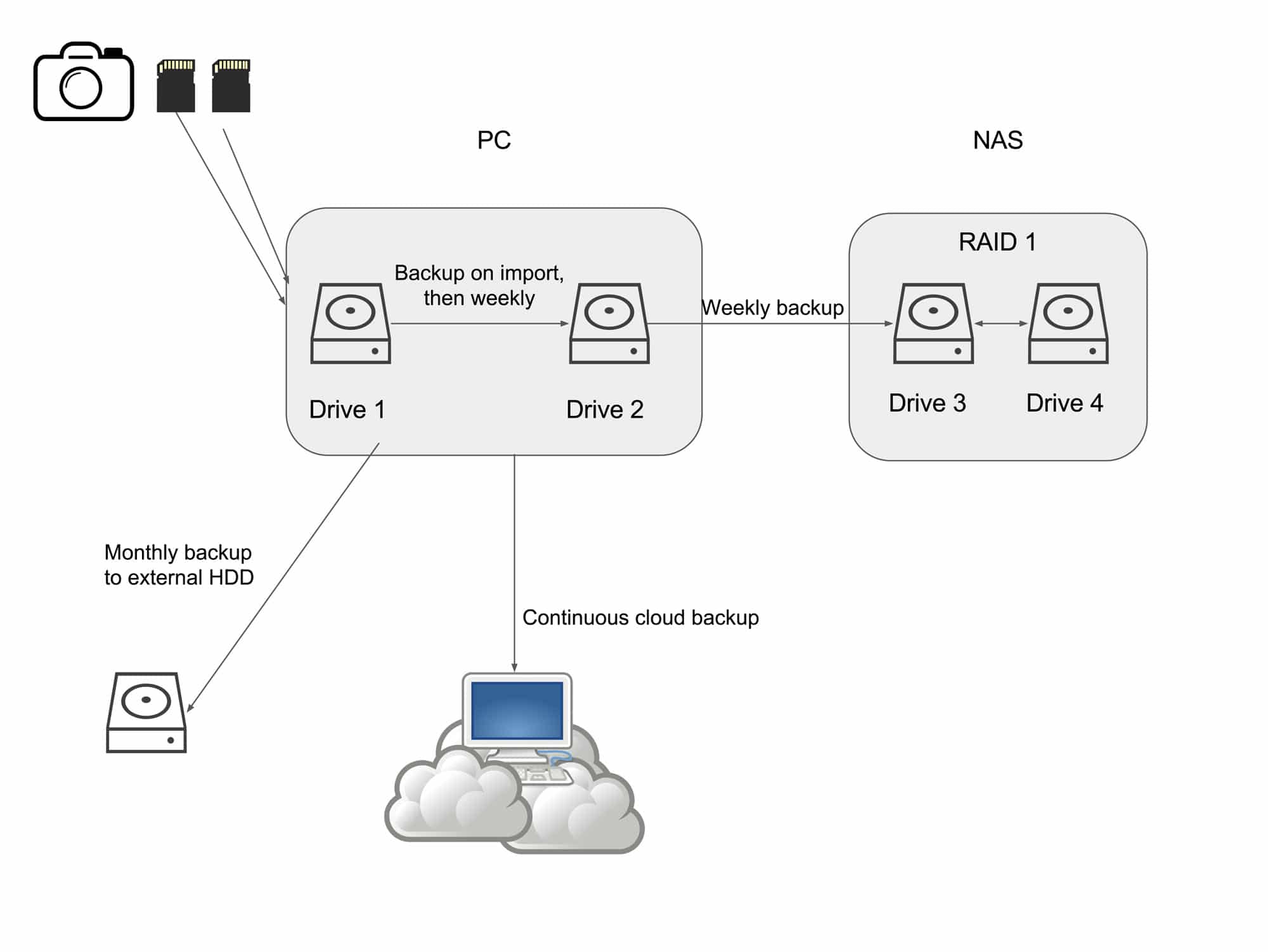
A photographer’s worst nightmare is losing photos, either through accidentally deleting files or a corrupted memory card. Make it a habit to copy images to your computer and an external hard drive immediately after the shoot. Yes, making two–or even three–copies is ideal, and doing it the minute you get home from the wedding is the best time to do this.
Take Advantage of Presets to Speed Up Editing

The editing process is arguably the most time-consuming part of the post-wedding workflow. Editing each image one-by-one can easily take 1-2 minutes per image, depending on how heavily you edit. To make this process easier, use presets to apply multiple settings in bulk to your photos.
Know that applying presets will not magically fix your images. When you use a preset, the editing software will apply a configuration of settings that you can tweak or adjust until you achieve your desired look or tones. Overall, presets can help make your images look more cohesive and consistent.
Be Real
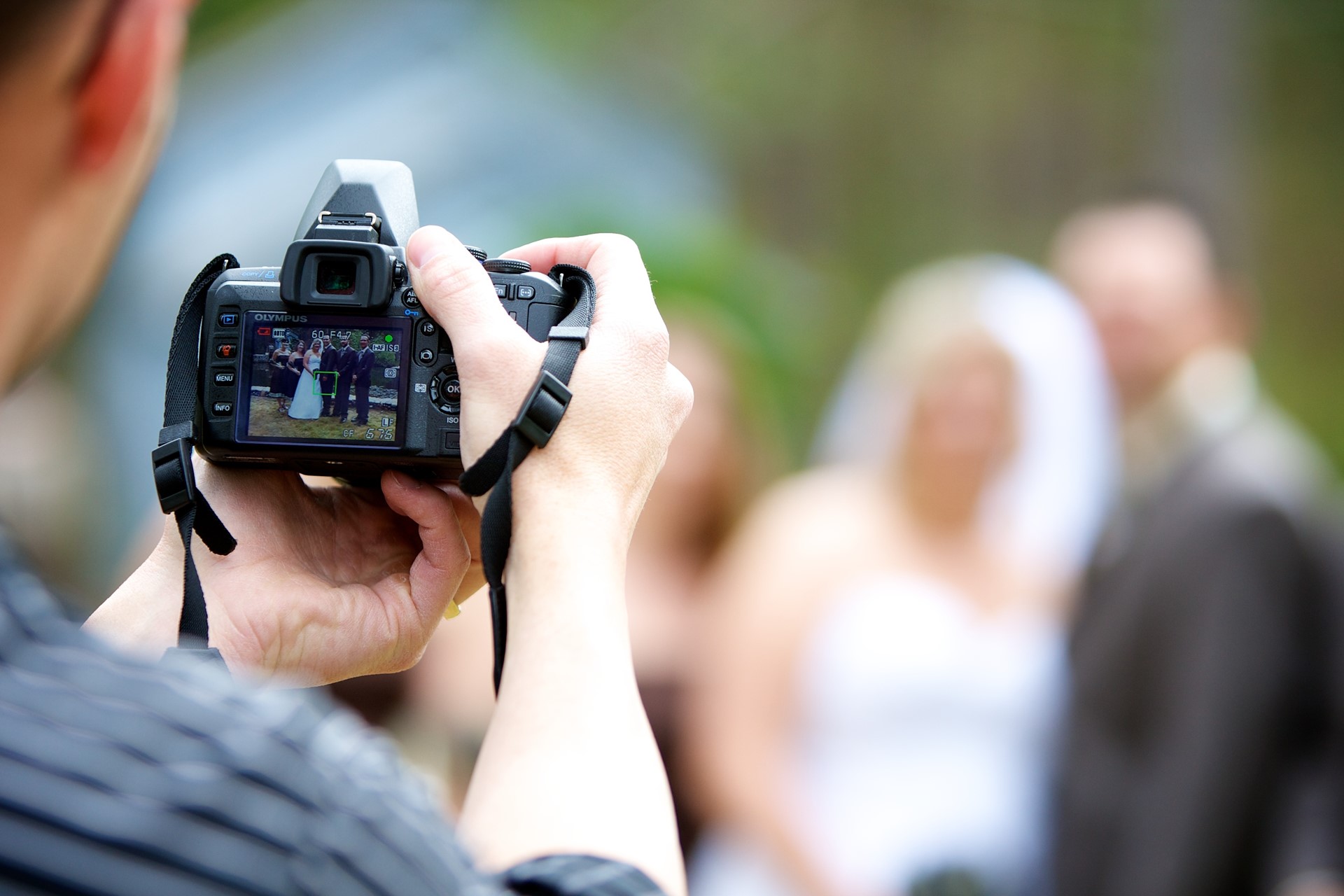
Forget what the magazines say. Forget the hype and the pomp and the circumstance. Brides and grooms and their families are just human beings full of feelings. Throughout the wedding process, treat them with respect and humor and empathy. Don’t try to be someone you aren’t. And don’t try to make your clients be someone they’re not. Clients will love you, refer you, and hire you again – not only because you make lovely photographs, but because you are a lovely human to work with.
Wedding photography is a wonderful profession in the photography industry and Is highly recommended to consider taking up professionally! Despite it being a competitive industry and a job that’s often stressful and physically demanding, wedding photography is also enormously rewarding and a lot of fun. Weddings are unique things. Everyone is happy, well-dressed, and emotionally charged. Anything can happen, and it’s your job to capture as much of it as you can! If you’re just getting started with wedding photography, I really hope these tips have helped.
Thank you for visiting my blog and reading today’s post. I hope you have a lovely week and I shall see you in two weeks!


 Peytons View
Excellent article and some sound tips. A couple of years ago I got roped (badgered really) into photographing my step daughter as wedding. As they didn’t have a large budget, and I had the gear (I am a professional landscape and nature photographer) I had to do it…my Partner insisted and I had little choice. I had never shot a wedding before. The groom is a gamekeeper for one of the large estates so the owners kindly let them use ‘the big house’ as a venue and they have a private chapel on the grounds.
I was really nervous and during the rehearsals one evening at the chapel I couldn’t get the lighting right, not being used to flashguns. Hard shadows everywhere and the ceiling too high to bounce. I couldn’t sleep wondering what to do and thinking if Photoshop could get rid of the shadows etc
Come the day, the shutters on the chapel were thrown open and golden sunlight streamed in! No flash needed. The Vicar let me sit at the front of the church and I shot off dozens of shots with two silent mirrorless cameras.
The day was sunny and bright and everything went well, the bride and groom loved them!
I will never ever do another wedding as long as I live! It is just too nerve wracking for me!!!
LikeLiked by 1 person
Thank you!
Oh my god, that was lucky for a few of reasons:
1. That you’re a photographer already (I know a different field of photography), but they were lucky to have you!
2. The venue letting your step daughter and her partner use the grounds.
3. The day being sunny enough to give you the best possible lighting!
I’m glad they loved your photos, I’m sure they turned out beautifully. It can be very nerve-wracking especially the first few times as you want to do them justice for the couple, but it can also be very hard work 😓
LikeLike
Thank you! I must admit, that when I saw the perfectly exposed images in Lightroom I was very happy. The bride and groom were delighted with the results so that made it very worthwhile. I still won’t do another one though!
LikeLiked by 1 person
great job on this article Peyton! Mike
LikeLiked by 2 people
What an excellent comprehensive post on wedding photography! I’m not an aspiring wedding photographer but now that I’ve seen this list, I’m more motivated to consider it! You offered a lot of great tips on photography which I have no clue about.
Rest your knee and I hope you’ll be up and running again soon!
– Lauren
LikeLiked by 2 people
Thank you so much for your kind words!
I will. So do I 🤞🏼
LikeLiked by 1 person
This was such an interesting post even for a non photographer life me!
I feel for your dad. After an accident where I was a passenger, I find it hard to relax when someone else is driving.
LikeLiked by 2 people
Thank you for your kind words.
I hope you’re ok now 🤞🏼 I can only imagine how hard it is, do you still feel that way today?
LikeLiked by 1 person
I still try to avoid being a passenger but I can do it if I have to!
LikeLiked by 1 person
I completely understand that. I have the utmost respect for you 😊!
LikeLiked by 1 person
Helpful post. You can speed up your blogging career with this copy https://mybook.to/tbGgqt
LikeLiked by 3 people
Hope your knee feels better in coming days – a brilliant and detailed article for people taking on the brave venture of wedding photography – was fascinating!
LikeLiked by 2 people
Thank you so much for your kind words. I hope so too ☺️
LikeLike