


Good morning, I hope everyone’s ok. It has been a horrific week, on Friday my mum and I almost got into a very serious car crash, which if it wasn’t for our Uber driver (who I would’ve given more than 5 stars if the app would allow) quickly slammed on the brakes just in the nick of time otherwise none of us would be alive right now, I am eternally grateful that none of us were seriously harmed, my ribs did unfortunately get the brunt of the force of impact from the seatbelt, which is a good time to remind you to always wear a seatbelt in a car at all times as you never know what can happen on the road. We were pretty shaken up after but then later on we received a phone call from our doctors telling me that I needed to go to the hospital as my blood results (which I’d only done mere hours before) were showing some abnormalities, and he wanted me to have an ECG to check everything is Ok with my heart, he wanted me to go that night to A&E but over the weekend I was very poorly as were my mum and dad and didn’t end up making it to our local hospital until Monday night, where I managed to have the ECG done quite quickly, only to then be told that I should’ve gone to a different hospital but the doctor hadn’t informed us of which one we were supposed to go to in the first place, but due to personal reasons, I’ve decided not to go ahead with the other hospital and instead will be waiting for my ultrasound to see if anything shows up.
Anyway, on with this week’s post… Want to capture the gorgeous hues and moody tones of fall? While creating stunning autumn landscape photos might seem difficult, it’s actually pretty easy – once you know a few tricks. Fall offers a stunning display of light and color that photographers will adore. You can watch for spectacular sunsets, gentle morning mists, and vivid red and orange leaves. Consider trying to capture how the afternoon sun illuminates a solitary leaf or how the fog envelops the hills. Your images will stand out with these simple scenes.
10 Fall Landscape Photography Tips

Ever felt your heart go thump-thump at the sight of a fall landscape, absolutely vibrating with hues of gold and crimson against a vibrant blue sky? Autumn colors are a creative kick, right?!
But when you try to capture that magic through your lens, does it feel like the colors lose their luster, leaving you with less-than-stellar shots?
You’re not alone. Fall landscape photography can be a tricky field to navigate.
Don’t worry – it’s possible with a little practice and guidance to capture the autumn splendor just as your eyes see it. Read on to find out some useful tips to get that perfect Fall/Autumn Landscape shot!
Check The Fall Foliage Forecast
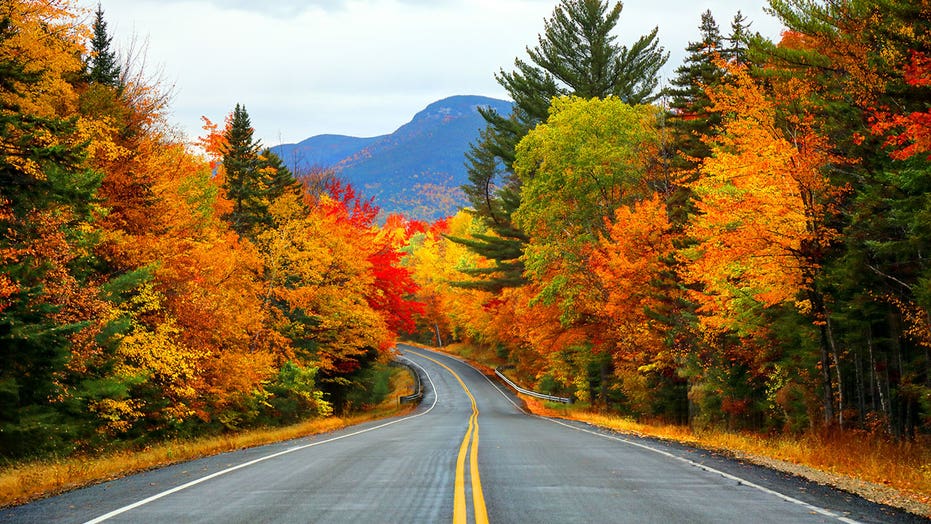
To capture the best fall landscape photos, it’s important to be there when the colors are at their peak. This is when you’ll see vibrant reds, oranges, and yellows. However, these peak colors only last for a week or two. To avoid missing out, you can use fall foliage forecasts to plan your outings. Simply search for “fall foliage predictor in [location]” on Google to find the forecast for your area or a nearby one.
Maximize Golden Hour Light at Sunrise or Sunset

Take advantage of the golden hours to capture the beauty of autumn to its fullest.
Light is different during sunrise and sunset because of the sun’s low position. During these early morning and evening periods, the sunlight is diffused and indirect, casting a warm glow and long shadows that can bring out the vibrant hues of autumn leaves. Shooting during golden hours adds depth and dimension to your images, making the reds, oranges, and yellows of foliage pop against the beautifully lit backdrop.
Dedicated landscape photographers benefit from heading out well before sunrise, photographing until the sun is high in the sky, and then returning to the same location in the late afternoon to photograph until well after sunset. This way, you can capture a scene with peak colors in many different lighting situations.
Use a Tripod
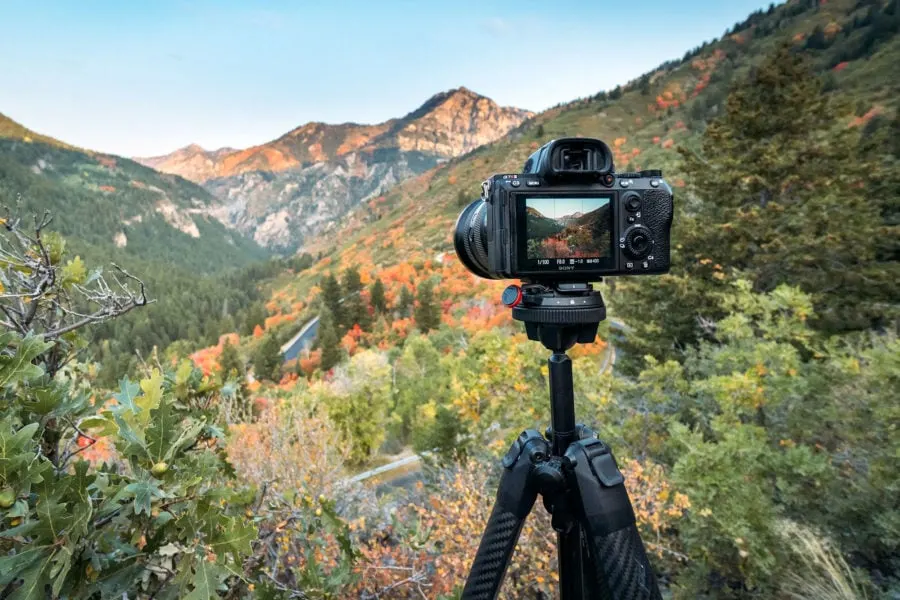
Using a tripod is a game-changer for capturing the perfect fall foliage photos. This trusty piece of equipment stabilizes your camera, eliminating the risk of blurry, shaky images, particularly when shooting in low light conditions or using slow shutter speeds.
An extra benefit to using a tripod is you don’t need to limit yourself to eye-level shots. Experimenting with the height of your tripod can lead to unique perspectives. Try positioning the camera low to the ground for a different viewpoint of the autumn leaves or extend it to its full height to capture a wider landscape.
If you plan to create a panorama by stitching together multiple images, a tripod is vital. Ensure each shot overlaps by about 30% with the previous one, and keep the camera level to ensure a smooth and natural-looking panorama.
Warm Up Your White-Balance

White balance is how warm or cool the overall color reflects through your photographs. Since fall pictures often center on capturing the warm, inviting hues of the season, one technique to really make these colors pop is to adjust your camera’s white balance to bring out the rich warm tones in fall leaves. Most cameras offer a ‘Shade’ or ‘Cloudy’ setting in the white balance options. Using these presets can help to enhance the warm tones prevalent in autumn landscapes.
Experiment with your camera’s white balance settings until you achieve the desired result.
🔥 Pro Tip: It’s best to shoot in RAW so you have plenty of data in the image to play with in Lightroom or your editing software of choice. This way, if you don’t particularly like the white balance when you get it on the computer, you can easily make adjustments with the most data possible.
Use a Polarizing Filter

Polarizing filters reduce glare and reflections, particularly during sunny or very bright scenes. When it comes to fall foliage, it can help reduce the glare on the leaves. If you want to deepen or increase the density of hazy or blue skies, then this filter is especially handy.
Benefits of using a polarizing filter include:
- Enhances Color Saturation: Polarizing filters assist in heightening the vividity of fall colors, making the reds, oranges, and yellows of the leaves pop more in your photographs.
- Reduces Glare: It can help reduce the glare on shiny, wet leaves after rain, enabling you to capture their natural color and texture.
- Improves Sky Contrast: A polarizing filter can deepen the blue of the sky, creating a striking color contrast with the fiery colors of the fall foliage.
- Adds Depth: By reducing reflections and enhancing color saturation, polarizing filters lend a sense of depth to your photographs, making them more dynamic and visually appealing.
- Protects Your Lens: Apart from enhancing image quality, a polarizing filter also protects your camera lens against potential scratches or smudges.
Use a Telephoto Lens

Autumn leaves, trees, and forests look so beautiful that it’s often tempting to whip out that wide-angle lens and capture the entire scene. But while a wide-angle lens can work for fall photography, it’s often nice to go in the opposite direction and shoot with a longer focal length. A 70-200mm or a 55-200mm lens is ideal, though you can also shoot with a 100-400mm lens or even a 150-600mm. A telephoto focal length lets you emphasize patterns in the leaves, plus it’ll compress the scene to create a beautiful wall of trees. You can also use the longer focal length to highlight intimate details of a forest interior. Look for patterns, then hunt for the part of the scene where the pattern breaks and include it in your composition. Consider also adding negative space to help isolate your subject. Empty sky works great for this, though you can also create negative space with forest floors or motionless ponds.
Look For Patterns and Textures
Fall color photos tend to start with, well, color. It’s what generally draws you to the scene in the first place, after all. However, the best fall landscape shots merely use color as a jumping-off point. In other words, they include color, but the color doesn’t carry the image. Instead, the composition relies on color plus patterns and textures to hold the viewer’s interest. Many fall scenes do have plenty of interesting patterns and textures to work with, so moving beyond color isn’t especially difficult. Simply find some reds, yellows, and oranges that you like – then think about other compositional elements you can incorporate into the shot.
Look For Elements That Contrast With The Fall Color

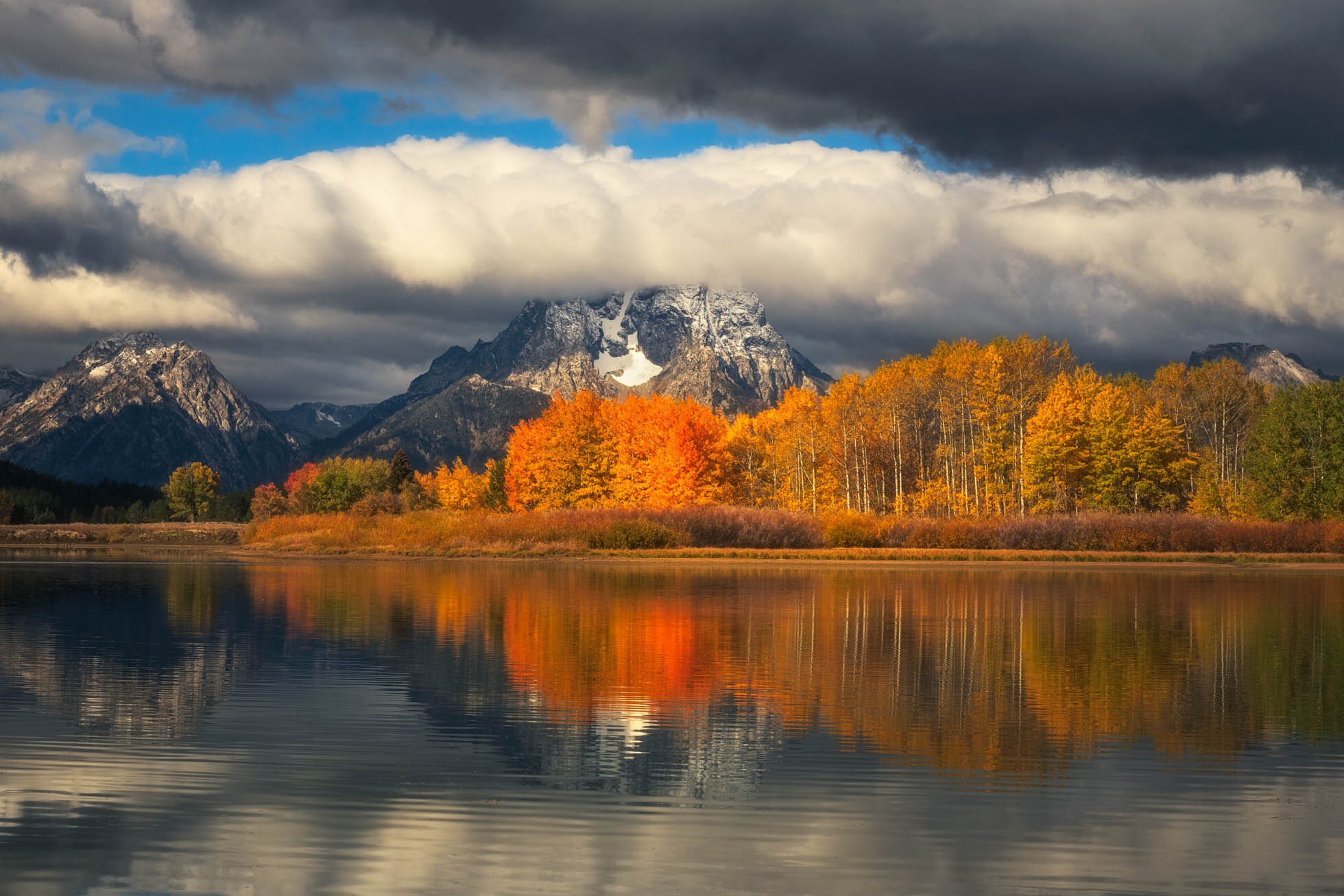
Fall colors are usually bright and have textures and patterns. To really take your photos to the next level, find nice colors – but be sure to contrast them with darker elements. That way, you can create dramatic tension. Look at the image displayed above. It features some nice, bright, well-lit trees, but they’re juxtaposed with a dark, shadowy rock face: And it’s that contrast, that drama, that elevates the shot.
Of course, dark rocks aren’t the only contrasting element you can use in your photos. You can include a sun/shade contrast (where your subject is lit by the sun but the background is in the shade), contrast fall colors with dark water, or contrast bright fall colors with darker, browning fall colors (the opportunities are endless!).
Look For Reflections
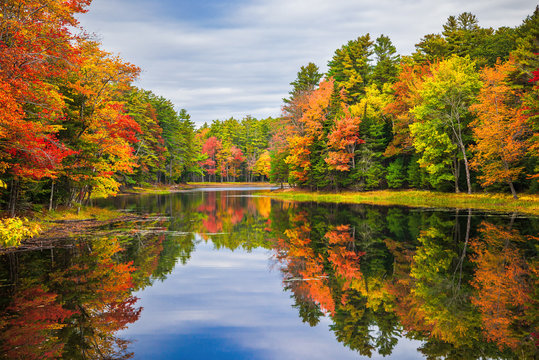
Reflective surfaces, such as bodies of water, can be a gorgeous compositional element in your autumn landscape photography. The mirror-like reflection of brilliant fall colors and textures in a calm lake, river, or pond can double the impact of your scene, providing a sense of balance and symmetry. Even puddles after a rain can serve as a great reflective surface for capturing the beautiful fall colors.
When shooting reflections, consider the rule of thirds; position the horizon line along one of the horizontal grid lines rather than in the middle of the frame. This gives more room to highlight the reflection.
If you DO put the horizon line smack dab in the center, then try to lean into the symmetry of the scene and watch your edges to ensure you’re including elements that add to symmetry, and excluding elements that detract from it. Additionally, try to include a focal point in your composition, such as a distinctive tree or rock formation, to draw the viewer’s eye.
Don’t Forget To Look Up

The interior of a forest can be an amazing place to shoot the fall colors, but it’s often difficult to find a pleasing composition. Sometimes, you just can’t isolate individual elements and you can’t find interesting patterns. You might be ready to throw in the towel, but I’d recommend you try something else:
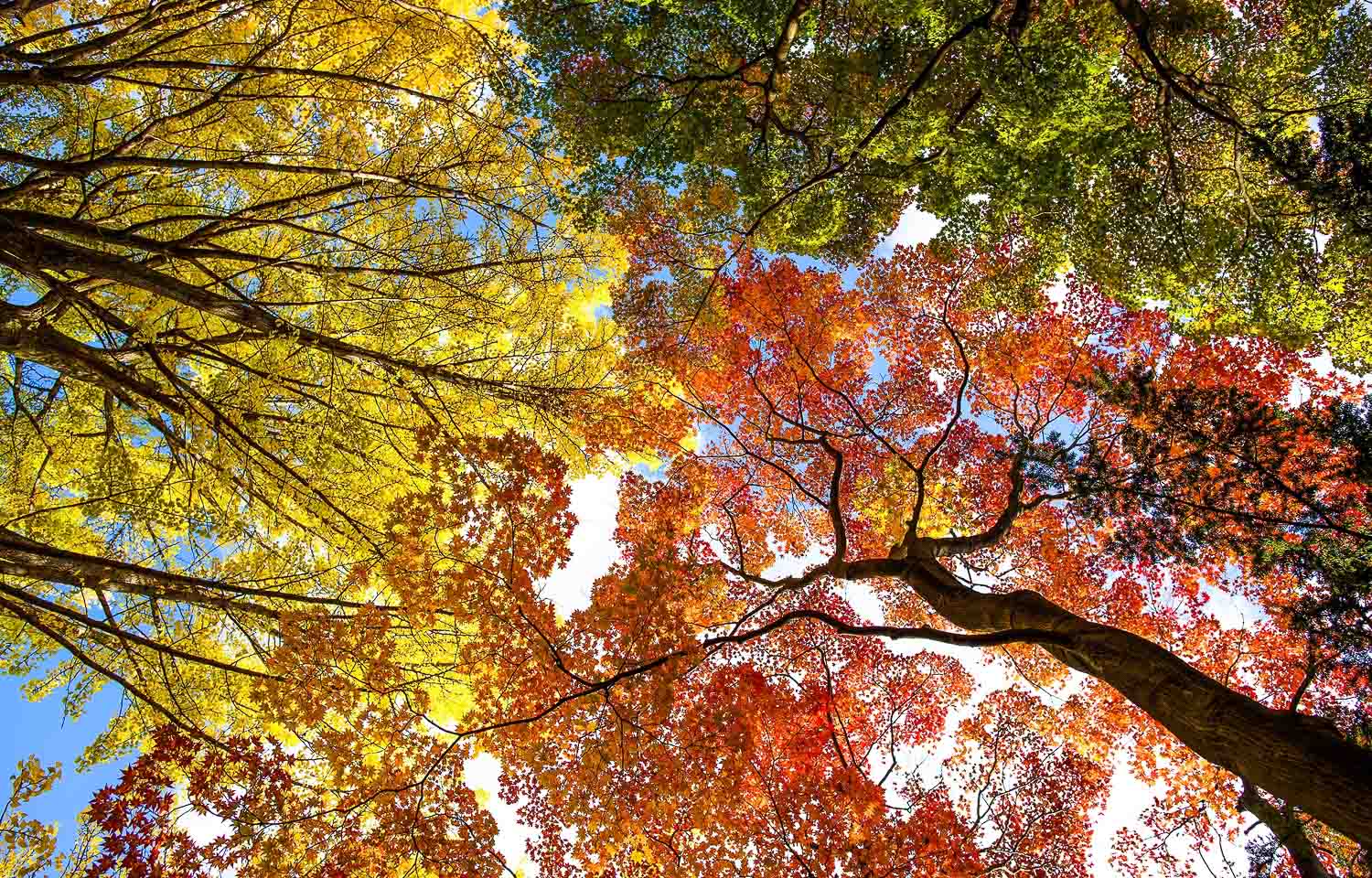
Look up and explore the canopy. This works best on sunny days; images that contrast fall colors with a deep blue sky can be really pleasing.
You generally want to keep the trees sharp from foreground to background, so don’t forget to use smaller apertures like f/22. Also, if you shoot through the forest toward the sun, a narrow aperture will create a stunning starburst effect.
*Bonus:* Carefully Process Each Photo

When you’re out shooting autumn landscapes, you should always do your best to nail the shot in-camera. But you should also make sure that you carefully review your images when you get back home – and then post-process your best files.
Why? For one, RAW files are designed to be edited. Unprocessed RAW files tend to look pretty flat and bland, whereas processed files can look far more colorful and contrasty (closer to how you saw the scene at the time).
For instance, most RAW files look better with a bit of boosted contrast and extra saturation. I’d also encourage you to remove chromatic aberration, do a bit of sharpening, and make sure the exposure and white balance both look good.
Once you’ve handled the basics, you can stop, or you can use processing to take your photos to the next level. A subtly applied vignette, for instance, will focus the viewer on the main subject. Color grading can create atmosphere and mood. Dodging and burning can add three-dimensionality.
As you can see, autumn photography is one of the best times to go out and take pictures. Whenever possible, you should try to get out there as much as you possibly can. Good photos generally come from perseverance and careful planning. By being outside often, you’ll increase your chances of capturing beautiful scenery with the light that you want and at the peak of the autumn foliage. Hopefully, these tips will help you make the most of your time photographing the amazing colors of the fall season.
Thank you for visiting my blog and reading today’s post, I hope you all have a lovely week and possibly manage to go and take some beautiful photos (if you plan to do so)! Stay safe, and I shall see you next week!


 Peytons View
I like these tips – especially on the polarising filter 🙂
LikeLiked by 1 person
Great tips!! Thanks for sharing!
LikeLiked by 1 person
Thank you for all these great pointers.
LikeLiked by 1 person
Great tips! I love taking pictures of fall’s glorious colors.
LikeLiked by 1 person
I’m not a photographer but sure love all the Fall colors. It’s all GOD’S beauty really. Thank you much for sharing them!
LikeLiked by 1 person
Wow! Absolutely amazing photos! Interesting to see some of how it’s done.
LikeLiked by 1 person
Lucky
LikeLiked by 2 people