

Morning all! Is everyone doing alright? I’m doing ok considering some personal things that are happening right now, I can’t say anymore, not because I don’t want to but because right now I don’t know myself, all I can say is my health is being tested at the minute, but thankfully I’ve got the love and support of my family to help me get through it, which I’m eternally grateful for! Did everyone have a good week? My family and I definitely did, I mentioned last week that we would be visiting my sister for a couple of days, well we did and it was amazing – I got to reconnect with her again and just hold her, we got to see my eldest nephew more grown up and talking (the kid is a maths genius in the making) and we finally got to meet my littlest nephew who is so cuddly and smiley he was easily amused. It was so nice to spend quality time with all of them for more than just a couple of hours and take the boys to a conservation park for them to see the animals and to have a little play! We also got to go to the infamous library in Birmingham, – the view from the secret garden was so picturesque, I managed to get some amazing shots. It was so nice to just get away from reality and escape into holiday mode and not have to stress and worry for a bit.
Now onto this week’s post…Today (25th September) is International Ataxia Awareness Day, I wanted to do a post on this condition as it is quite personal to me as my mum, unfortunately, suffers from it. There are different types of Ataxia and while the one my mum has is more common in the U.S, the same cannot be said for here in the UK, in fact, any type of Ataxia in England is not greatly understood as doctors don’t understand the full complexity of it, meaning my mum was only one of two people at our local hospital in my hometown to be diagnosed as a rare case, but that sadly took quite a while and she ended up being misdiagnosed for over 30 years. Now to support her and others who have the condition, I wanted to help raise awareness to help others learn more about this often misunderstood condition and the signs to look out for so you or someone you know don’t have to go that long without getting the wrong diagnosis.
International Ataxia Awareness Day is an annual event dedicated to raising awareness about ataxia, a rare neurological disorder that affects coordination, balance, and speech. This global day of recognition aims to increase public understanding of ataxia, highlight the challenges faced by those living with the condition, and promote research towards finding effective treatments and ultimately a cure. Ataxia Awareness Day itself is observed to spread awareness about the various forms of ataxia, a group of disorders that impair the nervous system, leading to difficulties with movement, speech, and other functions. The day serves as a platform for patient advocacy groups, medical professionals, and affected individuals to share their experiences and knowledge. It also emphasizes the importance of early diagnosis, supportive care, and ongoing research to improve the quality of life for those living with ataxia.
What is Ataxia?
Ataxia is a degenerative disease of the nervous system. Many symptoms of Ataxia mimic those of being drunk, such as slurred speech, stumbling, falling, and incoordination. These symptoms are caused by damage to the cerebellum, the part of the brain that is responsible for coordinating movement. There are many different types of cerebellar ataxia and, often, they are hereditary. As a result, some types have been found in only a few families in specific countries, while others are more common and are found throughout the world. There are well over 10,000 people in the UK who have a type of ataxia, so even though it is rare, it is not as rare as you might think. Some types of ataxia are not hereditary. Ataxia treatment involves a combination of medication to treat symptoms and therapy to improve quality of life. People affected by Ataxia may experience problems with using their fingers and hands, arms, legs, walking, speaking, or moving their eyes. Ataxia affects people of all ages. Age of symptom-onset can vary widely, from childhood to late adulthood. Complications from the disease are serious and oftentimes debilitating. Some types of Ataxia can lead to an early death.

that controls movement and
coordination. It is located at
the base of the brain at the
back, and at the top of the
spinal cord.)
What Causes Ataxia?
Some people inherit ataxia via specific genes that have come from one or both parents. Some develop ataxia due, for example, to vitamin deficiencies, degeneration of the balance center, or prolonged exposure to high levels of alcohol. Others can develop ataxia as a result of damage to the brain, for example from a stroke, tumor, viral infection, or head injury. In many people, discovering the cause of ataxia is complicated and involves a number of tests and scans. Sometimes it is not possible to find the cause of ataxia.
Hereditary Ataxias

Hereditary ataxias are genetic, which means they are caused by a defect in a certain gene that is present from the start of a person’s life, inherited from your parents. Hereditary Ataxias can be divided into those that are dominantly inherited, passing from generation to generation due to a single copy of a defective gene passing from parent to child, and those that are recessively inherited, Ataxia seen in a single generation and is due to two copies of a defective gene; one passed from each parent (who are carriers) to the child.
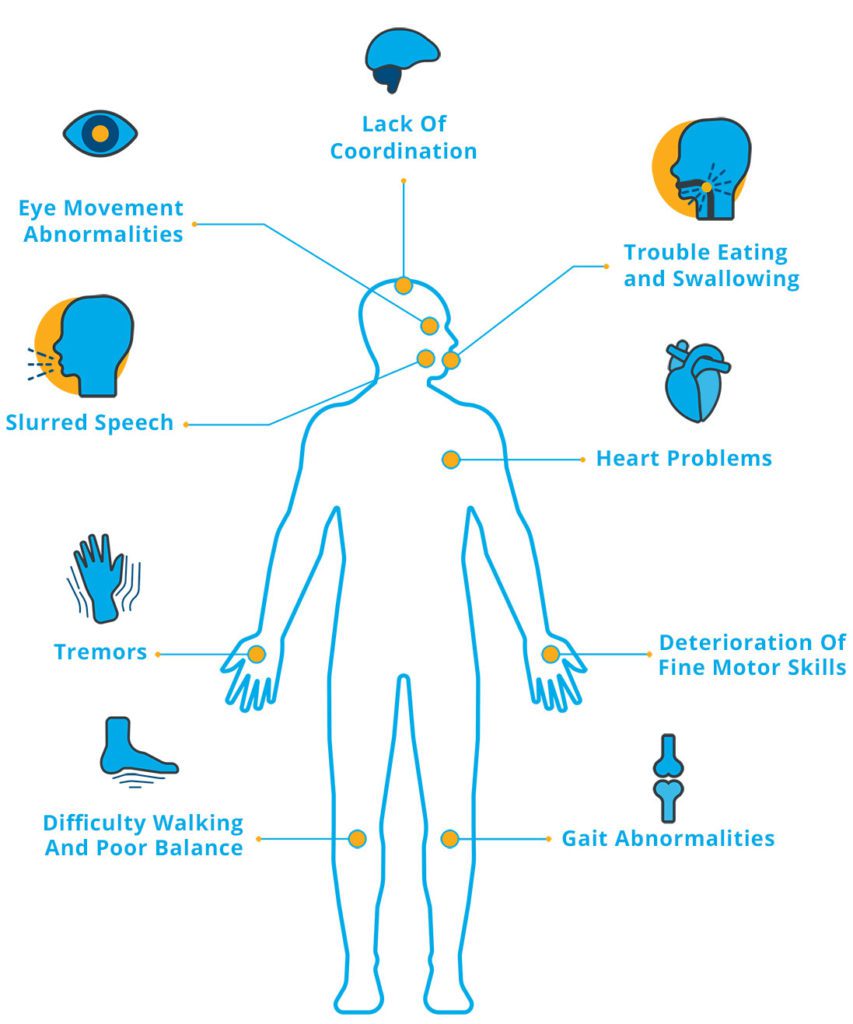
Ataxia symptoms vary by person and type of Ataxia. The rate of progression varies as well. Symptoms may worsen slowly, over decades – or quickly, over mere months. Common symptoms of Ataxia are:
- Autosomal Dominant Ataxias: Each child of a parent with an autosomal dominant Ataxia gene has a 50% chance of inheriting the Ataxia gene. Since the gene is dominant, if a gene is passed on to the child from one parent, the child will develop the disease. Men and women are affected equally.
- Spinocerebellar Ataxia: Spinocerebellar Ataxia is one specific type of Ataxia among a group of inherited diseases of the central nervous system. Genetic defects lead to impairment of specific nerve fibers carrying messages to and from the brain resulting in degeneration of the cerebellum (the motor coordination center of the brain). With the advancement of research, more than 40 different genes of SCA have been found with SCA 1 being the first to be found.
- Episodic Ataxia: Episodic Ataxia is clinically characterized by attacks of Ataxia with a clear onset of resolution. There are now eight recognized episodic Ataxia syndromes, numbered 1-8, in addition to late-onset episodic Ataxia. The genes are known for EA1, EA2, ES5, and EA6. The best characterized are EA1 and EA2, the others are exceptionally rare and largely defined by single families.
Autosomal Recessive Ataxias
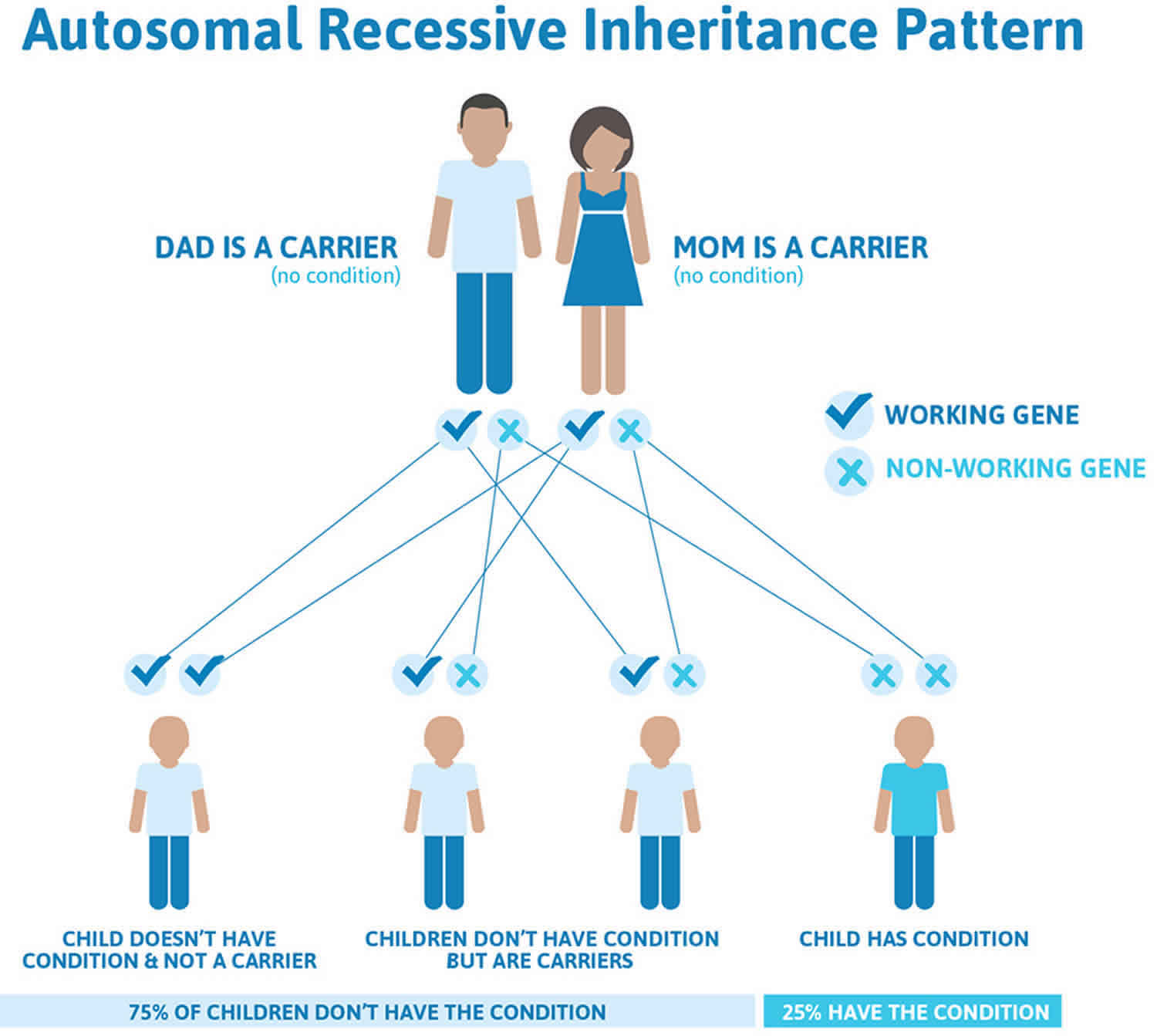
Autosomal recessive inherited diseases affect males and females equally, but both parents must be carriers of the Ataxia gene and each must pass on the Ataxia gene to the child for the child to develop the disease. Each child of parents who are carriers of a recessive gene has a 25% chance of developing the disease, a 50% chance of inheriting just one of the Ataxia genes, becoming a carrier themselves, and a 25% chance of inheriting no Ataxia genes. Because a single recessive Ataxia gene does not cause symptoms, it can be passed on in a family for generations without being recognized. Therefore, there can appear to be no “family history” of Ataxia if the disease was inherited as a recessive gene.
- Friedreich’s Ataxia: Friedreich Ataxia (FRDA) was named after Nikolaus Friedreich, who first described it in 1863. It was the first form of hereditary Ataxia to be distinguished from other forms of Ataxia. It is caused by an abnormality of a single gene called the Frataxin (FXN) gene. The abnormality can be passed from generation to generation by family members who carry it. Two copies of each gene are inherited; one copy from the mother and one copy from the father. An individual who has one copy of an altered or nonfunctioning FXN gene does not develop any neurological symptoms and is called a carrier.
- Ataxia Telangiectasia: Ataxia Telangiectasia appears early in childhood when children begin to walk. Though they usually start walking at a normal age, they wobble or sway when walking, standing still or sitting. They start to show signs of Ataxia and soon after will show signs of “telangiectasia,” or tiny red “spider” veins, which appear in the corners of the eyes or on the surface of the ears and cheeks exposed to sunlight. This unique appearance together with ataxia is what led to the naming of this disease “ataxia-telangiectasia.”
- Mitochondrial Ataxia: Ataxia can be inherited in other ways too. Mitochondrial Ataxias pass from mother to child through the defect Mitochondria in the mother’s eggs.
Acquired Ataxias

There is a large group of people who have symptoms of Ataxia that usually begin in adulthood, appear “out of nowhere”, and have no known family history of the disease. With acquired Ataxia, there is an external cause, which means a person developed it because of something that happened during their life. This can include many different problems and events such as vitamin deficiencies, autoimmune conditions, some infections, exposure to toxic substances or drugs (especially alcohol), various cancers, and many more.
- Sporadic Ataxia: Sporadic Ataxia occurs without any evidence that it was inherited from a family member. It can be difficult to diagnose. Other forms of Ataxia must be ruled out before a diagnosis of Sporadic Ataxia can be made. This disease is termed “neurodegenerative” because the nerve cells in the cerebellum gradually disappear over time without a known cause. Sporadic Ataxia can be either “pure cerebellar” if only the cerebellum is affected or cerebellar plus, if the Ataxia is accompanied by additional symptoms such as neuropathy, dementia, weakness, rigidity, or spasticity of the muscles. Disability may be greater and progress more quickly with the cerebellar plus form of Sporadic Ataxia.
- Multiple System Atrophy (MSA): In some people, the symptoms of Sporadic Ataxia are a prelude to the development of Multiple System Atrophy (MSA), which includes Ataxia, Parkinsonian features (such as rigidity and slowness of movement), and difficulty with the autonomic nervous system. The autonomic nervous system controls the automatic functioning of the body, including regulation of blood pressure, digestion, bladder and bowel function, some sexual functions, and sweating. People with MSA, whose symptoms begin with Sporadic Ataxia, may develop Parkinsonian symptoms of slowness and stiffness of movement along with difficulty turning over in bed and rising from a soft chair.
Symptoms
- Lack of Coordination
- Slurred Speech (also called dysarthria)
- Trouble Eating and Swallowing (which can cause choking or coughing)
- Deterioration of Fine Motor Skills
- Difficulty Walking
- Gait Abnormalities
- Eye Movement Abnormalities
- Tremors or Shaking (often of the hands)
- Heart Problems
- Fatigue or Tiredness
Specific types of ataxia may also cause other symptoms, for example, Friedreich’s ataxia can sometimes be associated with heart problems (cardiomyopathy), diabetes, or curvature of the spine (scoliosis). In most people with ataxia, the ability to think and understand is not affected. However, there are emotional aspects of coming to terms with ataxia and these can vary from person to person. People with ataxia can experience mood disorders, such as depression, which are treatable. Some specific types of ataxia do affect mental function, but these are rarer forms. Ataxia affects people in different ways.
Some people are affected very mildly, for example, they only experience slight balance problems and may walk using a stick. Other people experience symptoms more severely and may require assistance from carers to carry out everyday living tasks. or require the use of wheelchairs, walkers, and/or scooters to aid in their mobility. Although ataxia can affect people significantly, many people with the condition lead full and active lives, attending school, further education and training, working, bringing up families, and traveling the world.
Diagnosis
It is sometimes difficult to get a diagnosis of the specific type of ataxia, as many different conditions can seem very similar. A neurologist may need to do extensive tests to find out exactly what a patient has and this can take time. Investigations include:
- Patient History: This usually involves your doctor asking you questions to help identify whether the ataxia is caused, for example, by a tumor or alcohol poisoning.
- Brain Scans: Magnetic resonance imaging (MRI) brain scans can give an image of the cerebellum and other parts of the brain that show whether they are damaged. The scans can sometimes be used to distinguish between multiple sclerosis and ataxia.
- Family History: This helps to determine whether the patient has an inherited type of ataxia. If their parents and grandparents also have/ had ataxia then it is likely that the patient has an autosomal dominant inherited ataxia. If the parents are not (or were not) affected but more than one child has ataxia, it suggests that the condition is inherited recessively. Even if no one else in the family is affected, this does not necessarily mean that the ataxia is not inherited.
- Genetic Tests: These are available for some types of inherited ataxia and involve taking a blood sample. If the result is positive, then it can generally be considered a definite diagnosis. If the results are negative for all these tests, this may mean that it is a type of inherited ataxia for which the gene has not been found, or that a test is not yet available. Sometimes your blood sample may be stored for a long time so that if there are advances in research and new tests become available, further tests can be done.
- Other Laboratory Tests: These may include testing for vitamin E levels in the blood or to see whether a patient has a genetic condition such as abetalipoproteinemia or familial isolated vitamin E deficiency. People with these conditions have low levels of vitamin E, and this can be treated with vitamin E supplements and a specialized diet. Another rare inherited condition that can be treated is Wilson’s disease, which can be diagnosed by blood tests for copper and a protein that’s called caeruloplasmin.

Pre-Symptomatic Genetic Testing
If you are a close relative of someone with a known inherited ataxia and you do not show any signs of ataxia, it is possible to have a genetic test for yourself. The chance of developing ataxia or being a carrier depends on how the ataxia is inherited (as described above). The decision to have a test or not is a very personal one and can be a difficult one to make. Some people prefer to have all possible information in advance, in order to plan for the future. Others may prefer not to know unless there is a cure. Test results can have a range of long-term consequences, affecting everything from whether or not to have a family to the ability to get insurance. Support in making this decision is available from clinical geneticists, who are experienced in talking to people about these issues. Tests are only generally available for adults (ie. people over 18 years old), but this may vary depending on individual circumstances. For more specific advice talk to your doctor.
Genetic Counselling
The results of a genetic test can bring up some difficult questions and concerns about the future, so it is often useful to see a genetic counselor or clinical geneticist before testing goes ahead, to talk about what the potential results might mean. For example, some types of ataxia have specific characteristics that make them distinguishable from others, eg. SCA7, which causes retinal degeneration leading to failing eyesight. If the neurologist suspects it is an inherited condition, they may make a referral for genetic counseling. This provides an opportunity to discuss what a diagnosis could mean for the person with ataxia and their family. A doctor or neurologist can arrange a referral to a regional genetic center (where genetic services are available) to explain the tests and the implications of the test results. Specialist Ataxia Centres also offer genetic counseling to their patients. For a full list of regional genetic centers in the UK contact the Genetic Alliance, and for information in the US for help with getting tested visit Ataxia.org.
Treatment
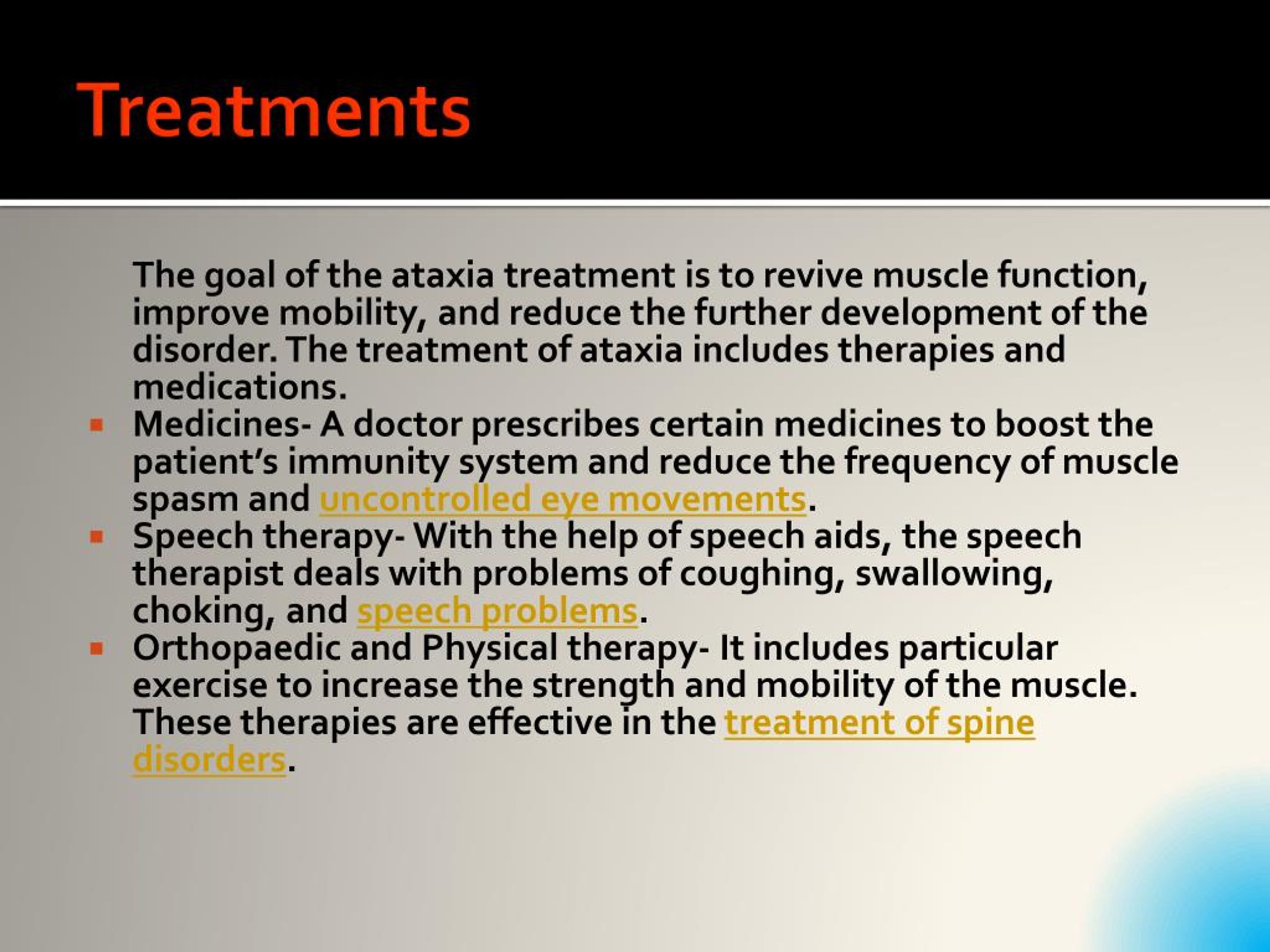
Some types of ataxia are treatable, which makes it so important for people to get a specific diagnosis of the type of ataxia they have. The goal of Ataxia treatment is to improve the quality of life and requires an individualized approach. If the diagnosis is of ataxia with vitamin E deficiency (otherwise known as familial isolated vitamin E deficiency) or of abetalipoproteinemia, these can be treated with vitamin E supplements and a specialized diet. Wilson’s disease can be treated with zinc, or with a medication that helps to remove copper from the body. There are a number of other rare conditions, especially diagnosed in children, which are normally associated with deficiencies and are also treatable. Tests to diagnose these conditions should be carried out routinely. The newly recognized disorder called ‘cerebellar ataxia with coenzyme Q10 deficiency’ may be treated with coenzyme Q10 supplements, and gluten ataxia may be treated with a gluten-free diet. Not all of these tests are appropriate for everyone, but this can be discussed with the doctor or neurologist. Working closely with a neurologist is important to develop a plan to address symptoms. Speech and language therapy, occupational therapy, and physical therapy are common treatment options. They are sometimes used in conjunction with medication therapy to manage symptoms.
Is There A Cure?
At the moment there is no known cure for most types of ataxia. However, several clinical trials are ongoing, which may result in treatments. In particular, many trials are taking place testing medications for Friedreich’s ataxia. There is also some evidence of benefit from vitamin E and coenzyme Q10 in Friedreich’s ataxia. In addition, although there may not be a cure, there are many ways to help people manage with some of the symptoms they experience depending on the type of Ataxia they have. A lot of progress is being made in finding new genes causing ataxia, which will result in more people getting a specific diagnosis. There are also many promising new treatments that are being tested in human trials, and may in the future be available to patients.
How to Get Involved

There are several ways to participate in International Ataxia Awareness Day and help raise awareness about this condition:
- Learn About Ataxia: Take time to educate yourself and others about ataxia, its symptoms, and its impact on those affected. Understanding the condition can help reduce stigma and foster greater empathy and support.
- Participate in or Organize Events: Join local or online events focused on ataxia awareness, such as walks, webinars, or educational seminars. If there aren’t any events near you, consider organizing one to bring your community together in support of the cause.
- Share Your Story: If you or a loved one is affected by ataxia, consider sharing your personal story on social media or at local events. Personal testimonies can be powerful tools for raising awareness and inspiring others to get involved.
- Donate to Ataxia Research: Support organizations that fund research into ataxia by making a donation. Contributions help advance scientific understanding and bring us closer to finding a cure.
- Wear Blue: Show your support for International Ataxia Awareness Day by wearing blue, the color associated with ataxia awareness. Encourage others to do the same and share photos on social media to spread the word.
Thank you for visiting my blog and reading today’s post, As I mentioned at the beginning, this condition is very close to my heart as my mum suffers from it as did my Nan, and I wanted to raise awareness in honor of them both as I’ve seen with my own eyes just how hard it can be living with it, and if I can help just one person then It would’ve all been worth it! Have a lovely week, and I shall see you next Wednesday!


 Peytons View
I hope you feel better and hugs to your mum. This post is informative. I never knew about this condition at all. Thankyou.
LikeLiked by 1 person
I pray for strength and grace for your mum and entire family. I do wish her well and a much better health in Jesus name amen.
LikeLiked by 1 person
I had never heard of Ataxia. Prayers for your mother, and for you. I’m glad you got to spend some time with your family 🙂
LikeLiked by 2 people
Hey, I hope you are doing well. My name is Neha Chavan from India. I am a patient of FA, that is, Friedreich’s Ataxia. I am glad that you are writing about Ataxia. Awareness is quite important and not many people know about it! So, Thank you! 😊
LikeLiked by 2 people