
Good morning, hope everyone’s well. It has been very warm here in the U.K, which is a rare occurrence as our country is not usually known for having sunshine, so when it does come out, everyone takes full advantage of getting their barbecues out and enjoying as much ice-cream as they can (myself included!). This week has been a bit of a blur for me personally as the new anti-biotics I was prescribed made me quite poorly to the point where I was having trouble gripping onto reality, but I stuck it out for the few days I was on them and thankfully in doing that, the infection in my toe has cleared up and my head is a bit clearer, which I need it to be as my mum and I are having to track down my medical records as like I mentioned in my previous post it seems that our current GP surgery have lost mine, well as of Monday, we managed to properly confirm that pre-2023 there is no record of my medical history, so at the moment we’re at the stage of emailing around to our previous surgeries to see if they can help. Away from that though, we’ve had a pretty chill week, which I’m so grateful for.
On to this weeks post… as its National Photography month I thought a post on photography gear might come in useful for those who are interested in becoming a photographer, whether you choose to take it up as a hobby or go even further and pursue your passion for it and turn it into a career! And while a camera is the most basic necessity when it comes to the world of photography, acquiring add-ons and accessories for your rig can help you ramp up your skillset and produce better shots. Once you get into the game, it is inevitable to realize how important camera gear and accessories are to bring out the real essence and beauty of photography. Of course, the list of accessories can be quite long. Since there are so many things to choose from, and with each of them having its own unique purpose, deciding what to get and what not to can be a confusing process. But just like any other field, there are essentials attached to the game of photography and I’m here to give the basics for what every photographer should have.
*Disclosure: This post may contain affiliate links, meaning I get a small commission which help cover expenses if you do decide to make a purchase through my links, but don’t worry – its at no cost to you.*

It’s not the camera or photography equipment that makes the photographer. It’s your creative eye, passion, and skill. However, the right photography gear can elevate your images and make you feel more confident in your art, especially if you’re a new photographer. There’s nothing wrong with investing in photography gadgets if you’re a veteran photographer, too! So to become a successful photographer, you’ll need the right gear.
Camera
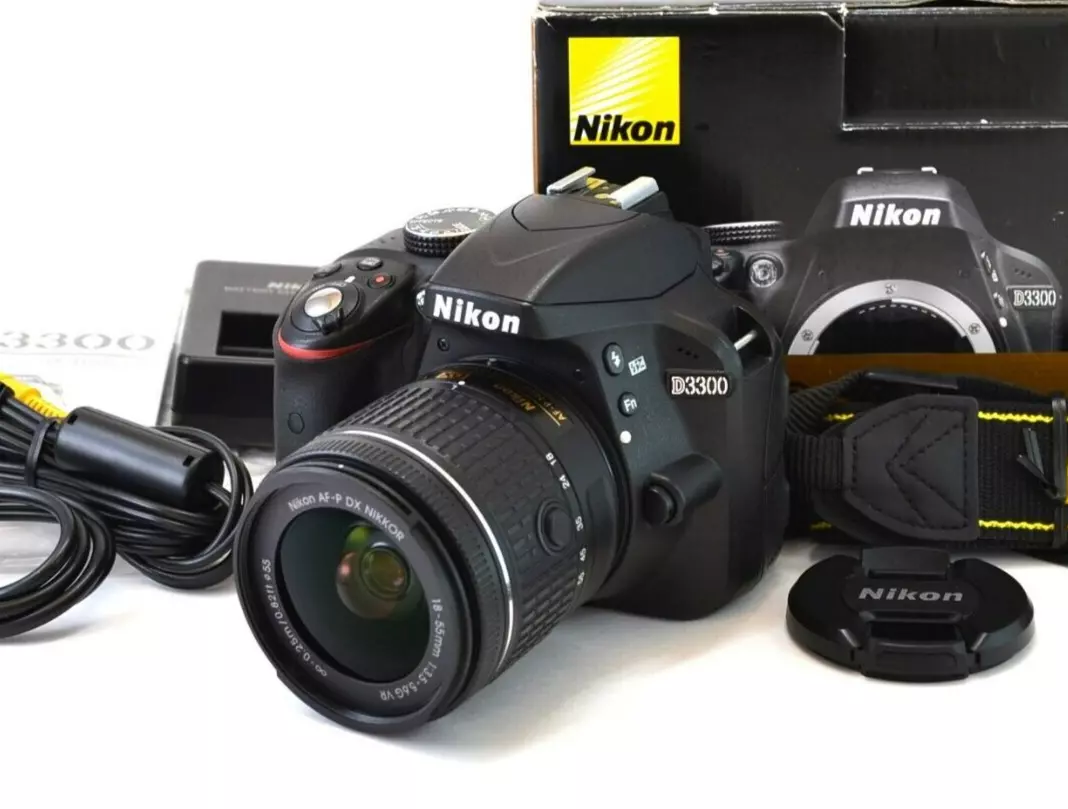
The most important piece of gear is, of course, a camera. There are different types to choose from, such as DSLR cameras and mirrorless models. Both have their advantages:
•DSLRs are known for their optical viewfinders, wide selection of lenses, and longer battery life.
•Mirrorless cameras, on the other hand, offer smaller and lighter bodies, electronic viewfinders, and advanced autofocus systems.
The next big thing in your first camera is the sensor. So, full-frame options offer excellent picture clarity but tend to be more expensive. At the same time, APS-C and Micro Four Thirds are smaller but still deliver good results, especially for beginners. Also, consider the availability and variety of lenses for the camera body you’ll want to buy. And as a rule of thumb, a 16-24 megapixel model is more than enough for most novices. I personally use the Nikon D3300, it was Nikon’s most advanced inexpensive super-compact DSLR. which comes with an excellent 18-55mm VR II lens as shown. The Nikon D3300 packs ultra-high image quality into a small and light package and has more than enough speed for chasing kids, school sports and theatre, and far more pixels than anyone will ever need. The Nikon D3300 is a wonderful camera for anything meaning you’ll want to carry everywhere.
You can buy it >Here< for a refurbished price of £379.99
Tripod

Every photographer needs a tripod. Not for every shot maybe, but for night shots, time-lapses, long-exposure seascapes, macro shots and more, a tripod will give you pin-sharp shots and a stability you can’t get from handheld exposures. A regular tripod will give you good stability at an affordable price, while a travel tripod will pack down small for easy portability. If your looking for a good but cheap tripod The Amazon Basics 60-inch Lightweight Tripod is quite possibly the best mid-weight tripod for those who value a budget price over everything else. The tripod checks most boxes for a basic tripod when it comes to functionality and is surprisingly light and easy to carry. What’s more, it provides a lot of handles and grips you don’t often find even on some modern, premium options out there.
You can buy it >Here< for the bargain price of £17.30
Camera Bag
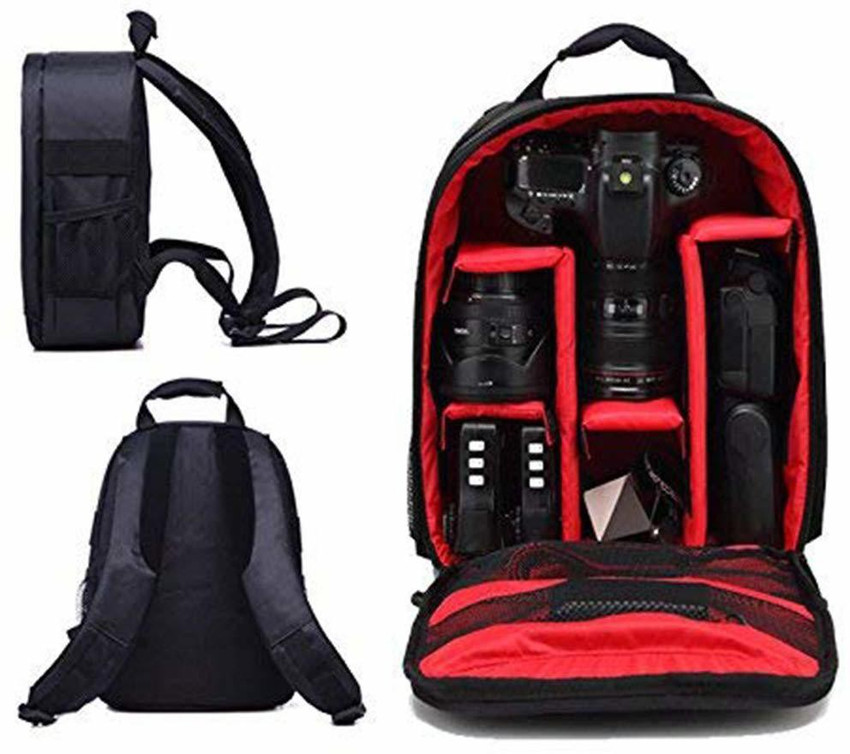
The most obvious and useful accessory that you can get for your camera is a camera bag. These come in all sorts of variety, offering different types of shapes, sizes, and objectives. There are well over a thousand options on the internet that will fill your purpose. Whether you are a full-blown photographer with all sorts of professional equipment and gear, or an amateur enjoying your favorite pastime, there is no doubt you need a camera bag to carry and protect your stuff. Luckily, unlike cameras or lenses, getting a camera bag is easy, like Sunday morning. Picking a good one is mostly common sense — if a bag is comfortable, fits your equipment well, and offer the protection you need – go for it. The Docooler Camera Bag has enough space to store all your gear, full size DSLR, with lens and tripod on the left and other accessories.
You can buy it >Here< for £22.49
Camera Cleaning Kit

Keeping your DSLR clean and in good working condition is essential for producing gorgeous images. Every photographer needs a cleaning kit that gets the job done. And this Professional Camera Lens Cleaning Kit Includes: 1 air blower, 1 two in one cleaning pen, 1 brush, 1 beauty brush, 5 cleaning cloths, 20 lens paper, 4 cleaning rod, 1 detergent, 5 dry and wet bag, 1 tweezers, 1 storage box, 5 cotton swab, 1 instruction manual. Zero Scratches, Efficient Cleaning: Extremely fine Microfiber can easily clean the invisible dust, particles and smudges on Cameras and Lens, leaves zero scratches, streaks or marks. Non-Toxic Alcohol-Free Formula Cleaner Kits also leave zero scratches, streaks or marks after use. Changing the cleaning kit can efficiently and safely clean the dirt on the camera and lens. 2 in 1 lens brush, cleaning brush. The accessories are all packed in a black storage box. When you need to use it, open the storage box and select the tools you need, It is very simple and convenient. A bonus tool is the Rocket Blowing Balloon – the air blower can easily direct a stream of air to blow away dirt and dust from your lenses or camera sensor, unique in appearance.
You can buy it >Here< for £12.99
Lenses

A lens – equally as important as a camera. The lens is what ensures that the light reaches your camera sensor. Seeing as a photograph is about capturing light which then creates an image, a lens plays a somewhat important role. When deciding on the best lens for your photography equipment kit, keep in mind, no two lenses are the same. Shapes, sizes, and prices vary significantly. More notably, each available model accomplishes something different. There’s no one-size-fits-all option, and that’s why there are hundreds of lenses available on the market. Overall, you can distinguish between a zoom lens or a prime lens. Each type of lens will do something different for your image.
You can buy a telephoto zoom lens >Here< for £89.90
Shutter Release

Camera shake can be reduced by using shutter releases, which are little devices that can be attached to the camera’s shutter button. A shutter release is essential for portrait and long exposure photographers who need immaculate sharpness and deal with longer shutter speeds. All photographers should own at least one of these handy gadgets for their professional cameras. The quality of shutter releases varies greatly, from the most basic to the most excellent. A radio antenna is commonly found on the more modern remote shutter releases. In many cases, the more expensive remotes are equipped with a greater number of more powerful shooting modes. Additionally, the longer lifespan of the higher-end shutter releases is an added bonus. It’s entirely up to you whether or not you want a wired or wireless shutter release. You can use a wireless shutter release if you enjoy taking selfies, or if you need to operate many cameras at once. The wired shutter release works almost as well as the wireless one if you frequently use a tripod and/or don’t mind the cord. When you click the button on the shutter release, it “talks” to your camera, and when you press the button on the device, your camera takes a picture. When you have your camera stabilized on a tripod or other piece of equipment, you can prevent it from moving by taking pictures without pressing the shutter button. This will keep your camera from shaking, which will keep your pictures from being blurry.
You can buy one >Here< for £10.99
Flash

For many types of photography, a flash is essential. It matters if you want to take pictures of people in dark environments or if you want to shape and mould the light that shines on your subject. It’s also an excellent way to brighten dark shadows, even during the day. If you’re interested in advanced flash photography, consider getting an external flash that can work without being attached to your camera. These flashes are incredibly useful as they can make a photo look professional. A little warning, though: Lighting is tricky. That goes for both novice and professional photographers. So, don’t go bound yourself in the head if you don’t ace the use of flash the first time around.
You can buy one >Here< for £39.99
Filters


Filters. More essential camera gear in a photographer’s toolbox. Think of filters as sunglasses for your lens. Place your filter in front of your lens (well, to be precise, it will go behind your lens) to alter the light that your camera captures. Although most digital cameras take excellent pictures nowadays, some filters simply can’t be replicated in post-processing. Choose between four primary filters. Between you and me you won’t be needing all of them when you’re starting. The most important one is the polarizing filter. Adding a polarizing filter to your camera equipment can take an average photograph to the next level. Polarizing filters enhance the saturation and color depth of photographs by reducing the amount of light that passes through particular wavelengths of the visible spectrum that cause glare. Polarizing filters are among the fascinating camera accessories, and they are a vital component of the equipment set for any professional photographer. From there, you can always add more filters to your camera equipment.
You can buy a polarizing filter >Here< for £10.06 and a lens filter kit >Here< for £25.49
Memory Card

Adding memory cards to your photography equipment list is essential. Memory cards store photos and lets you transfer them from your camera to your computer. There are primarily two reasons as to why memory cards are an essential item. Firstly, storage. Get a memory card that can hold plenty of photos — ideally well over 1000 photos, if not more. Find a memory card that’s at least 16 GB, ideally, one that has 32 GB, 64 GB or more. Secondly, speed. As cameras pump out bigger and bigger files, your memory cards need to keep up. Fast memory cards come with several benefits, and one of the biggest is that they minimize the time your camera spends “buffering” (locking up to process a burst of photos). A fast memory card will save you time in the field and let you take longer bursts more easily.
You can buy a 128GB >Here< for £9.99
Memory Card Reader / SD Reader

SD card readers that are incorporated directly into computers are becoming increasingly rare, especially in portable devices like laptops. Purchasing an SD card reader is something you should really consider doing if you want to prevent getting stuck in the frustrating scenario of being unable to transfer images from an SD card. Even while it’s not always one of the most important components of a camera kit, having one can be really useful in various circumstances. SD card readers are a somewhat common piece of technology. SD card readers can function as adapters for virtually any device because they use a common USB connector. Simply place your SD card inside the reader and connect the reader to a port on your computer using the USB cable. At this point, you should be able to transfer your files. A straightforward piece of hardware, an SD card reader is one of those items for which there isn’t much variety available on the market. You can select from several other designs, such as a stick or even a version with chords, but that’s about as hard as it gets. If you need an SD card reader, most options will do.
You can buy one >Here< for £6.79
Batteries / Chargers

The worst thing about going out with a camera is getting to your destination only to find that the battery is dead. The charger is always included when purchasing a new camera, but this is not always the case when purchasing a pre-owned one. As a rule of thumb, it’s preferable to get a charger specifically designed for the brand of camera you’re using, such as an on-brand Nikon charger for a Nikon camera or a Canon charger for a Canon camera, because once you’ve run out of juice, your device is done. And this doesn’t just include your camera. It’ll affect your external flash, light meter, and any other portable device you may decide to add to your photography equipment kit. Plus having a charger that can charge numerous batteries at once may be advantageous. You’ll be able to use extra batteries, charge them up quickly, and be ready to go for the entire day.
You can buy it >Here< for £25.99
Reflectors

So how does a reflector work? Essentially, reflectors are shiny surfaces, mostly quality fabric that helps bounce back the light from an external source, such as an external flashlight or a strobe light. The bounced-back light can be focused on the subject being shot. It is basic photography: the better the lights, the better the photograph. This tool comes in handy when the external light source can not be tweaked according to the needs. Reflectors can be used to control the amount of light falling on the subject, allowing the photographer to achieve the desired results. When shooting outdoors, there is nothing much you can do to control the amount of sunlight, but you can always use a reflector to soften down the intensity of light falling on the subject. When it comes to indoor photography, reflectors can work like magic, and the 5-in-1 Portable Photography Reflectors. K&F Concept 22′ light reflectors comes with gold, silver, white, black and translucent covers and a diffusion panel to provide different light effects perfect for your shooting.
You can get it >Here< for just £19.99
Editing Software

The photo session is just the beginning of the process of creating an amazing image. An accomplished photo editor can start with a high-quality RAW photograph and, with a wide variety of editing tools, produce a great finished image. Enhancing what you have already captured and creating effects that aren’t always attainable in a photographic studio are both things that can be done through post-processing. This is especially important to keep in mind when it comes to ecommerce product photography, which often feels restrictive to the creative process. Most photographers will edit their photos one way or another. Some good and pretty straightforward editing software includes Adobe Photoshop. It’s a robust editing program primarily aimed at graphic designers, digital artists, and photographers. Specifically, Adobe’s Lightroom is a very dedicated editing program for photographers.
You can buy a 1 year Auto-renewing subscription >Here< for £99.82
External Hard Drive

It might not be crucial for you to get an external hard drive right now, given you’re just starting and might not have that many pictures to lose. However, at some point, you will! Having a catalogue of images tucked away can offer peace of mind should your computer suddenly fail – but that’s just being extra cautious. Because who has ever heard of a computer crashing? Aside from providing you with extra security, external hard drives are just plain useful. As the output quality of cameras continues to improve, the image files are growing larger and taking up significantly more space. Seagate delivers simple drag-and-drop backup in a lightweight, compact design. The result? 2 TB of extra storage for your computer in a portable hard drive that’s perfect for life on the go. Whether you want to free up hard drive space on your Windows computer or simply back up files so that you’ve got a second copy, Seagate Basic makes it ridiculously easy — just drag and drop! With up to 5 TB of capacity, there’s plenty of room for your growing collection of files.
You can buy the 1TB >Here< for £53.99 or the 2TB >Here< for £67.99
Although every photo session will be different, there are a few things that most every photographer should keep in their camera bag. While this list isn’t necessarily complete, it should give you some fresh ideas and a good start on preparing your pack for your next professional assignment or photo outing.
Thank you for visiting my blog and reading today’s post, I hope you all have a good day and enjoy the rest of your week! For now, though I will end this post with a see you later.


 Peytons View
There’s a lot of kit to carry about…
LikeLike
I totally agree with you there, but, I suppose it depends on what type of photography / what style of photography you’re doing on that day to determine whether you need all the gear or whether you just need certain equipment for that shoot.
LikeLiked by 1 person
I always find that wherever I do I’m missing something
LikeLiked by 1 person
Great info for photographers.
Lots of gadgets though. I bet you don’t use all, all the time. And I hope you don’t have to carry them all, all the time, too (piggybacking on Simon)
LikeLike
Thank you for the comment. No I don’t use all of them all the time, I am lucky though as when I do need more equipment than I carry, I have two wonderful people who help me with transporting them from place to place! 😃
LikeLiked by 1 person
That’s great.
LikeLiked by 1 person
Good detail sharing about photography, thanks.
LikeLiked by 1 person
An excellent short precis on photography equipment needs beyond the moble phone camera.
LikeLiked by 1 person