Good Morning everyone, how are you all? Did everybody have a nice weekend? It’s not been a great one for me unfortunately, I’m still struggling with my relapse, but another thing happened which occurred on Sunday as we were driving back from doing a bit of shopping, when suddenly without warning, a car right in front of us braked causing my dad to have to quickly slam on his brakes as well, making the car jolt forward and the seatbelt (which I’m thankful for) cause me to get whiplash in my shoulder, which has been getting progressively worse since it happened. We went to the pharmacy on Monday who gave me some cream to try, so hopefully that helps otherwise they said if it’s no better by Thursday when I go and see the Doctor about my ME/CFS relapse (i.e. not being able to walk or talk and hopefully getting an MRI) I will have to mention it to them to see if I need to have an X-ray to check it’s not broken or anything serious. Before I move on with this week’s post, I just want to say a huge happy birthday for tomorrow to my beautiful big sister, because I know she reads my blog every week, so, this is a special message that goes out to her… “Without you, my childhood would not have been so special without you by my side. You mean the world to me, and I’m thankful for you on this special day. Happy Birthday!”
Anyway, let’s crack on with this week’s post… as it’s summertime, and in many places quite hot, it is the perfect opportunity to try out new photoshoot ideas. The weather is warm and sunny. And there are plenty of fun places to shoot outdoors or themes to shoot indoors! Keep reading to learn how to approach your summer photography, so this season’s photos can be your best! But don’t worry if you don’t get it right the first time. Photography can take a great deal of time and patience, just keep shooting and be open to learning new techniques, stick with it and your photos will come out great!
Ah, summer! It’s a magical time, filled with endless photographic possibilities, not to mention bright light, balmy temperatures, and beautiful skies. Of course, summer photography does come with its fair share of challenges. The sun can sometimes be a little too intense, washing out your shots and adding unwanted contrast. The heat can make it difficult to photograph outside during the middle of the day. And let’s not forget the struggle of finding those perfect subjects that truly capture the essence of summer. Fortunately, with the right approach, you can overcome all these challenges. Here are a few tips to help you get that perfect summer shot!
The Golden Hour
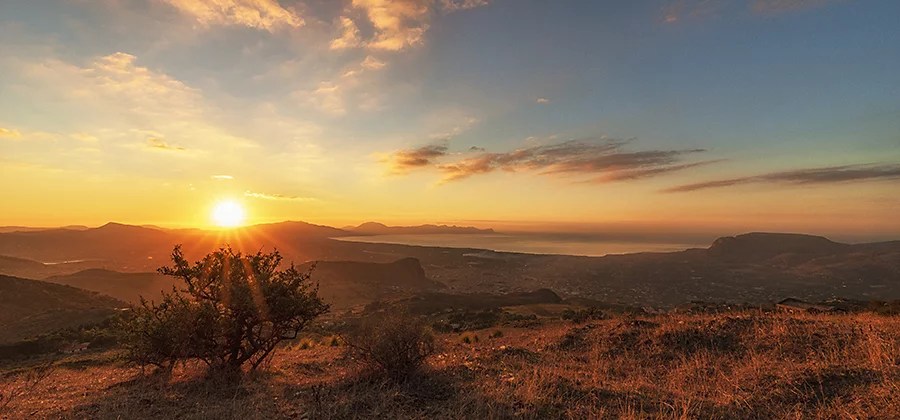
Golden hour occurs twice a day – right before sunset and right after sunrise. In the hour or so before sunset, the world is bathed in golden light. The light is often much warmer than at dawn because it’s scattered and diffused by the thicker atmosphere – that’s why the sun often looks bigger at sunset than at sunrise – and your photos will come out warmer than you expected as the color temperature of the light is very low. Long shadows rake across the landscape, revealing texture and form, while the sun’s golden orb slowly dropping toward the horizon looks magnificent. For a sunrise or sunset, use a telephoto or telezoom lens to exaggerate the size of the sun’s orb – a 200mm or, better still, a 300mm, 400mm or 500mm.
Silhouettes

This tip goes hand in hand with the last one and that is to use the sun to backlight the subject and create a silhouette. By simply positioning the sun behind the subject you can easily create a stunning silhouette image. Place a solid object between you and a bright background and you’ve got the makings of a great silhouette. The object could be any simple, easily-identifiable shape such as a person, tree, boat or building and the background could be anything from a fiery sunrise or sunset, the summer sun sitting low in the sky, or shimmering highlights on water. Mix and match as you like, but the result is always an eye-catching picture.
Use A Polarizer

A polarizer is an essential filter for summer photography. It’s a filter that serves multiple purposes but the two main ones during summer are adding contrast to the sky and removing unwanted glare from wet surfaces. As well as deepening a blue sky and emphasising clouds, it will also eliminate reflections, reduce glare so colour saturation is increased and lessen the effects of haze. To get the best effect on the sky, keep the sun on one side of the camera, while to get rid of reflections the angle between the reflective surface and the lens axis needs to be around 30°. Polarisers lose two stops of light, so keep an eye on those shutter speeds if you’re hand-holding – on a sunny day you’ll be down to 1/30sec at f/11 at ISO 100. A tripod will be handy if you need to stop the lens down, or you could increase the ISO to 200 or 400 so you can use a faster shutter speed.
The Blue Hour
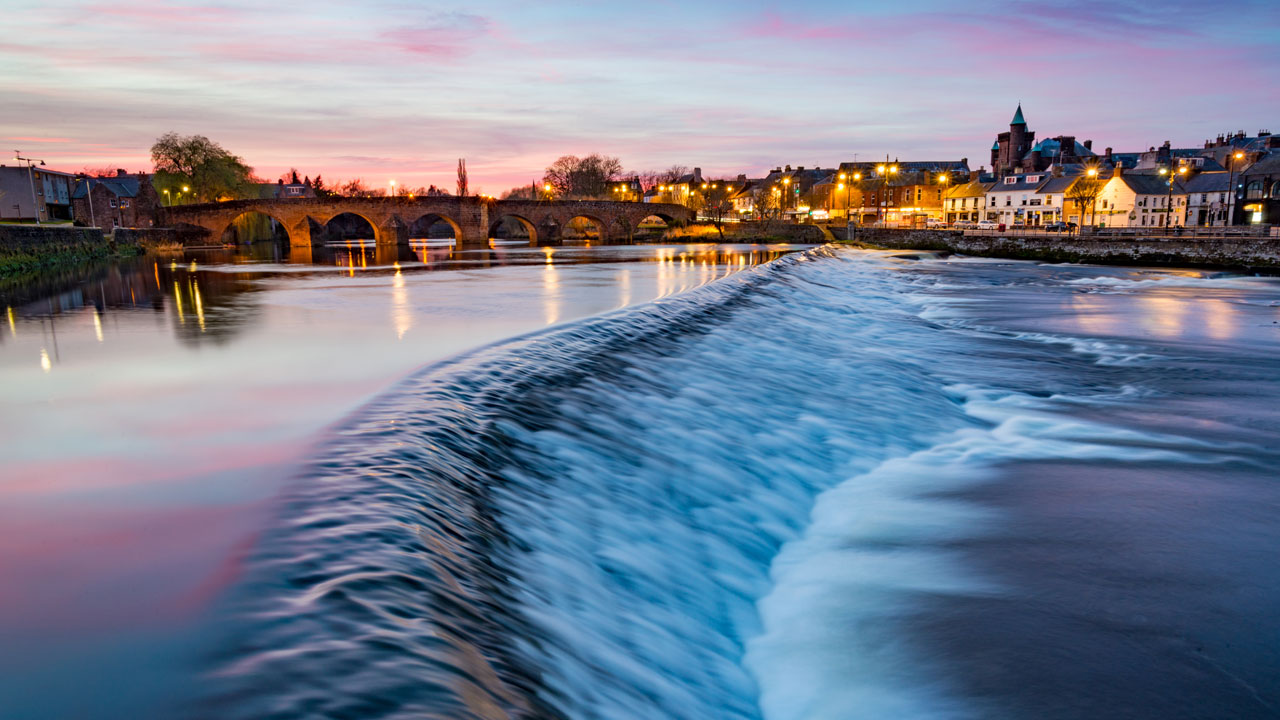
Since the sun is harsh throughout most of the day, why not head out after it’s down? The Blue Hour (the hour-ish before sunrise and after sunset) offers a much softer light for photographers and it’s an interesting light to photograph in. It tends to bring out details in the landscape you might not have noticed otherwise. This is something many new photographers and beginners miss out on because they leave too early. Make sure you aren’t too eager to go, and keep shooting until the light has faded in the sky and it becomes a deep, rich ocean of blue.
Flowers, Flowers, Flowers
:max_bytes(150000):strip_icc()/types-of-wildflowers-4061772-hero-4f093bf89ec94cd9ac766a4e0465238d.jpg)
Summer is a great season to photograph wildflowers and they’re often found anywhere. Gardens tend to be at their most photogenic during summer, with plants and shrubs creating a riot of color in even the modest suburban plot. Hedgerows and roadside verges also come alive with poppies, ox-eye daisies, buttercups and other vibrant blooms. They can be a nice addition to an image whether you choose to zoom using a close-focusing zoom to make make an abstract shot or, even better, a macro lens. Your telezoom will also be ideal for shooting large drifts of flowers – the compressed perspective will make the flowers appear crowded together, while shooting at a wide aperture will allow you to isolate one single bloom from its surroundings.
Shoot in RAW
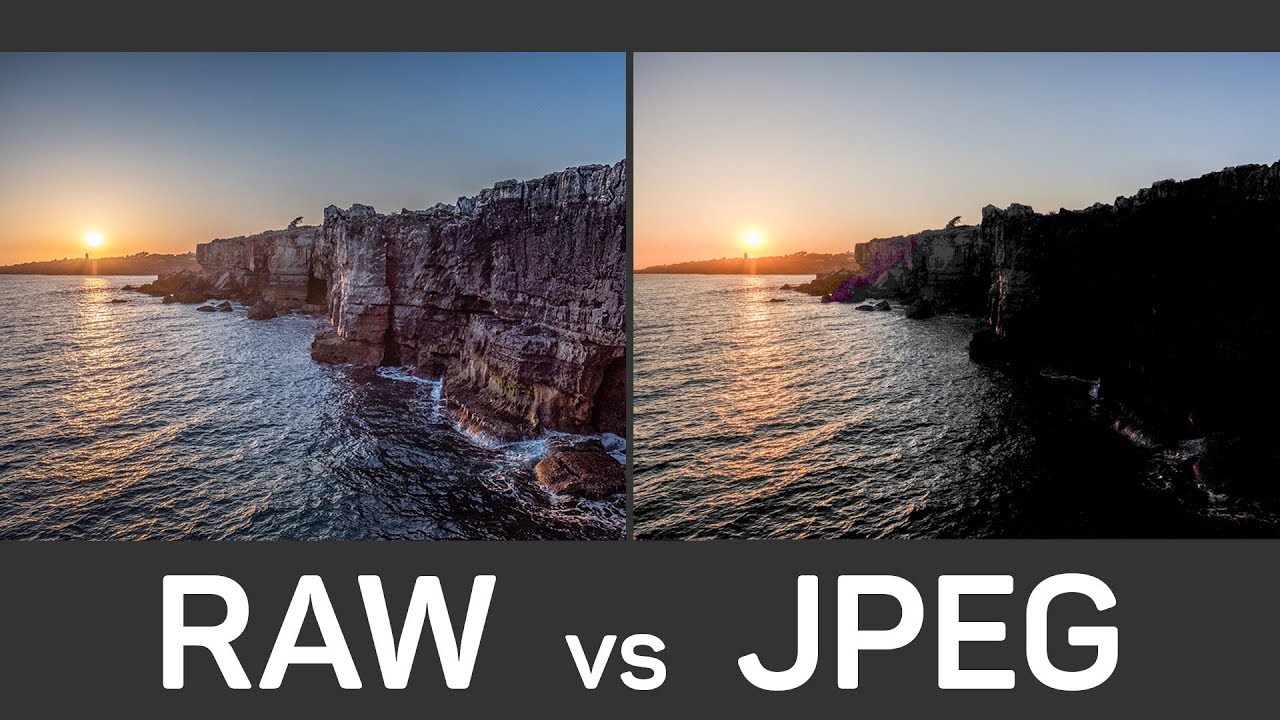
Just like any other season or style of photography: shoot in RAW! With so many variables in lighting, colors, and other aspects of your photo, it is always in your best interest to shoot in RAW so that you have the room to edit where you need to. If your photos are overexposed or underexposed because of how the bright summer sun reacted with your camera settings, you will want to edit your photos afterwards so you can make them look their best. You will be able to edit a lot more if you shoot in RAW format, rather than in JPEG!
Avoid Harsh Light
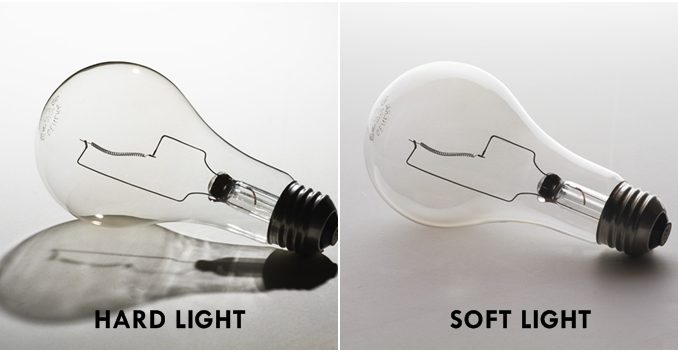
Summer light out in the open is harsh and unflattering, but if you step into the shade of a building or tree it’s a different matter. There the light is soft, shadows are very weak and contrast is much lower. Portraits benefit greatly from being shot in the shade as you’ll avoid ugly shadows being cast under noses and in eye sockets. Details and found still lifes also work much better in shade. If you’re in the open and no shade is available, holding something above your subject’s heads will work – a brolly, diffuser (A diffuser is simply a piece of translucent material which scatters light rays. Diffusers reduce glare and harsh shadows. They eliminate unattractive contrast and even out the tonality in an image) or sheet of card. This also works well for details and close-ups – try shooting a flower portrait in full sun, and then again with a sheet of card casting a shadow over the flower – there’s no comparison.
Equipment
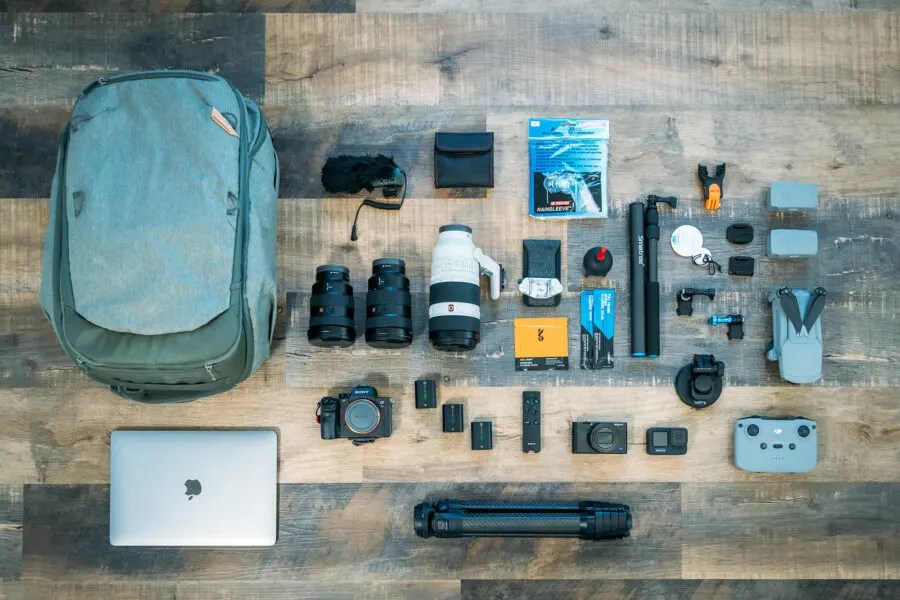
Select your gear carefully if you want to travel light. Only select what you think you will need. Once you’ve made all those selections, go through again, and purge more items. Yes, really. It can be hard on your first go-around to pare down, so doing two rounds might make it easier. Use this list as a guide:
- A quality, lightweight camera backpack
- One telephoto lens
- One wide zoom lens
- One camera body
- Several camera cards ranging from 8GB to 32GB
- A point and shoot camera or, preferably, high-end smartphone camera
- One battery charger
- One compact 2TB External Hard drive or other backup photo storage including the Cloud
- Camera rain cover
Depending on your needs and destination, also consider these pieces:
- A travel tripod and remote trigger
- Extra camera batteries
- Rain cover for your bag
*All of these items should easily fit into a backpack or camera bag.*
Play with Black and White

The bright sunlight and deep shadows that you get during the summer create high contrasting images. These high contrast images are perfect for black and whites. Look at shapes and textures and try turning these shots black and white, you’ll probably end up with something amazing that you just can’t get as easily in the winter. Sometimes, the environment and lighting just aren’t going to cooperate. Don’t fully disregard your photos in these cases. Make your photoshoot in black and white as an experiment. Monochrome images emphasize shadows for more drama and are especially effective on cloudless city days when there are lots of shadows. In these cases, use your camera’s combined RAW and JPEG modes. Setting the picture style on your camera to Monochrome will help you get enough data for post-production so you can edit them to your desired style. This can also be really helpful to edit film photography to black and white when the lighting hasn’t turned out as you expected.
Water Reflections
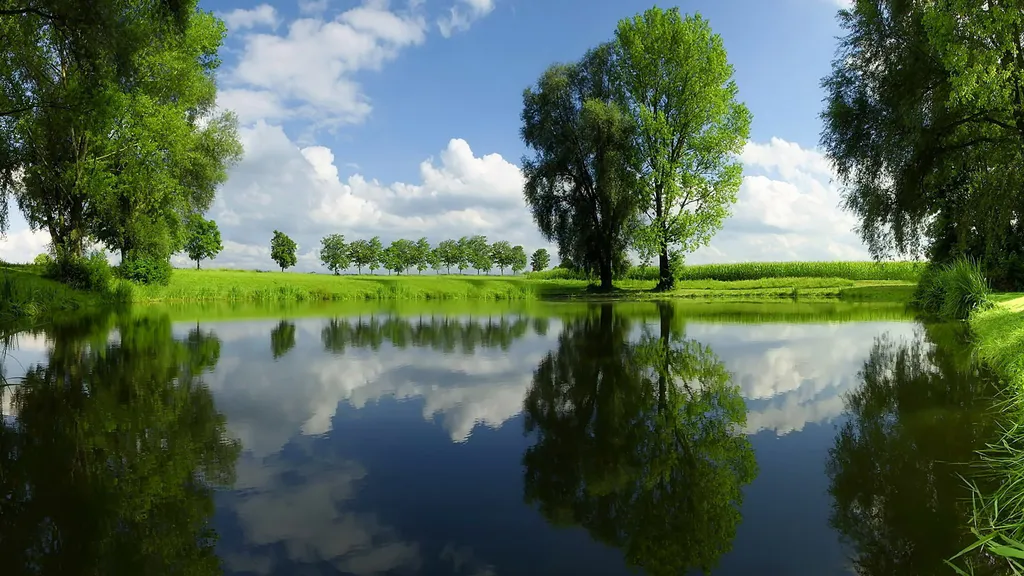
Another perfect summer photography idea and tip is taking water photos in different forms. Spice up your beach photos with interesting splashes. Just be sure to increase your shutter speed for that frozen-in-time look. Water reflections also make beautiful summer photos. However, the most interesting thing to shoot for us is the summer rain. You only need to stay on track of the current weather conditions to plan your next photography session.
Finally, Summer is a wonderful time to get out and photograph. Whether you are on vacation, with family, or just enjoying this beautiful season, make time to capture all the fun going on around you! The best summer images are anything that captures your interest! Head to the beach, go camping or visit a carnival or busy pier. Or stay out late and capture the evening light. Whether you like to capture portraits, landscapes or events, you’ll find something to tickle your photographic interest. Look for opportunities for unique summertime images, and have fun creating photos that are different from anything that you’d capture any other time of the year.
Thank you for visiting my blog and reading today’s post, I hope you all have a good day and enjoy the rest of your week! For now, though I will end this post with a see you later.


 Peytons View
Nice. Thank you for guidance.
LikeLiked by 1 person
I hope you will be fine, join a gym is possible.
LikeLiked by 1 person
*if possible
LikeLike