

Hello everyone, good morning! Hope your all doing well. It has been a manic week, I had to take pictures of my dads old car on Sunday so I could list it on Facebook Marketplace as spares or repairs, and within an hour we had multiple responses to the advert, so hopefully it will be gone soon (fingers crossed). Yesterday I had to have my routine 2-year eye test that I was a little bit overdue for, and although not much has changed since the last time I saw the optician, they’ve prescribed me some new glasses as the lens in my current glasses are the wrong type for my eyes, but other than that I’m pleased to say that they are otherwise very healthy! I wont ramble on any further as I want to move on to this weeks post as its an important one…
This week’s blog post is British Heart Week, raising awareness surrounding all things to do with heart disease and is a subject very close to my heart as quite a few of my family members have suffered with heart-related problems, none so than more recently because of my Nannie who suffered with her heart for many years, and which sadly may have contributed towards her sudden passing a couple of years ago, and my Grandad who died from a heart attack 10 years ago this August. I wanted to do a post on this matter to raise awareness as its something I’m very passionate about because not long after losing my Nannie, my dad started having trouble with his heart resulting in him needing to be monitored regularly, and in raising awareness about this topic I hope it will help others out there who are suffering to get checked out if something doesn’t feel right.

British Heart Week is observed from 7 to 15 June. The reason for this observation is to spread awareness about heart diseases and help people get the right treatment. The British Heart Foundation is U.K.’s heart charity that founded the British Heart Week. Heart diseases are one of the country’s leading diseases that is responsible for every 1 in 4 deaths. The week-long observation is also a tribute to the medical professionals for their continuous research of the heart. Heart disease describes a range of conditions that affect the heart. Heart diseases include:
- Blood vessel disease, such as coronary artery disease
- Irregular heartbeats (arrhythmias)
- Heart problems you’re born with (congenital heart defects)
- Disease of the heart muscle
- Heart valve disease
Heart disease includes conditions that narrow or block blood vessels (coronary heart disease). This can lead to a heart attack, angina and some strokes. Heart disease also covers conditions that affect your heart’s muscle, valves or cause abnormal rhythms (arrhythmias).
About Your Heart:
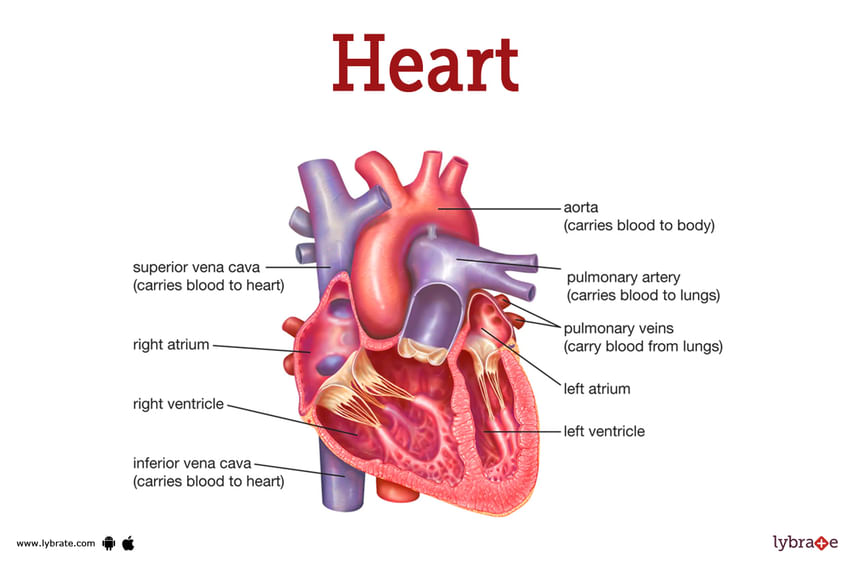
Each day, your heart beats around 100,000 times. It’s a muscle, about the size of your fist, in the middle of your chest tilted slightly to the left. This continuously pumps about five litres (eight pints) of blood around your body through a network of blood vessels called your circulatory system. This blood delivers oxygen and nutrients to all parts of your body to help your organs and muscles work properly. Your blood also carries away unwanted carbon dioxide and waste products.
Your heart has a left side and a right side, they are separated by a thin muscular wall called the Septum. Both sides of your heart have an upper chamber and a lower chamber.
- The upper chambers are called the left atrium and the right atrium (or the atria)
- The lower chambers are called the left ventricle and the right ventricle.
The right side of your heart receives the de-oxygenated blood that has just travelled round your body. It pumps the blood to your lungs to collect a fresh supply of oxygen. The left side of your heart pumps the re-oxygenated blood round your body again.
Your heart muscle is made up of three layers of tissue:
- Pericardium – a thin, outer lining that protects and surrounds your heart.
- Myocardium – a thick, muscular middle layer that contracts and relaxes to pump blood around of your heart.
- Endocardium – a thin, inner layer that makes up the lining of the four chambers and the valves in your heart.
Symptoms Of Heart Disease:

Symptoms of heart disease vary based on what condition you have and can include:
- Chest Pain
- Pain, Weakness or Numb Legs and/or Arms
- Breathlessness
- Very Fast or Slow Heartbeat, or Palpitations
- Feeling Dizzy, Lightheaded or Faint
- Fatigue
- Swollen Limbs.
Risk Factors:
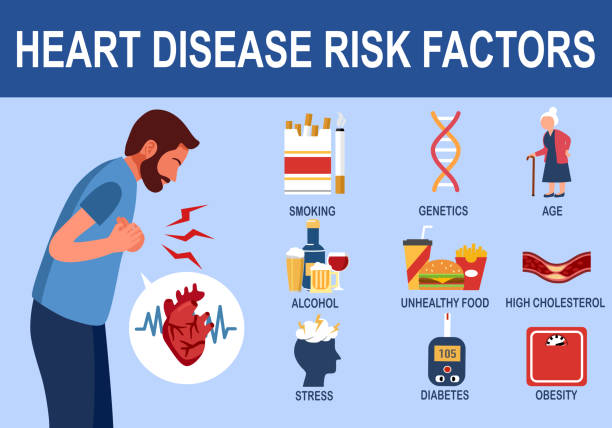
Risk factors for heart disease include:
- Age – Growing older increases the risk of damaged and narrowed arteries and a weakened or thickened heart muscle.
- Sex – Men are generally at greater risk of heart disease. The risk for women increases after menopause.
- Family history – A family history of heart disease increases the risk of coronary artery disease, especially if a parent developed it at an early age (before age 55 for a male relative, such as your brother or father, and 65 for a female relative, such as your mother or sister).
- Smoking – If you smoke, quit. Substances in tobacco smoke damage the arteries. Heart attacks are more common in smokers than in nonsmokers. If you need help quitting, talk to your health care provider about strategies that can help.
- Unhealthy diet – Diets high in fat, salt, sugar and cholesterol have been linked to heart disease.
- High blood pressure – Uncontrolled high blood pressure can cause the arteries to become hard and thick. These changes interrupt blood flow to the heart and body.
- High cholesterol – Having high cholesterol increases the risk of atherosclerosis. Atherosclerosis has been linked to heart attacks and strokes.
- Diabetes – Diabetes increases the risk of heart disease. Obesity and high blood pressure increase the risk of diabetes and heart disease.
- Obesity – Excess weight typically worsens other heart disease risk factors.
- Lack of exercises – Being inactive (sedentary lifestyle) is associated with many forms of heart disease and some of its risk factors, too.
- Stress – Unrelieved stress may damage the arteries and worsen other risk factors for heart disease.
- Poor dental health – It’s important to brush and floss your teeth and gums often. Also get regular dental checkups. Unhealthy teeth and gums makes it easier for germs to enter the bloodstream and travel to the heart. This can cause endocarditis.
Complications:

Complications of heart disease include:
- Heart failure – This is one of the most common complications of heart disease. Heart failure occurs when the heart can’t pump enough blood to meet the body’s needs.
- Heart attack – A heart attack may occur if a blood clot is stuck in a blood vessel that goes to the heart.
- Stroke – The risk factors that lead to heart disease can also lead to an ischemic stroke. This type of stroke happens when the arteries to the brain are narrowed or blocked. Too little blood reaches the brain. A stroke is a medical emergency — brain tissue begins to die within just a few minutes of a stroke.
- Aneurysm – An aneurysm is a bulge in the wall of an artery. If an aneurysm bursts, you may have life-threatening internal bleeding.
- Peripheral artery disease – In this condition, the arms or legs — usually the legs — don’t get enough blood. This causes symptoms, most notably leg pain when walking (claudication). Atherosclerosis can lead to peripheral artery disease.
- Sudden cardiac arrest – Sudden cardiac arrest is the sudden loss of heart function, breathing and consciousness. It’s usually due to a problem with the heart’s electrical system. Sudden cardiac arrest is a medical emergency. If not treated immediately, it results in sudden cardiac death.
Diagnosis:
Tests may be based on your family history and can include:
- Blood Tests
- Chest X-ray
- Electrocardiogram (ECG) – a quick and painless test that records the electrical signals in the heart. It can tell if the heart is beating too fast or too slowly.
- Echocardiogram – Noninvasive exam uses sound waves to create detailed images of the heart in motion. It shows how blood moves through the heart and heart valves. An echocardiogram can help determine if a valve is narrowed or leaking.
- CT Scan – In a CT scan, you lie on a table inside a doughnut-shaped machine. An X-ray tube inside the machine rotates around your body and collects images of your heart and chest.
- MRI Scan – MRI uses a magnetic field and computer-generated radio waves to create detailed images of the heart.
- Holter monitoring – A Holter monitor is a portable ECG device that’s worn for a day or more to record the heart’s activity during daily activities. This test can detect irregular heartbeats that aren’t found during a regular ECG exam.
Treatment:
Treatment will depend on your condition, but usually includes:
- Medications – If lifestyle changes alone don’t work, medications may be needed to control heart disease symptoms and to prevent complications. The type of medication used depends on the type of heart disease.
- An Implantable cardioverter defibrillator (ICD) – ICD is placed under the skin, usually in the space just below the collar bone (clavicle) to monitor your heart rate. Thin wires connect the ICD to the heart, where it’s always checking your heart rate and rhythm. It monitors your heart rhythm through the electrodes.
- Pacemaker – A small electrical device that’s implanted in the chest or abdomen. It’s used to treat some abnormal heart rhythms (arrhythmias) that can cause your heart to either beat too slowly or miss beats.
- Stents – A narrow flexible tube (called a catheter) is put into your wrist or groin (the area of your hip between your stomach and thigh) and pushed up to the coronary artery. A small balloon at the end of the tube is blown up to widen the narrowed part of your artery. When the balloon is deflated and the catheter tube and balloon are removed, the stent stays in place, acting like a scaffold to keep your artery open.
- Heart Surgery – Some people with heart disease may need a procedure or surgery. The type of procedure or surgery will depend on the type of heart disease and the amount of damage to the heart.
Lifestyle and home remedies:

Heart disease can be improved — or even prevented — by making certain lifestyle changes. The following changes are recommended to improve heart health:
- Don’t smoke – Smoking is a major risk factor for heart disease, especially atherosclerosis. Quitting is the best way to reduce the risk of heart disease and its complications. If you need help quitting, talk to your provider.
- Eat healthy foods – Eat plenty of fruits, vegetables and whole grains. Limit sugar, salt and saturated fats.
- Control blood pressure – Uncontrolled high blood pressure increases the risk of serious health problems. Get your blood pressure checked at least every two years if you’re 18 and older. If you have risk factors for heart disease or are over age 40, you may need more-frequent checks.
- Get a cholesterol test – Ask your provider for a baseline cholesterol test when you’re in your 20s and then at least every 4 to 6 years. You may need to start testing earlier if high cholesterol is in your family. You may need more-frequent checks if your test results aren’t in a desirable range or you have risk factors for heart disease.
- Manage diabetes – If you have diabetes, tight blood sugar control can help reduce the risk of heart disease.
- Exercise – Physical activity helps you achieve and maintain a healthy weight. Regular exercise helps control diabetes, high cholesterol and high blood pressure — all risk factors for heart disease. With your provider’s OK, aim for 30 to 60 minutes of physical activity most days of the week.
- Maintain a healthy weight – Being overweight increases the risk of heart disease. Talk with your care provider to set realistic goals for body mass index (BMI) and weight.
- Manage stress – Find ways to help reduce emotional stress. Getting more exercise, practicing mindfulness and connecting with others in support groups are some ways to reduce and manage stress.
- Practice good hygiene – Regularly wash your hands and brush and floss your teeth to keep yourself healthy.
- Practice good sleep habits – Poor sleep may increase the risk of heart disease and other chronic conditions. Adults should aim to get 7 to 9 hours of sleep daily. Kids often need more. Go to bed and wake at the same time every day, including on weekends.
Coping and support:
You may feel frustrated, upset or overwhelmed upon learning that you or a loved one has heart disease. Here are some ways to help manage heart disease symptoms and improve quality of life:
- Cardiac rehabilitation – This personalized exercise and education program teaches ways to improve heart health after heart surgery. Cardiac rehabilitation helps add healthy lifestyle changes — such as exercise, a heart-healthy diet and stress management — into your life.
- Support groups – Connecting with friends and family or a support group is a good way to reduce stress. You may find that talking about your concerns with others in similar situations can help.
- Continued medical checkups – Regular appointments with your health care provider can help make sure you’re properly managing your heart disease.
How To Observe British Heart Week

- Donate for the cause – Donate to the British Heart Foundation. The BHF has more than 8,000 collection locations across the country that accept clothing, vinyl, jewelry, and many more things that they sell on their eBay site.
- Take part in an event – The British Heart Foundation organises events like running, swimming, trekking, cycling, and more for raising funds. Take part in this and help BHF raise funds for further research.
- Volunteer for a role – Volunteer at BHF to be a face of change. BHF has different roles that suit all lifestyles and can also help you make new friends and acquire new skills.
If you would like more information about heart disease or any other heart-related problems visit https://www.bhf.org.uk/ to find out more information.
Thank you for visiting my blog and reading today’s post, I hope you found it helpful and informative, I hope in raising awareness about this disease it will urge people to get their heart checked and get the right treatment (if needed). I hope you all have a lovely week and enjoy the sunshine, and I will see you next week!


 Peytons View
definido y detallado, un buen comentario acerca del músculo que permite la vida de cada persona y de cada ser vivo.. Siento que le ha faltado informar acerca de los crecientes problemas de corazón que tenemos alrededor del mundo desde las inyecciones letales del Covid 19, esta es una verdad que no puede obviarse y que ha causado y sigue causando grandes problemas y muertes.
LikeLike