Morning all, is everyone doing ok? I know how bad the weather has been, especially here in the U.K with the recent storm that’s wreaked havoc up and down the country, sadly costing at least five people to lose their lives, my heart goes out to their friends and family during this tragic time. I said last week I would give an update about my shoulder, well the first doctor I saw on Friday didn’t even really look at me, he just dismissed me and sent me off with a physio referral, never mind the fact since the accident 2 weeks ago it has started to swell and travel up my neck and down my arm. And the second one I saw on Sunday as the pain got even more worse, would you believe? called me a liar to my face and gave me exercises that I won’t be able to physically do as they require you to stand which I haven’t been able to do since I crashed really badly with my M.E/CFS 8 months ago, so now I’m going to try asking my own GP to see if he can refer me for an X-ray as that’s all I’ve been wanting them to do, if he says no then I’m completely helpless and don’t know what to do next.
Anyway to take my mind off that drama and get back to something I love doing, lets move on with todays post… Photography is a huge part of blogging, there’s no denying that. I think that one of my favorite aspects of having a blog is not only getting to learn new things practically on a daily basis, but also seeing how much photography is improving. Photography offers an amazing creative plug socket that can help you better express what you want to say, all while increasing your likes, comments and shares. A blog is a perfect tool for doing just that. It gives you the opportunity to show who you are, why you are a photographer, and what value you can provide. Whether you have a fancy DLSR camera or simply a smartphone, you can absolutely learn how to take engaging photos for your blog — and have fun doing it.

If you’re a photographer, you probably know that the world of photography is exciting and rewarding. It’s also an industry that’s constantly changing, which means that your skills as a photographer will need to evolve with it. One way for you to do this is to learn about photography blogging. Photography blogging is a great way for you to keep up with what’s happening in the photography world. It can also help you develop your style and grow as a photographer. Here is a list of 12 photography blogging tips to help you get started.
A Good DSLR Camera

First off, to take some more than decent product photography, you will need a good camera or an excellent phone camera. When I say a good camera, I don’t mean the latest Nikon or most expensive Olympus. You don’t need an expensive camera to take great pictures. You just need a great vision. I personally use a Nikon D3300, which is quite affordable and a perfect choice if you’re just starting out and have never worked with a DSLR camera before. It’s great for beginners and once you start figuring out manual mode you will quickly become a pro. In time, you may want to invest in a better camera or better lens, because it will drastically improve the quality of your photos and the effort you will need to put in after (to edit it).
Exposure Triangle
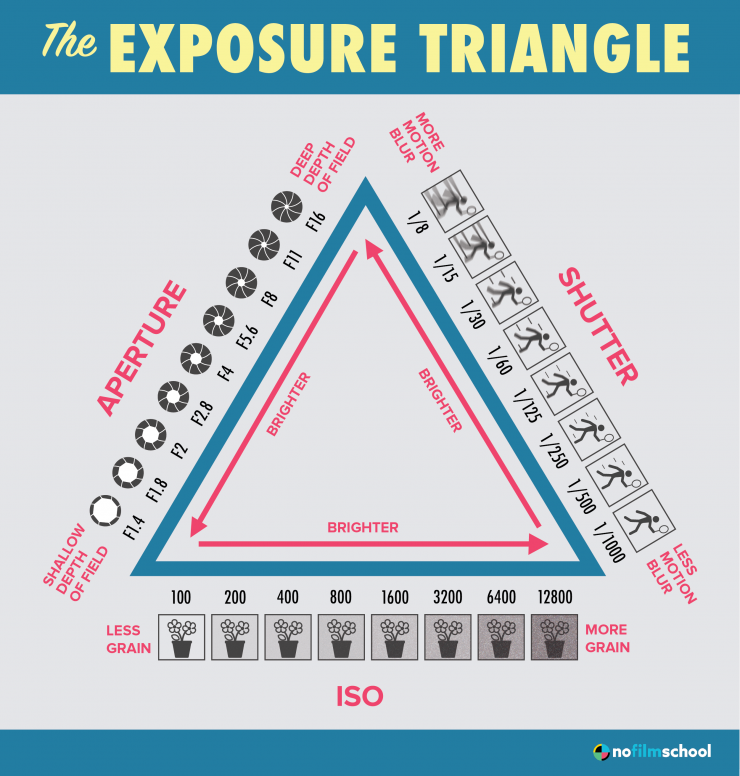
Aperture, ISO and shutter speed are all part of what’s called an exposure triangle. Your aperture controls the amount of light that travels through the lens into the film plane and it’s indicated by the f-number. The aspect of an f-stop can be a bit confusing because as the f-stop decreases, the opening increases. In other words, f/1.8 will let in a lot more light than f/5.6, the smaller the f-stop, the wider the opening, the brighter the image and the shallower depth of field. ISO setting is your camera’s sensitivity to light. The higher the ISO, the more sensitive it is. ISO really comes in handy when taking pictures in conditions where your light source is limited. Last, but not least, shutter speed controls the duration of the exposure, in other words, it controls the speed, at which the curtain opens and closes. More specifically, it refers to how long the light is permitted to enter your camera. Being able to tweak all three (aperture, ISO and shutter speed) so that they work together, will create a nice, harmonious exposure and will allow you to take great photos. Don’t be afraid to play with manual settings, take lots of pictures, experiment, see what works and what doesn’t. This is the best way to learn- by trial and error.
Lighting

Most of the time, you’ll want to take photos that aren’t too bright or too dark. A good plan is to photograph outside around sunset or sunrise or on a cloudy day. By avoiding bright, direct light, you’ll get softer, more flattering images. Try to use as much natural light as possible, whenever possible and you will never want to go back to taking your pictures without it. It doesn’t matter how bright you think your house lights are, they can be harsh, leave a yellow cast.. seriously, natural light is the way to go. Try using a kitchen window, or as I previously mentioned, go outside for a better natural glow.
Composition
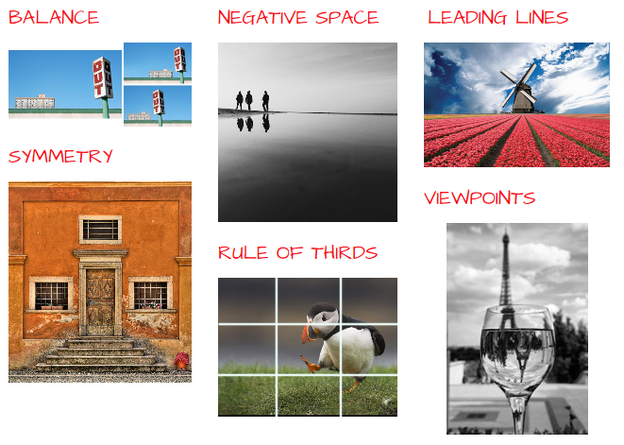
While there’s an art to composition, anyone can do it. Start by learning about photo composition techniques like symmetry and the rule of thirds so you have ideas at the ready when you go out to shoot. There’s no such thing as “perfect” when it comes to composition, but knowing how to do it well can make a big difference in your shots. A composition can be made up of many different elements, or only a few. It’s how the artist puts those things within a frame that help a photograph become more or less interesting to the viewer. A good photograph will take many different parts and combine them into an aesthetically pleasing whole. Composition is how an artist tells a story within the confines of a single frame. Keep in mind, however, that there is a huge difference between creating a nice background and having clutter. It not only will look unaesthetic and won’t be visually pleasing, but it can also turn away potential readers.
Do Some Basic Editing

Although you can’t turn a bad photo into a good one, you can get pretty close with the right editing tools. These days, you don’t need to know a lot of technical information to edit your way into a fabulous photo — Photo editing software is any kind of software you can use to manipulate or edit your photos. Also called Image editing software, these tools let you improve your photos with various tools, like color and contrast manipulation, object removal, or added effects. Adobe Photoshop is the industry standard software for photo editing, And then when you’re ready to take your editing skills to the next level, you can do even more with professional editing apps, including when you’re on the go.
Camera Tripod

Why a tripod? For clearer pictures. A tripod and remote will take your pictures to the next level right away! A tripod may completely change the game for many photographers. Your images’ technical quality will be improved, but there are a ton of other benefits as well. Your versatility will grow, your compositions will get better, and much more. A tripod allows you to use a long exposure, i.e. a faster shutter speed of up to several seconds, without the risk of you moving. You can also use the flash to light up your subject while using a long exposure so that the background doesn’t come out too dark. Another bonus is Consistent framing which means less time is spent cropping, rotating, and changing the alignment of photographs during post-processing, which saves time and effort. And using a tripod is an essential tool for photographers looking to improve the quality and professionalism of their work.
Explore Different Genres
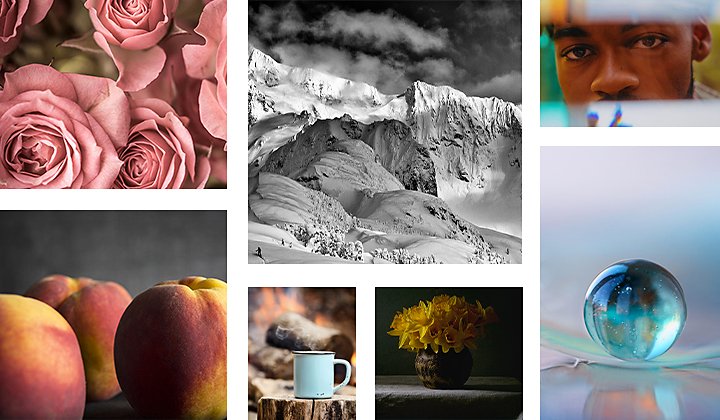
What is the theme of your blog? If it’s quite specific, such as food around the world, consider the different story-telling angles you can take to tell the story of that food. What of the chefs, the building, where the food comes from? To illustrate, a typical food blog features the food and wine placed on their table: food photography. However, if you want to tell a different story and, again, offer a fresh perspective, start exploring different genres of photography. For e.g. In order to photograph the chefs, one would want to dabble in portraiture or street photography. Furthermore, to tell the story of a restaurant with history, consider architectural photography.
Play With Angles

Experiment with different angles to see how they affect your compositions. Keep these ideas in mind the next time you’re out shooting. When framing a shot, take a moment to think about the composition and the light. With a little practice, you’ll be able to create stunning photos you’re proud of. When you’re taking a picture, look through the viewfinder. It will help you see what the camera sees. Understanding how to use it to your advantage will help you to get the best shots possible. You can make better decisions when taking photos by estimating how angles work. Different angles in photography can make a big difference in a photo’s overall look and feel. For instance, shooting from a low angle can make a subject look larger than life while shooting from a high angle can make them look small and insignificant. Therefore, it’s important to choose the right angle when taking a photo, as it can change the perspective of the image.
Use Props From Everyday Life
.jpg)
Photography Props play a huge part in most blog photography. Photography props can also help you set the mood of your images. For example, if you’re taking a photo of a person sitting in a chair, a blanket or a pillow can add comfort and a sense of home to the image. If you’re taking a photo of someone reading, a book or a magazine can add a sense of relaxation and calmness. By choosing the right props, you can create a mood that will captivate your audience and make your images more impactful. In addition to using props thoughtfully, it is also important to consider their placement within the frame. A prop that is positioned too close to the subject can create visual confusion and draw attention away from the main focus of the photo. To ensure that props complement the subject and the overall composition, it is recommended that they be placed in the background or off to the side of the frame. This will provide a visual contrast and help to create depth in the image.
Back Up Image Files

A simple device malfunction, accidental deletion, or loss can result in the permanent erasure of your precious images. By regularly backing up your images, you safeguard against these unforeseen circumstances, ensuring that your or your clients’ memories are not lost forever. Technology is not flawless, and hardware failures can occur without warning. Hard drives can crash, memory cards can become corrupted, and smartphones can get damaged or lost. By creating backups on separate storage mediums, such as external hard drives, cloud storage, or even DVDs, you ensure your images remain intact, even in the face of hardware failures. Everyone understood the critical importance of backing up image files. Most bloggers have a backup on a hard drive and a backup external drive. A few bloggers also use Google Photos or other cloud storage such as Amazon Prime Photos, Onedrive or Dropbox. Some bloggers use USB flash drives. Whichever way you choose to back up your photos, the most crucial thing is to have a backup. There is nothing worse than losing your photos!
Learn New Skills
Keep yourself and your audience engaged by trying new techniques. Say you’ve gotten used to shooting outside during the daytime. Maybe give night photography a try. Or perhaps you’ve gained a lot of experience using digital cameras. Consider trying film. You can even experiment with different physical and digital mediums to create something truly original. So get out your digital paintbrushes, acrylic paints, or drawing charcoal and go wild — and keep learning new skills as you go.
Be Kind To Yourself And Reflect Back On Your Achievements

Once enough time has gone by, look at how far you’ve come and pause to celebrate your accomplishments. The chances are that all the time and energy you put into creating amazing photos did pay off. Be sure to revisit the goals you set at the beginning of your journey. If you haven’t accomplished all of them yet, see what you can do differently in the future. Maintaining an online presence takes a lot of work, and so does building up your photography skills. Remember that, as important as blogs and social media may seem, they’re only one aspect of life. So, take breaks when you need to, enlist help from family and friends, and don’t stop having fun with it.
I hope that some of you have found this somewhat helpful to read, and I hope it inspires you to get your cameras out and start snapping away! Photography, for me, is fun. It’s a way for me to channel my creativity. If you struggle with photography or lack inspiration, just play around a bit. Try out things you’ve never thought to do before and just go with it. Don’t take yourself too seriously, or beat yourself up if something isn’t going the way you wanted it to – Taking photos should be fun and once you’ve written out your blog post, and added in your photographs, there should be that sense of satisfaction when you hit the publish button. Your photographs DON’T need to look like everybody else’s. If you’re happy with the photographs you take, then carry on doing what you are doing, because as long as you are happy with the photographs you produce, that’s really all that matters.
Thank you for coming to my blog and reading today’s post, I hope you have a lovely week and manage to stay warm! See you next week.


 Peytons View
Very informative . Thank you 🙂
LikeLiked by 1 person
Great post Peyton. Lots of great tips and very useful information. Thank you.
LikeLiked by 1 person