

Good Morning everyone, how are you all doing? I want to apologize for the lack of post last week, I have been battling a major relapse with my condition which I am currently still struggling through, I’m doing everything I can to get back on my feet and posting my normal content as soon as possible, for now though if you don’t know what ME/CFS is read on to find out more…

Myalgic encephalomyelitis, also called chronic fatigue syndrome or ME/CFS, is a long-term condition with a wide range of symptoms. The most common symptom is extreme tiredness.
ME/CFS can affect anyone, including children. It’s more common in women, and tends to develop between your mid-20s and mid-40s.
Symptoms of ME/CFS

Common symptoms of ME/CFS include
- feeling extremely tired all the time – you may find it very hard to do daily activities
- still feeling tired after resting or sleeping
- taking a long time to recover after physical activity
- problems sleeping, such as waking up often during the night
- problems with thinking, memory and concentration
Some people with ME/CFS may also have other symptoms, including:
- muscle or joint pain
- headaches
- a sore throat
- flu-like symptoms
- feeling dizzy or sick
- fast or irregular heartbeats (heart palpitations)
The severity of symptoms can vary from day to day, or even within a day.
The symptoms of ME/CFS are similar to the symptoms of some other illnesses, so it’s important to see a GP to get a correct diagnosis.
Find out more about the symptoms of ME/CFS
Diagnosing ME/CFS
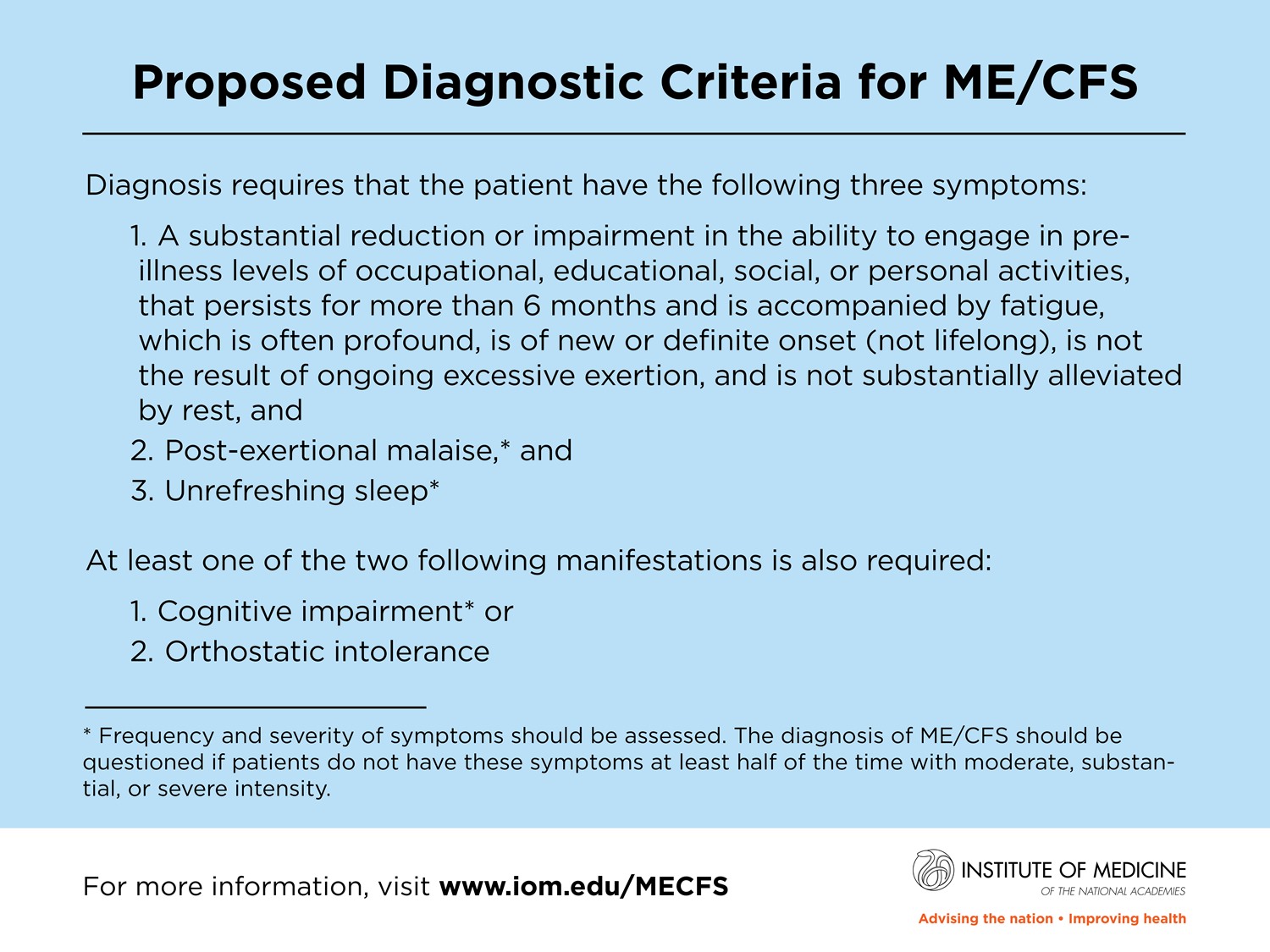
There is not a specific test for ME/CFS, so it’s diagnosed based on your symptoms and by ruling out other conditions that could be causing your symptoms.
The GP will ask about your symptoms and medical history. You may also have blood and urine tests.
As the symptoms of ME/CFS are similar to those of many common illnesses that usually get better on their own, a diagnosis of ME/CFS may be considered if you do not get better as quickly as expected.
Find out more about diagnosing ME/CFS
Treating ME/CFS
:max_bytes(150000):strip_icc()/chronic-fatigue-syndrome-treatment-716057-2ba0910b9a394bb59d0ceeca623e54e1.jpg)
Treatment for ME/CFS aims to relieve the symptoms. Your treatment will depend on how the condition is affecting you
While there is currently no cure for ME/CFS, there are treatments that may help you manage the condition.
Treatments include:
- cognitive behavioural therapy (CBT)
- energy management – where you’re given advice about how to make best use of the energy you have without making your symptoms worse
- medicine to control symptoms such as pain and sleeping problems
Some people with ME/CFS will improve over time, especially with treatment.
Many people with ME/CFS will need to adapt their daily routine and pattern of activities on a long-term basis. There may be periods when your symptoms get better or worse.
Find out more about treatments for ME/CFS
Causes of ME/CFS
:max_bytes(150000):strip_icc()/chronic-fatigue-syndrome-risk-factors-5b0d6d54119fa80037441e8c.png)
It’s not known what causes ME/CFS, but there are a number of theories – for example, it may be triggered by an infection, or certain factors could make you more likely to develop the illness.
Suggested causes or triggers for ME/CFS include:
- viral infections, such as glandular fever
- bacterial infections, such as pneumonia
- problems with the immune system
- a hormone imbalance
- your genes – ME/CFS seems to be more common in some families
Living with ME/CFS

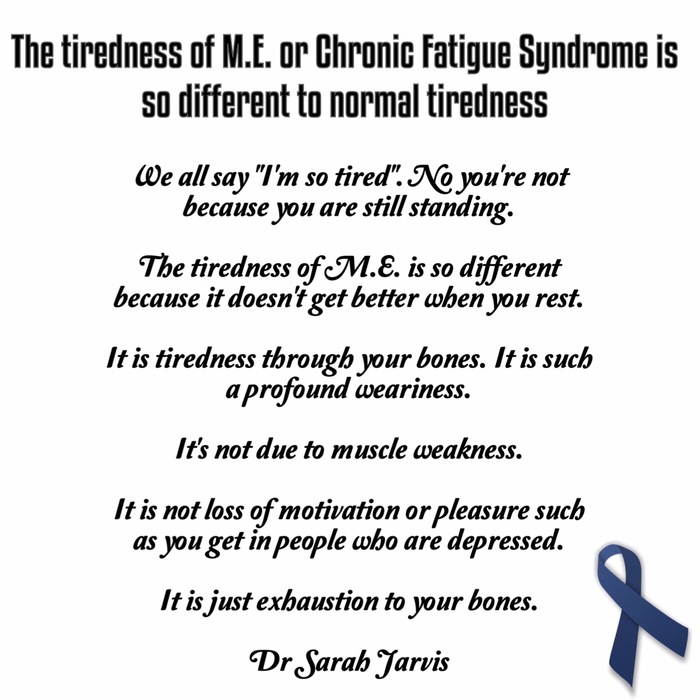
Living with ME/CFS can be difficult. Extreme tiredness and other physical symptoms can make it hard to carry out everyday activities. You may have to make some major lifestyle changes.
ME/CFS can also affect your mental and emotional health, and have a negative effect on your self-esteem.
As well as asking your family and friends for support, you may find it useful to talk to other people with ME/CFS.
ME Association is a charity that provides information, support and practical advice for people affected by the condition.
You can find a local support group on the ME Association website

Myalgic encephalitis (ME) / chronic fatigue syndrome (CFS) – flare-ups and relapse
Managing flare-ups in symptoms and relapse in myalgic encephalitis (ME)/chronic fatigue syndrome (CFS)
A flare-up is when there is worsening of symptoms beyond normal day-to-day variation, which lasts a few days
A relapse is when there is a sustained and marked exacerbation of ME/CFS symptoms lasting longer than a flare-up and needing substantial and sustained adjustment of energy management.
For a flare-up:
- identifying possible triggers, such as acute illness or overexertion (in some cases, there may be no clear trigger)
- temporarily reducing their activity levels
- monitoring symptoms, recognising that although flare-ups are transient, some will develop into a relapse
- not returning to usual activity levels until the flare-up has resolved.
For a relapse:
- reducing, or even stopping, some activities
- increasing the frequency or duration of rest periods
- reassessing energy limits to stabilise symptoms.
If a flare-up or relapse cannot be managed using the person’s self-management strategies outlined in their care and support plan or they are worried about new symptoms or a change in symptoms, advise the person to contact their named contact in primary care or the ME/CFS specialist team
Outlook:
Flare-up
- A worsening of symptoms, more than would be accounted for by normal day-to-day variation, that affects the person’s ability to perform their usual activities. flare-ups may occur spontaneously or be triggered by another illness, overexertion or other triggers. flare-ups usually occur as part of post-exertional malaise but it is possible for other symptoms, such as pain, to flare-up without post-exertional malaise. The worsening of symptoms is transient and flare-ups typically resolve after a few days, either spontaneously or in response to temporary changes in energy management or a change in treatment. A relapse lasts longer than a flare-up
Relapse
- A sustained and marked exacerbation of symptoms lasting longer than a flare-up and needing a substantial and sustained adjustment to the person’s energy management. It may not be clear in the early stages of a symptom exacerbation whether it is a flare-up or a relapse. Relapses can lead to a long-term reduction in the person’s energy limits

Thank you for taking the time to read my blog, as someone who suffers with this debilitating condition, I wanted to share more awareness about it as every time I can’t put a blog post out, I feel extremely guilty that my condition has unfortunately took a hold of me, but I’m keeping my fingers crossed and praying so hard that I will be back to normal soon, for now though I hope you all have a lovely week, until next time!


 Peytons View
❤️ blog. I hope you will follow mine too. A cordial greeting from the south of Spain.
LikeLiked by 2 people